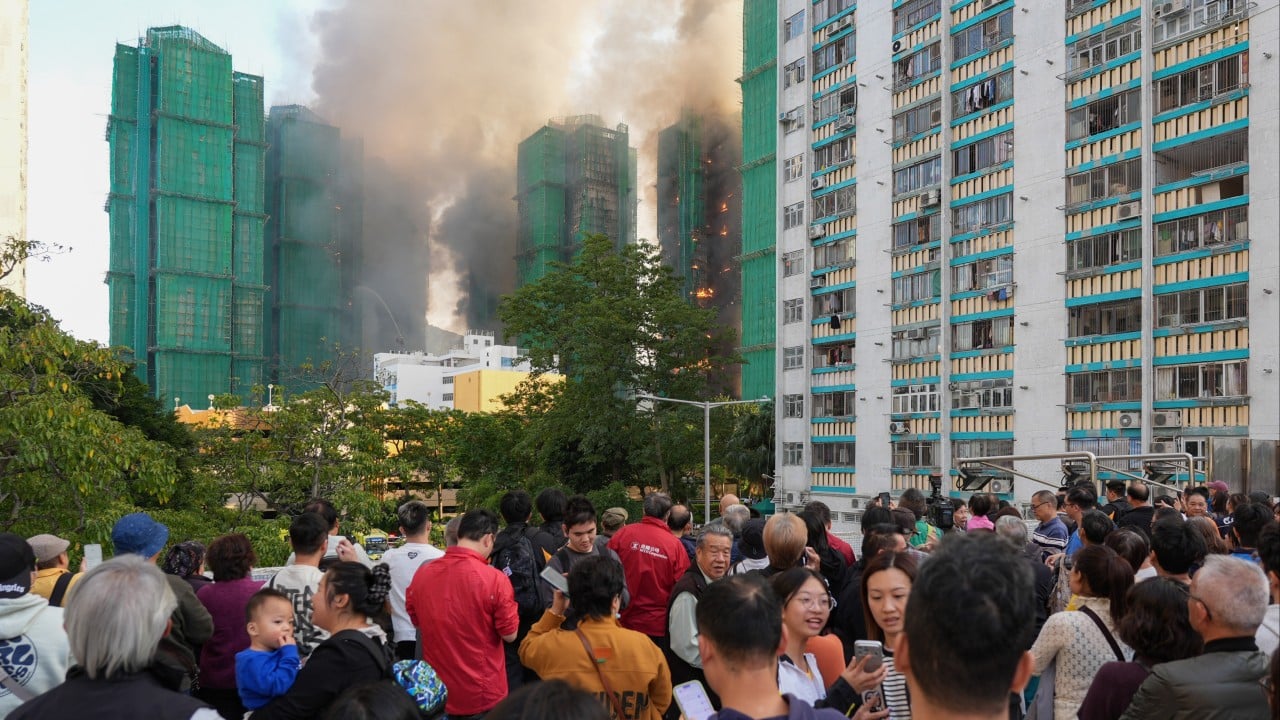
The recent tragedy in Tai Po has followed a predictable, exhausting script. A fire breaks out. Lives are lost. Amidst the ashes, the media unearths a "heroine"—a neighbor who spent her final moments banging on doors to save others instead of saving herself. We mourn her. We lionize her. We turn a structural failure into a story of individual sacrifice.
This narrative is a trap. Expanding on this topic, you can also read: Why the Green Party Victory in Manchester is a Disaster for Keir Starmer.
By centering the conversation on the "heroism" of victims, we are effectively subsidizing the negligence of landlords and the complacency of urban planners. We are teaching people that the "correct" response to a systemic safety failure is a suicide mission.
It is time to stop praising the martyrs of Hong Kong’s subdivided housing and start blaming the infrastructure that makes martyrdom necessary. Analysts at NBC News have also weighed in on this trend.
The Heroism Fallacy
When we call someone a hero for alerting their neighbors in a burning tenement, we are engaging in a form of emotional displacement. It feels better to talk about a woman’s "noble heart" than it does to talk about the lack of functioning smoke detectors or the illegal partitions that turned a hallway into a chimney.
I have spent years looking at urban safety and crisis management. The math is brutal. In a high-density environment like Tai Po, the "Golden Window" for escape is measured in seconds, not minutes.
Every second a resident spends playing the role of a human fire alarm is a second they aren’t using to reach a fire escape. In modern fire safety science, this is known as negative altruism. By attempting to save others without the proper equipment or training, the "hero" often blocks exit routes, creates confusion, or becomes an additional casualty that firefighters then have to recover, slowing down their actual suppression efforts.
The competitor articles want you to cry. I want you to get angry.
The Death Trap Economy
Let’s look at the reality of these buildings. We are talking about "tong lau"—older walk-ups often carved into subdivided flats (subdivided units or SDUs).
The tragedy in Tai Po isn't an isolated incident of bad luck. It is the logical conclusion of the SDU economy. When you split a 500-square-foot flat into four units, you aren't just doubling the rent; you are quadrupling the fire load and halving the exit width.
- Electrical Overload: Most of these buildings were wired for the 1960s. Now, every subdivided unit has its own air conditioner, induction cooker, and water heater. The wires aren't just old; they are screaming.
- The Chimney Effect: Illegal partitions often block windows or fire doors. This turns hallways into pressurized tubes of superheated gas.
- The "Hero" Requirement: We only need heroes when the system fails. If the building had a monitored fire alarm system and integrated sprinklers, the "heroine" could have simply walked out, and her neighbors would have been alerted by a machine that doesn't have lungs to fail.
We praise the woman who died knocking on doors because it’s cheaper than demanding the government enforce the Fire Safety (Buildings) Ordinance on every single pre-1987 structure in the New Territories.
Stop Mourning and Start Auditing
If you live in a high-density neighborhood, the best way to honor a victim is to stop being a "neighbor" and start being an auditor.
The "lazy consensus" says we should be more like the Tai Po heroine. Logic says we should ensure we never have to be.
Imagine a scenario where every resident in an older Tai Po block spent twenty minutes this weekend doing three things:
- Checking if the fire door on their floor actually closes (most are propped open for "ventilation").
- Testing the battery in a $100 standalone smoke detector.
- Identifying the exact location of the nearest fire extinguisher and realizing they don't know how to use it.
That is not "heroic." It is boring. It is technical. And it is the only thing that actually keeps people alive.
The romanticization of the "neighborly alert" is a symptom of a society that has given up on safety standards. We have accepted that our housing is so dangerous that we need human sacrifices to act as early warning systems.
The Brutal Truth of Survival
In a fire, your primary responsibility is your own survival. This sounds cold. It sounds "un-Hong Kong." But from a crisis management perspective, a survivor is a success; a dead hero is a failure.
When you stay behind to alert others in a non-reinforced structure, you are gambling with a 1,000°C fire front. You are not a professional. You do not have a self-contained breathing apparatus (SCBA). You are inhaling hydrogen cyanide and carbon monoxide. Within three minutes, your cognitive functions are gone.
By the time you reach the third door, you aren't saving anyone. You are just adding to the body count.
The real "heroism" in urban living isn't dying in a hallway. It’s the relentless, "annoying" persistence of the tenant who files a complaint every time a neighbor stacks cardboard in the stairwell. It’s the person who refuses to move into a unit where the fire exit is padlocked.
The Policy of Silence
Why doesn't the media talk about this? Because it’s bad for business.
Tragedy sells. Heroism sells. Technical discussions about the Fire Services Department’s inspection backlogs do not. It’s much easier to write a human-interest piece about a "shining soul" than it is to investigate why the Buildings Department takes years to act on "Unauthorized Building Works" (UBWs).
We are currently living in a cycle of Sacrifice and Forget:
- A fire kills people in an old building.
- A hero is identified.
- Public sympathy peaks.
- Minor inspections are carried out in the immediate vicinity.
- The news cycle moves on.
- The underlying structural rot remains.
If we keep praising the victims for their "bravery," we are telling the landlords that they don't need to install alarms—because the tenants will just scream for each other.
Your Actionable Survival Order
Stop looking for heroes. Start looking for violations.
If you are waiting for a neighbor to knock on your door to tell you the building is on fire, you have already lost. You are relying on a human being’s panic-stricken adrenaline to save your life.
Buy a standalone smoke alarm today. They cost less than a meal at a decent cha chaan teng. Install it. If it goes off, leave. Do not grab your phone. Do not grab your ID. And do not spend five minutes knocking on doors.
The best way to save your neighbors is to be out of the way so the professionals can get in.
Every time we celebrate a "fire heroine," we give a pass to the people who built the furnace she died in. Stop calling it a tragedy of fate. Call it a tragedy of engineering and a triumph of cheap sentimentality over real safety.
The Tai Po fire wasn't a story of human spirit. It was a story of a building that worked exactly how a poorly regulated, overcrowded firebox is supposed to work.
It burned. And someone died because we’ve decided that "heroism" is a valid substitute for a fire-rated door.
It isn’t.