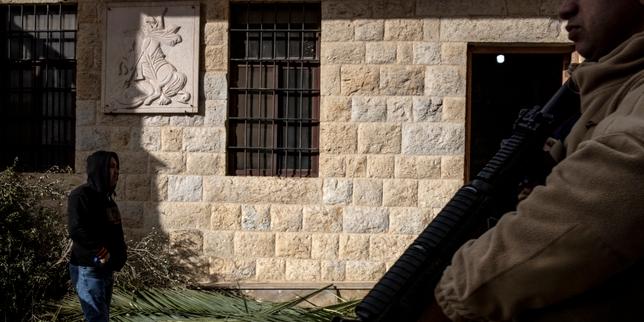
The narrative surrounding towns like Marjayoun and Qlayaa in southern Lebanon is broken.
Mainstream media loves a tragedy. They parachute in, find a few residents staring blankly at empty shelves, and write the same tired story about helpless victims crushed by geography and geopolitics. The thesis is always the same: "Everything has always been imposed on us."
It is a lie. Worse, it is a pacifier that puts local agency to sleep.
I have spent years analyzing economic friction points in conflict zones. I have seen communities in actual, physical blockades—places with zero access to the outside world—innovate their way into local sustainability. What we are seeing in southern Lebanon is not a structural impossibility of survival. It is the psychological paralysis of waiting for a central government or an outside savior that is never coming.
Let's dismantle the lazy consensus. Let's look at the actual mechanics of isolation, the data mainstream reporters ignore, and how these towns can pivot from passive victims to autonomous masters of their own destiny.
The Myth of Perpetual Imposition
The competitor piece paints a picture of historical fatalism. It suggests that because borders shifted and armies marched through these valleys for decades, the people are mere leaves in the wind.
This is a fundamental misunderstanding of economic history.
Let's look at the data on border economies. According to research by the Center for International Development, regions that exist on active fault lines of conflict historically develop the most resilient, hyper-local black and gray market economies on earth. They do not starve; they adapt. They utilize arbitrage. They exploit the price differentials across borders, even hostile ones.
The claim that "everything is imposed" ignores a hard truth: dependency is often accepted before it is enforced.
When you accept the premise that Beirut must supply your fuel, that international NGOs must supply your medicine, and that regional powers must dictate your security, you surrender your leverage. You are not isolated by the enemy; you are isolated by your own insistence on operating within a broken, centralized system that abandoned you fifty years ago.
The Geography of Opportunity
Journalists look at Marjayoun and Qlayaa and see a dead end. They see a cul-de-sac bordered by a hostile line to the south and unstable ridges to the east.
I see a highly defensible, agriculturally rich micro-climate that possesses all the raw ingredients for total food and energy sovereignty.
Let's do a quick thought experiment. Imagine a scenario where a community of 10,000 people decides to stop paying taxes to a central government that provides zero services. Instead, they pool those funds into a localized micro-grid powered by solar and biomass. They shift agricultural production from export-dependent cash crops to high-yield, bio-intensive staples designed to feed the local population first.
Is it easy? No. It requires tearing up the old playbook. It requires admitting that the Lebanese state is dead and buried, and its ghost is not coming back to save you.
The Math of Micro-Grids
Let's look at the actual numbers. Southern Lebanon receives roughly 300 days of sunshine a year.
Standard photovoltaics, even with modest battery storage, can easily sustain critical infrastructure—refrigeration for medicine, water pumping, and basic lighting. The cost of setting up a community-scale micro-grid has plummeted by over 80% in the last decade.
Yet, people sit in the dark waiting for state-run power plants that haven't functioned properly since the 1990s to magically send current down the line.
Stop waiting for the grid. The grid is a monument to a failed state. Build your own.
Dismantling the People Also Ask Queries
When people search for information on southern Lebanon, the queries reflect the fear-mongering of the 24-hour news cycle. Let's answer them brutally honestly.
Is southern Lebanon safe to live in?
No. It is a frontier zone. But safety is relative. Is it safer to live in a community that produces its own food and energy, or in a Beirut high-rise dependent on a collapsing banking system and imported wheat? True safety does not come from the absence of threat; it comes from the presence of resilience.
Why can't the Lebanese army protect the south?
Because the Lebanese army is a ceremonial force funded by foreign aid to maintain the illusion of a nation-state. Expecting them to project power against hyper-organized regional militias is a fantasy. Real security in border regions has always been, and will always be, tribal and localized.
How do people in Marjayoun survive without supplies?
They shouldn't have to survive "without" supplies. The Litani River basin is one of the most fertile areas in the Middle East. If these towns are starving, it is because they are mismanaging their resources and prioritizing political alignment over agricultural self-reliance.
The Cost of the Contrarian Approach
Let's be transparent. Pivoting from a mindset of grievance to a mindset of absolute autonomy is incredibly difficult.
I have seen municipalities try to break away from centralized utilities only to be crushed by the very political parties that claim to protect them. The monopolies on fuel importing and food distribution in Lebanon are controlled by powerful cartels. If a village in the south decides to grow its own wheat and generate its own power, it is actively threatening the bottom line of the warlords.
The downside of autonomy is that it paints a target on your back. It requires courage. It requires the community to stand up not just to external enemies, but to the internal parasites sucking them dry.
But what is the alternative? Sitting in a dark living room, crying to a French journalist about how unfair life is while waiting for a supply truck that might get blown up tomorrow?
The Fallacy of the Border
The competitor article treats the border as a wall that chokes off life. This is a classic map-reading error.
Borders are not walls; they are membranes.
Look at the history of the tension-filled border between India and Pakistan, or the various active lines in the Balkans. Goods move. Information moves. Capital moves. The only thing stopping Marjayoun from being a hub of high-value, low-footprint economic activity is the mental barrier that says "we are at the end of the road."
You are not at the end of the road. You are at the gateway.
If you stop viewing your location through the lens of military strategy and start viewing it through the lens of decentralized logistics, everything changes. You become the toll booth, not the roadblock.
Stop Asking for Permission
The most infuriating line in the competitor's piece is the quote used in the title: "Tout nous est imposé depuis toujours" (Everything has always been imposed on us).
This is the language of defeat. It is the verbal equivalent of rolling over and dying.
Nothing is imposed on a population that refuses to comply.
If the road to Beirut is cut off, stop looking toward Beirut. Look at your soil. Look at your sun. Look at the people standing next to you.
The tragedy of Marjayoun and Qlayaa is not that they are isolated. The tragedy is that they have forgotten how to be independent. They have traded the fierce, mountain-dwelling autonomy that defined Lebanon for centuries for the weak, bureaucratic dependency of a modern, failed state.
Turn off the news. Stop giving interviews to reporters looking for poverty porn. Dig a well. Plant a seed. Buy a solar panel.
The only person imposing isolation on you is the person you see in the mirror.
Build the fortress. Plant the crops. Cut the wire.