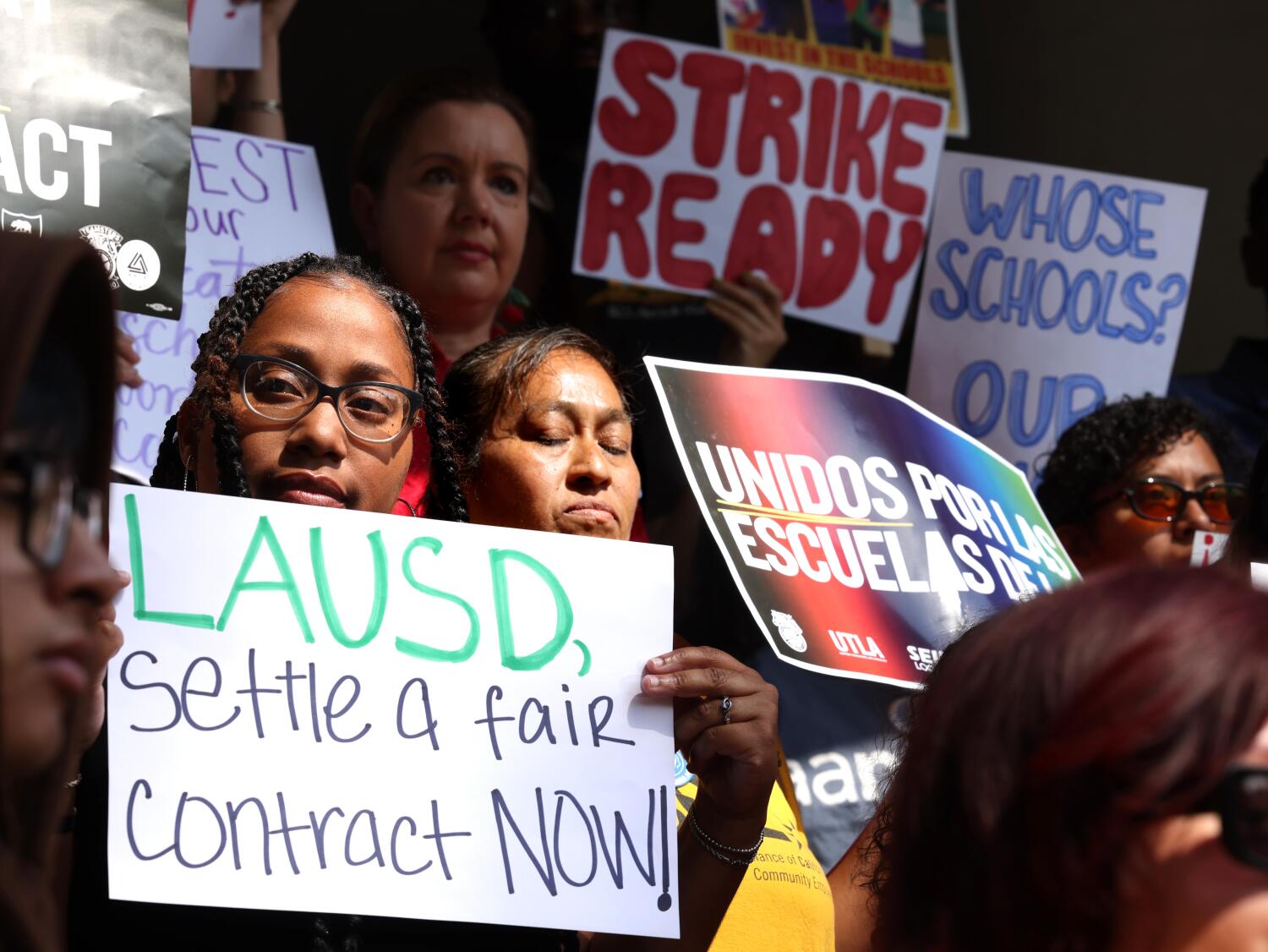
The headlines are celebrating a "victory for labor" and a "win for students." They are lying to you.
What just happened between the Los Angeles Unified School District (LAUSD) and United Teachers Los Angeles (UTLA) wasn't a resolution. It was a hostage negotiation where both sides agreed to keep the victim in the basement for another three years. The tentative agreement—pushed through hours before a total shutdown—is a textbook example of performative governance.
Mainstream media frames this as a binary: either the district is "stingy" or the union is "greedy." Both perspectives are lazy. The real crisis isn't about the percentage of a cost-of-living adjustment. It is about the fundamental insolvency of a model that prioritizes administrative bloat and pension preservation over the actual delivery of knowledge.
The Wage Increase Myth
The deal boasts a 21% salary increase over several years. On paper, it looks like a massive win. In reality, it is a desperate attempt to outrun the inflation caused by the very fiscal policies these institutions support.
When you factor in the skyrocketing cost of living in Los Angeles, this "raise" is a lateral move. It doesn't attract "the best and brightest" to the profession; it barely keeps the current staff from sliding into the gig economy. I’ve watched school boards play this shell game for decades. They offer a double-digit percentage increase but neglect to mention that the district’s long-term liabilities—specifically healthcare and pensions—are eating the budget from the inside out.
According to the California Policy Center, the unfunded liabilities for teacher pensions are a ticking time bomb. By the time this contract expires, the district will be even deeper in the red. We are paying today’s bills with a credit card that our students will never be able to pay off.
Class Size Reductions Are a Red Herring
The union loves to talk about class size. It is their most effective emotional lever. "Smaller classes mean better learning," they say. It sounds intuitive. It is also largely a distraction.
Decades of data, including the landmark Tennessee STAR study, show that while very small classes (under 17 students) can help in early grades, the marginal benefit of dropping a class from 30 to 28 is statistically negligible. Yet, the cost of hiring the additional staff required to achieve that tiny drop is astronomical.
The focus on class size is a jobs program disguised as a pedagogical strategy. It increases the union’s dues-paying membership without requiring a single change to the failing instructional methods that have left a staggering percentage of LAUSD students below grade level in math and reading. If we cared about outcomes, we would be talking about teacher quality, not teacher quantity.
The Administrative Bloat Nobody Wants to Audit
Why is the district always "broke" when it comes time for teacher raises? Because the bureaucracy has become an organism dedicated primarily to its own survival.
In the last twenty years, the ratio of administrators to students in large urban districts has surged, even as enrollment has cratered. LAUSD is hemorrhaging students. Families are fleeing to charter schools, private institutions, or leaving the state entirely. In any private sector business, a shrinking customer base leads to a leaner operation. In public education, it leads to a demand for more "coordinators," "consultants," and "equity officers."
This agreement does nothing to trim the fat at Beaudry. It treats the district's overhead as a fixed cost, when it should be the first place we look for savings. Every dollar spent on a mid-level bureaucrat who hasn't stepped into a classroom in a decade is a dollar stolen from a kid’s future.
The "Social Justice" Clause Distraction
The new contract includes provisions for "Black Student Achievement Programs" and support for immigrant families. While these are noble-sounding goals, they serve as a convenient smokescreen for the failure of the core mission: literacy and numeracy.
When a district cannot teach 60% of its students to read at grade level, adding "community schools" and "social services" to the teacher’s plate isn't an expansion of the mission. It is an admission of defeat. We are turning schools into triage centers because we have failed to make them centers of excellence.
Teachers are being asked to be social workers, psychologists, and security guards. They aren't trained for it, and they aren't paid for it. This contract cements that shift, ensuring that the next generation of LAUSD graduates will be "socially supported" but functionally illiterate in a globalized economy.
The Inevitability of the Next Strike
By "reaching an agreement" now, both the district and the union have ensured that another strike is inevitable in three years. They didn't solve the structural deficit. They didn't fix the pension crisis. They didn't stop the enrollment drain.
They just bought themselves some quiet.
If you want to actually fix the system, you stop negotiating over percentages and start negotiating over the structure itself. You move to a "money follows the student" model that forces the district to compete for every cent. You eliminate tenure to ensure that only the most effective teachers stay in the classroom. You gut the administrative office and put that money directly into the pockets of the people actually doing the work.
But that would require courage. It would require the union to admit that their interests are not always aligned with the students. It would require the district to admit that it is a failing monopoly.
Instead, we get a tentative agreement. We get a press conference. We get a few years of peace while the foundation continues to rot.
Stop congratulating the negotiators. They didn't save the schools; they just postponed the funeral.
The next time you see a "tentative agreement," ask yourself who is actually paying for it. It isn't the district, and it isn't the union. It’s the kids who will graduate with a diploma they can't read, from a city that traded their future for a temporary labor peace.
Get your kids out while you still can.