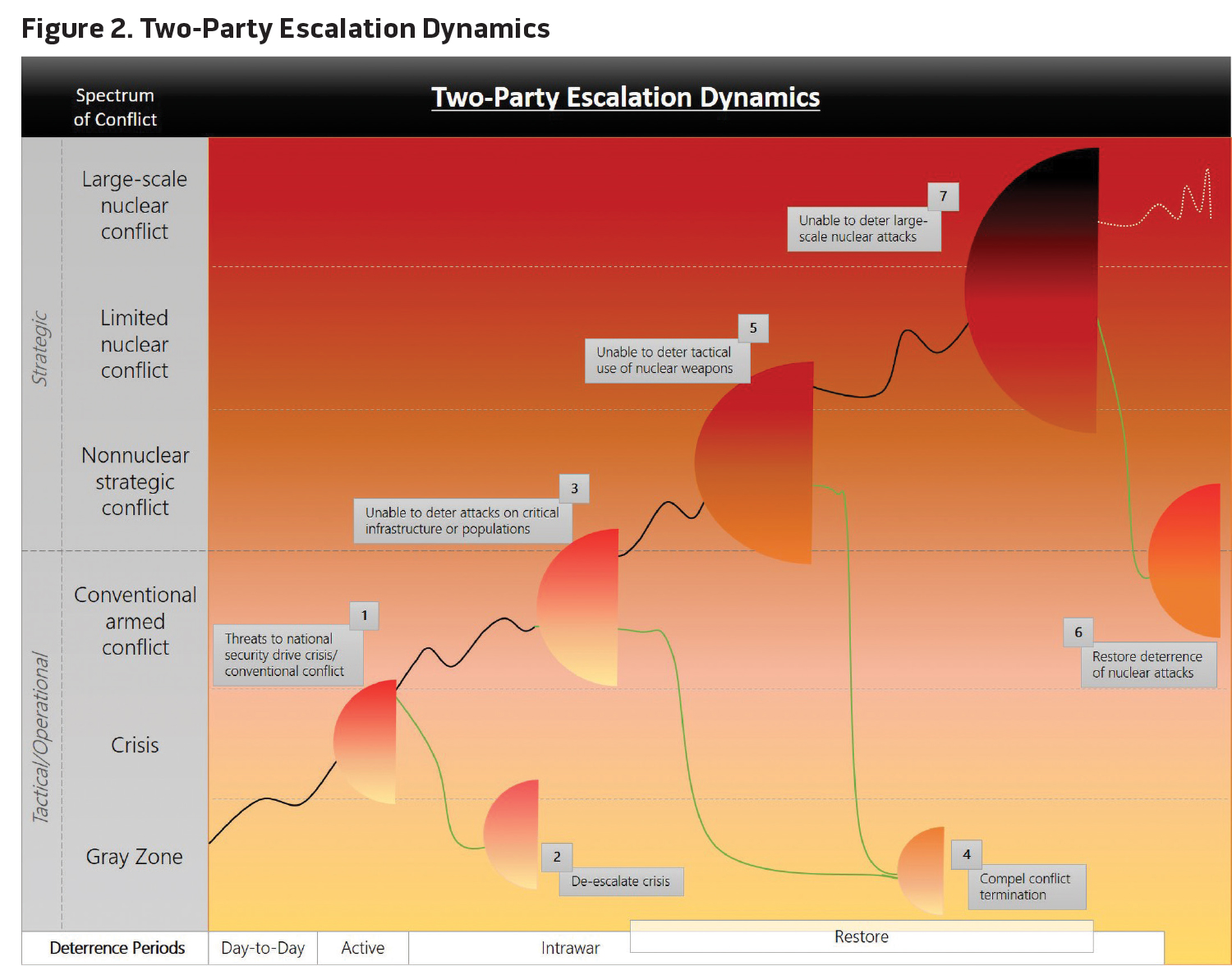
The press is currently obsessed with the flash. We see high-resolution satellite imagery of scorched tarmac and the precision of F-35s dancing around aging S-300 batteries. The narrative is always the same: Israel strikes, CENTCOM provides the "enabling architecture," and the world waits for the inevitable "escalation ladder" to reach its next rung.
This view is fundamentally broken. It treats regional warfare like a turn-based strategy game where more hits equals a higher score. In reality, these waves of strikes aren't a display of strength. They are a loud, expensive admission that the current security architecture has no idea how to handle a decentralized adversary. We are watching the sunset of the "Precision Bombing" era, yet everyone is cheering because the explosions look crisp on X. Recently making headlines in related news: Finland Is Not Keeping Calm And The West Is Misreading The Silence.
The Myth of Surgical Deterrence
Conventional wisdom suggests that if you hit a target hard enough, the opponent stops what they are doing. This is the "deterrence" trap. I have watched analysts for decades claim that taking out a specific radar site or a drone assembly plant resets the clock. It doesn't.
When Israel or the US targets "key infrastructure," they are attacking physical nodes in a system that has already evolved beyond physical dependency. We are applying 20th-century kinetic solutions to 21st-century distributed networks. You cannot bomb a supply chain that lives in thousands of nondescript basements and civilian-tier machine shops. More insights regarding the matter are covered by TIME.
Every time a multi-million dollar missile evaporates a garage full of $20,000 Shahed drones, the math shifts further away from the West. This isn't winning; it’s a slow-motion bankruptcy of the strategic imagination.
CENTCOM and the Infrastructure Obsession
US CENTCOM loves the word "infrastructure." It sounds professional. It suggests a structured, vulnerable target set. But what happens when the infrastructure is the ideology and the logistics are the black market?
The recent focus on targeting Iranian-linked assets in Iraq or Syria under the umbrella of "regional stability" ignores the primary law of the modern battlefield: adaptation is faster than procurement. Imagine a scenario where the US spends six months planning a strike on a specific logistics hub. The weapons are fired. The hub is destroyed. Total cost: $150 million. The adversary replaces the capability within six weeks using off-the-shelf components and decentralized smuggling routes at a cost of $2 million.
Who actually lost that exchange?
The "lazy consensus" in the media is that these strikes show "resolve." In reality, they show a desperate reliance on the only tool we have left because the diplomatic and economic tools have been blunted by over-use and poor execution. We are trying to solve a software problem (influence and regional hegemony) with hardware (GBU-39 Small Diameter Bombs).
The Electronic Warfare Blind Spot
While the headlines focus on the kinetic—the fire and the smoke—the real war is being lost in the spectrum. The obsession with strikes masks a terrifying reality: the gap in Electronic Warfare (EW) capability is closing.
In previous decades, Western air superiority was a given. Today, the proliferation of Russian and Chinese EW tech throughout the Middle East means that even "precise" strikes are becoming increasingly difficult and risky. The media reports on the successful hits, but they never report on the dozens of munitions that missed their mark due to GPS spoofing or signal degradation.
By focusing on the "wave of strikes," we ignore the fact that the technical cost of entry for these missions is skyrocketing. We are using a sledgehammer to kill flies, and the sledgehammer is starting to crack.
Why "Proportionality" is a Strategic Lie
You will hear talking heads discuss "proportional response." This is a comforting term designed to make the public feel like there is a steady hand at the wheel. It is a fabrication.
In a real conflict, proportionality is just another word for "stalling." If you only hit back exactly as hard as you were hit, you concede the initiative to the aggressor. You are essentially telling them they can dictate the tempo of the war indefinitely.
The current cycle of strikes in Iran and the surrounding region is the definition of a stalemate masquerading as an offensive. Both sides are performing for their domestic audiences. Israel shows its public it can reach Tehran; Iran shows its proxies it can withstand the "Zionist entity"; the US shows the world it still "leads" the region.
Meanwhile, the underlying issues—the nuclear threshold, the drone proliferation, the maritime instability—remain completely untouched.
The Logistics of the Underdog
We need to stop talking about "targeting key infra" as if we are fighting the Luftwaffe in 1944. Modern adversaries don't need massive factories.
The E-E-A-T (Experience, Expertise, Authoritativeness, Trustworthiness) of the defense establishment is built on the ruins of the Cold War. They understand how to target a tank division. They have no idea how to target a Telegram channel that coordinates a swarm of autonomous maritime drones.
If you want to actually disrupt an adversary like Iran, you don't hit a warehouse. You hit the banking interfaces that allow their front companies to operate in Dubai or Singapore. You target the technical specialists—the engineers and the procurement officers—not with bombs, but with relentless, aggressive cyber and financial isolation. But those things don't make for good headlines. They don't have the same "shock and awe" factor.
The Cost-Benefit Suicide
Let’s talk numbers. The latest reports indicate a massive expenditure of munitions for a handful of targets. This isn't sustainable.
The Western defense industrial base is creaking under the weight of supporting two major conflicts. We are depleting our stockpiles of high-end missiles for what are essentially symbolic strikes.
Imagine a scenario where a $3 million interceptor is used to take out a $50,000 drone. This is a fiscal suicide pact. The adversary knows this. They don't need to win the air war; they just need to stay in it until we run out of money or political will.
A Blueprint for Actual Disruption
If we want to stop this cycle, we have to stop playing the kinetic game.
- Stop Hitting Concrete. Start hitting the data. The command-and-control of modern proxy warfare isn't in a bunker. It's in the cloud. Disrupt the communication networks, not the launch sites.
- Aggressive Financial Kineticism. The US has the most powerful financial weapon in history: the dollar. We should be using it with the same precision and lethality as a Hellfire missile. Any entity, anywhere, that touches Iranian military procurement should be disconnected from the global financial system. No exceptions. No "diplomatic sensitivities."
- Decentralize Our Own Response. We are too reliant on carrier groups and massive airbases. They are high-value, slow-moving targets. We need to mirror the adversary. Small, mobile, autonomous systems that can deliver a payload and disappear.
The current path is a dead end. We are congratulating ourselves for hitting the same targets we hit three years ago. If the goal was deterrence, it has failed. If the goal was stability, it has failed.
The only thing these strikes have achieved is the illusion of activity. We are shadowboxing in the desert while the real opponent is already behind us.
Stop watching the explosions. Start watching the supply chain.