The recent pronouncements by the Iranian Parliament Speaker regarding "powerful responses" to external threats are not merely rhetorical flourishes; they represent the externalization of a calculated internal doctrine centered on Strategic Reciprocity. To understand the regional security environment, one must move past the surface-level alarmism of political speech and examine the underlying mechanics of Iranian deterrence, the structural constraints of its military architecture, and the logic of calibrated escalation.
The Triad of Iranian Deterrence Logic
The Iranian security apparatus operates on three distinct but interconnected pillars that define its "powerful response" capability. This framework explains why threats are issued and how they are likely to be manifested if triggered. Expanding on this theme, you can find more in: Why the Green Party Victory in Manchester is a Disaster for Keir Starmer.
1. The Cost-Exchange Ratio
Iran’s military strategy is inherently asymmetric, designed to maximize the economic and political cost to an adversary while minimizing its own resource expenditure. In this model, the "powerful response" is not a mirror of the threat (e.g., meeting a naval force with a naval force) but a disruption of the adversary's value chain. This involves targeting maritime transit lanes or energy infrastructure where the global economic impact far outweighs the localized military cost of the strike.
2. Strategic Depth via Proximate Friction
The Speaker’s reference to "enemies" acknowledges a geographic reality: Iran maintains a buffer of influence that allows it to export friction. By utilizing a network of non-state actors, Tehran ensures that any aggression against the mainland results in a multi-front activation. This creates a Force Multiplier Effect where the adversary must divide its defensive resources across several non-contiguous theaters, effectively diluting their offensive capability. Analysts at TIME have provided expertise on this situation.
3. The Threshold of Pain vs. The Threshold of War
A core component of the Iranian framework is the "Grey Zone" operation. The objective is to apply enough pressure to change an adversary’s behavior—the "powerful response"—without crossing the definitive threshold that triggers a full-scale conventional war. This requires precise calibration of kinetic actions, ensuring they are significant enough to be felt but ambiguous or localized enough to avoid a totalizing conflict.
Mechanics of the Iranian Response Function
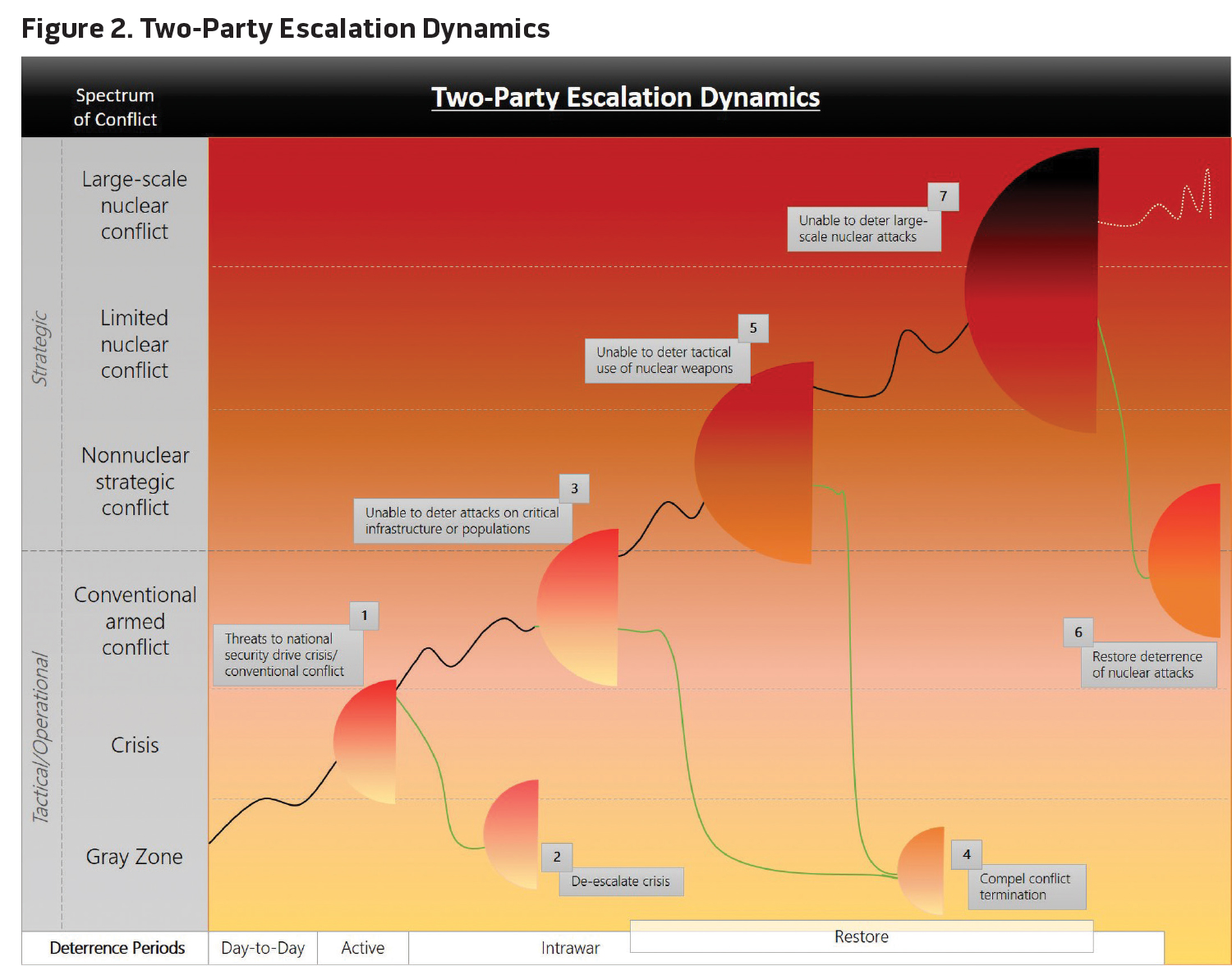
When the Parliament Speaker warns of a "big mistake," he is referencing a specific sequence of military and political escalations. This sequence is not randomized; it follows a predictable escalation ladder dictated by internal capability and regional positioning.
Stage 1: Narrative Sovereignty and Information Operations
The first stage of the response is always communicative. By framing the adversary's actions as a "big mistake," Iran attempts to seize the moral and legal high ground within its domestic and regional audience. This serves to solidify internal cohesion and signal to international observers that any subsequent kinetic action is "defensive" in nature.
Stage 2: Asymmetric Kinetic Signaling
If rhetoric fails to deter, the response shifts to hardware. This typically involves:
- Precision Missile and Drone Proliferation: Testing or deploying systems that demonstrate the ability to bypass regional missile defense systems (e.g., Iron Dome or Patriot batteries).
- Naval Harassment: Increasing the frequency of "close encounters" in the Strait of Hormuz to signal the potential for a global energy chokehold.
- Cyber Attribution: Deploying non-linear digital attacks against infrastructure or financial systems of the perceived aggressor.
Stage 3: Direct Kinetic Retaliation
The final stage is the "powerful response" proper. Historically, this has manifested as direct missile strikes against military installations, as seen in the 2020 response to the assassination of Qasem Soleimani. The calculus here is the Certainty of Retaliation. For deterrence to be credible, the actor must prove they are willing to accept the risks of direct confrontation to protect their sovereignty.
Structural Constraints and Vulnerabilities
A rigorous analysis must acknowledge that the "powerful response" framework is not without its limitations. Iranian strategy is forced to navigate several structural bottlenecks that dictate the scope of its threats.
Resource Scarcity and Economic Attrition
The "powerful response" is expensive. Sanctions and internal economic pressures create a ceiling for how long Iran can maintain a high-intensity kinetic posture. A prolonged conflict would stress the domestic supply chain and potentially lead to internal instability. Therefore, any response is likely to be "short-burst" and high-impact rather than sustained.
Technological Parity Gaps
While Iran has made significant strides in indigenous drone and missile technology, it still faces a gap in conventional air power and advanced electronic warfare compared to its primary adversaries. This gap necessitates the reliance on asymmetric tactics; a conventional "powerful response" would likely result in an unfavorable exchange ratio for Tehran.
The Proxy Dilemma
Relying on external actors for strategic depth introduces a variable of "Agency Loss." Tehran does not have 100% control over the actions of its partners. An unauthorized or over-aggressive action by a proxy could drag Iran into a conflict at a time not of its choosing, turning its "strategic depth" into a strategic liability.
Quantifying the Deterrence Equation
We can model the Iranian response probability $P(R)$ as a function of the perceived threat intensity $T$, the credibility of the adversary’s commitment $C$, and the internal political necessity for a show of strength $S$.
$$P(R) = \frac{T \cdot S}{C}$$
If the adversary's commitment $C$ is perceived as low (i.e., they are unwilling to enter a long-term conflict), the probability of a "powerful response" $P(R)$ from Iran increases, as the risk of catastrophic escalation is deemed manageable. Conversely, if $C$ is high, Iran is more likely to revert to Stage 1 or Stage 2 actions to avoid Stage 3 consequences.
Strategic Implications for Regional Stability
The Speaker's warning indicates a shift toward a more proactive deterrent posture. This suggests several likely developments in the near-term security environment.
- Hardening of Red Lines: Iran is likely to more clearly define the specific actions (e.g., strikes on nuclear facilities, targeted assassinations) that will trigger an immediate Stage 3 response.
- Increased Investment in Interdiction Capabilities: Expect a surge in the deployment of anti-access/area-denial (A2/AD) systems along the Persian Gulf.
- Diplomatic Leverage via Threat: The "powerful response" rhetoric serves as a bargaining chip. By raising the perceived risk of war, Iran seeks to force its adversaries back to the negotiating table on terms more favorable to Tehran.
The current geopolitical friction is a competition between two different theories of deterrence. The Western approach relies on the threat of overwhelming conventional force and economic isolation. The Iranian approach relies on the threat of disproportionate asymmetric disruption and the exploitation of geographic proximity. The "big mistake" mentioned by the Speaker is not a military error in the traditional sense, but a failure of the adversary to accurately calculate the cost of Iranian reciprocity.
To stabilize the region, the primary objective must be the establishment of a "De-escalation Corridor." This requires a shift from public posturing to back-channel communication where the thresholds for kinetic response are clearly articulated, reducing the risk of a "Powerful Response" being triggered by a miscalculation or a misunderstanding of intent. The current trajectory points toward a cycle of "Calibrated Retaliation" where each side attempts to have the last word, a process that inherently increases the statistical probability of an unintended systemic collapse.
Strategic actors should focus on identifying the "Off-Ramps" that allow for a preservation of face for all parties involved. This involves acknowledging Iran's security concerns while simultaneously establishing firm boundaries against regional destabilization. The failure to find this equilibrium will inevitably lead to a test of the "Powerful Response" doctrine, the results of which would be globally disruptive.