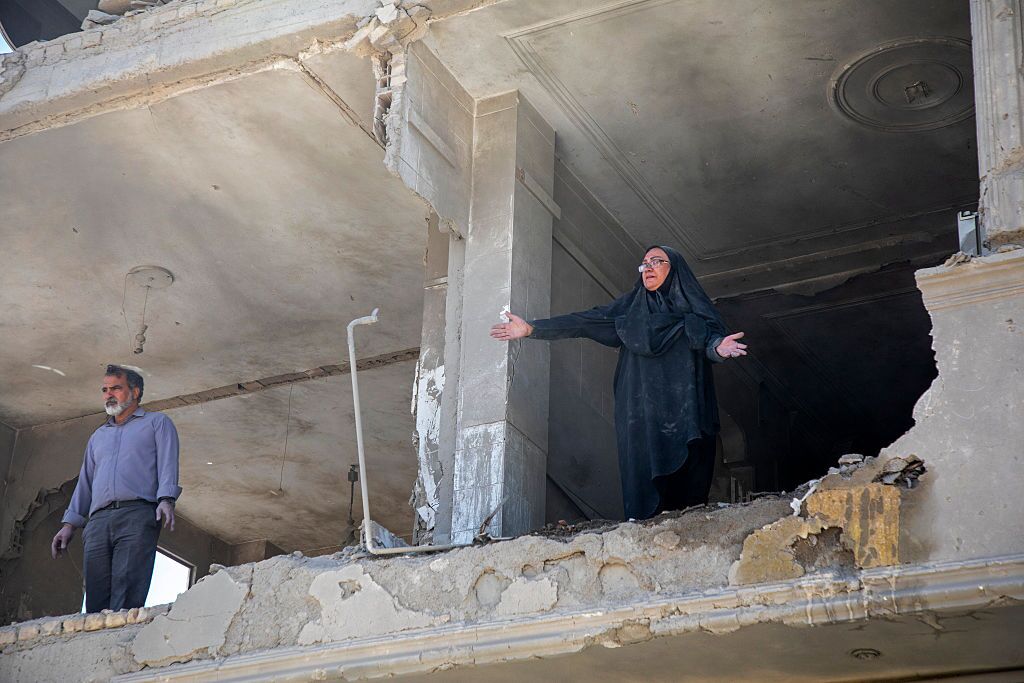
The foundation of the American dream is literally snapping. For decades, homeowners assumed that a house was a static asset, a permanent shield against the elements. That assumption is being shredded by a geological phenomenon accelerated by a shifting climate. Soils that were once predictable are now undergoing violent cycles of expansion and contraction, causing foundations to heave, walls to split, and floor plans to warp. This is not just a matter of cosmetic cracks in the drywall. It is a fundamental structural failure that is devaluing real estate and creating an uninsurable class of property.
The Science of Thirsty Ground
The primary culprit is a category of earth known as expansive clay. These soils act like a sponge. When it rains, they swell with immense pressure, capable of lifting entire concrete slabs. When the heat turns up and droughts linger, that moisture evaporates, and the ground shrinks away, leaving a void beneath the house.
The house follows the void.
Engineers call this "subsidence." In the past, these shifts occurred over decades. Now, because of more frequent and intense "flash droughts" followed by atmospheric rivers, the soil is cycling through these states with a frequency that modern residential construction was never designed to handle. A foundation can withstand a slow settle, but it cannot survive a rhythmic yanking.
Why Modern Building Codes Are Failing
We are building houses on yesterday’s data. Most local building codes rely on historical soil charts that do not account for the current volatility of the water table. Developers, pushed by the need for speed and high margins, often opt for the minimum legal requirement for foundation depth.
In many suburban developments, builders use post-tension slabs. These are concrete foundations reinforced with steel cables under high tension. While they are cost-effective and flexible, they are not invincible. If the soil beneath one corner of the house shrinks significantly more than the rest, the slab tilts. This is known as differential settlement. Once a slab tilts more than a few inches, the mechanical systems of the house—plumbing, HVAC, and electrical—begin to fail.
The Hidden Cost of Slab Leaks
When a foundation shifts, the pipes buried beneath it are the first to go. A rigid PVC drain line cannot bend with a moving house. It snaps. This creates a feedback loop. Water leaks into the soil from the broken pipe, causing the clay to swell even more in that specific spot, which further tilts the house. By the time a homeowner notices a mysterious jump in their water bill or a warm spot on the kitchen tile, the structural damage is often already in the five-figure range.
The Insurance Gap
Do not expect a policy to save you. Most standard homeowners insurance policies explicitly exclude earth movement. This clause is usually buried in the fine print, tucked away near the earthquake and flood exclusions. Unless you can prove that the foundation failure was caused by a sudden, accidental burst of a pipe—rather than the slow, agonizing movement of the soil—you are on your own.
The industry is quietly hardening. Insurance adjusters are becoming more aggressive in denying claims related to soil subsidence. They view it as a maintenance issue or an "act of God" that falls outside the scope of traditional coverage. This leaves the homeowner caught between a crumbling asset and a mounting repair bill that can easily exceed $50,000 for a standard residential piering job.
The Remediation Industrial Complex
A new industry has risen to meet this crisis. Companies specializing in foundation repair now deploy high-tech solutions like helical piers and polyurethane foam injection.
- Helical Piers: These are essentially giant steel screws driven deep into the earth until they hit load-bearing strata or bedrock. The house is then "shackled" to these piers.
- Slab Jacking: This involves pumping a high-density foam under the concrete to lift it back to its original level.
These are not permanent fixes in the traditional sense; they are life-support systems for a building that the ground no longer wants to hold. The cost of these interventions is skyrocketing as the demand increases. In states like Texas, Oklahoma, and Missouri, where expansive clay is prevalent, the wait times for reputable foundation contractors now stretch into months.
Regional Hotspots and the Value Wipeout
The crisis is not evenly distributed. The "Blackland Prairie" region of Texas, parts of the Front Range in Colorado, and the clay-heavy suburbs of London are seeing a surge in structural failures. In these areas, the "shrink-swell" capacity of the soil is so high that some houses are becoming virtually unsellable.
Savvy buyers are now bringing structural engineers to showings instead of just home inspectors. An inspector might see a crack and call it "settling." An engineer sees a warning sign of a catastrophic failure. If a house requires $40,000 in foundation work, that comes straight off the top of the home’s equity. For many middle-class families, their home is their primary investment. When the foundation fails, their net worth evaporates.
The Myth of the Maintenance-Free Home
Homeowners have been sold a lie of passivity. In the current environment, a house requires active soil management. This includes:
- Regulated Irrigation: Keeping the soil moisture consistent around the perimeter of the slab, even during a drought, to prevent the clay from pulling away.
- Extended Downspouts: Ensuring that rainwater is discharged at least ten feet away from the foundation.
- Vegetation Management: Removing large trees whose root systems can suck hundreds of gallons of water out of the soil near the house every day.
Most people don't do this. They wait until the doors stick or the windows won't open. By then, the ground has already won.
The Future of Residential Density
As the soil becomes less stable, we have to rethink where and how we build. The suburban model of sprawling, single-story homes on shallow slabs is increasingly untenable in high-risk zones. We may see a shift toward deeper, more expensive "basement" foundations even in southern climates where they were previously rare.
We are also seeing the limits of lightweight timber framing. A house that is too light doesn't provide enough dead load to resist the upward heave of expanding clay. We are essentially building kites and pinning them to a moving surface.
The reality is that our infrastructure was designed for a climate that no longer exists. The "stationary" earth is a relic of the 20th century. Today, the ground is an active participant in the destruction of the built environment. If you live on clay, your house is no longer a permanent fixture; it is a ship on a very slow, very dirty sea. You either learn to navigate the swells or you watch your equity sink into the cracks.
Stop looking at the roof and start looking at the dirt.