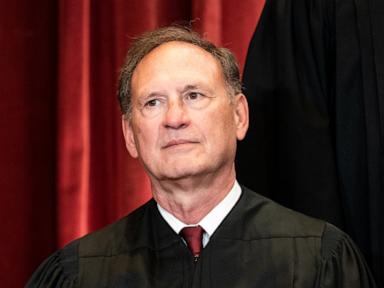
The hospitalization of Associate Justice Samuel Alito following a medical episode during a public event exposes the fragility of judicial continuity in a system designed around life tenure. While the immediate reporting focuses on the event-driven news cycle, a rigorous analysis must address the structural risks inherent in the Supreme Court’s current demographic and operational model. The incident serves as a diagnostic marker for two critical variables: the physical resilience of the Court’s personnel and the institutional impact of an unplanned vacancy.
The Mechanistic Drivers of Judicial Risk
The Supreme Court functions as a high-stakes bottleneck. Unlike executive or legislative bodies where deputies or committee members can absorb the workload of a sidelined leader, each Justice holds a non-fungible seat. The risk of a medical event is a function of three primary vectors.
1. The Actuarial Probability of Disruption
The average age of the Supreme Court bench often fluctuates in the mid-to-high 60s, a demographic profile where the statistical frequency of acute health events—cardiovascular incidents, respiratory distress, or neurological episodes—increases exponentially. When a Justice falls ill during a public engagement, it signifies a failure of the internal screening or preventative protocols that typically govern the public appearances of high-ranking officials.
2. The Operational Latency of Recovery
A hospitalization, even if brief, triggers a sequence of operational delays. The Court’s "Rule of Four"—the requirement that four Justices agree to grant a writ of certiorari—and the subsequent oral arguments require a full or near-full quorum to maintain legal legitimacy. A temporary absence creates a deadlocked 4-4 potential in ideologically charged cases, effectively freezing the development of federal law.
3. The Information Asymmetry of Federal Health
There is a profound lack of transparency regarding the baseline health metrics of lifetime appointees. Unlike the President, who undergoes a publicized annual physical, Justices operate under a veil of medical privacy. This creates a high-uncertainty environment for legal strategists and the public, where a single "fainting spell" or "illness" could be either a transient event or the first public sign of a chronic degenerative condition.
The Protocol of Crisis Management in the Judiciary
When an event like Justice Alito’s hospitalization occurs, the Supreme Court Public Information Office (PIO) manages the narrative through a strategy of minimal disclosure. This approach is designed to maintain institutional stability but often results in speculative volatility.
The mechanism of reporting follows a predictable decay:
- Phase One (The Acute Event): Discovery by third-party witnesses or event attendees. This is the period of highest misinformation.
- Phase Two (The Institutional Acknowledgment): A brief statement confirming the location (hospital) and general status (stable/resting).
- Phase Three (The Functional Update): Confirmation of whether the Justice will participate in upcoming conferences or oral arguments "on the briefs."
This sequence highlights a significant vulnerability: the Court lacks a formal, transparent protocol for temporary disability. There is no clear threshold for when a health struggle necessitates a formal recusal or a temporary step-down, leaving the decision entirely to the individual Justice’s discretion.
Analyzing the 4-4 Deadlock Function
The mathematical consequence of a Justice’s absence is the increased probability of an affirmed lower court ruling. When the Court is split 4-4, the judgment of the court below stands, but no national precedent is set. This creates a "legal shadow zone" where the law differs by circuit, undermining the Court’s primary mission of providing uniform federal guidance.
The cost of this deadlock is measurable in:
- Litigation Overhead: Corporations and individuals must continue to litigate the same issue in different jurisdictions because the Supreme Court failed to provide a definitive ruling.
- Strategic Stalling: Parties in cases currently before the Court may attempt to delay proceedings if they believe a returning Justice would swing the vote in their favor.
- Jurisdictional Fragmentation: A split Court leaves the "law of the land" in a state of entropy.
The Cognitive and Physical Demands of the Bench
The workload of a Justice is frequently underestimated by outside observers. The role requires the synthesis of thousands of pages of complex legal briefing, active participation in high-pressure oral arguments, and the authorship of precise, logically airtight opinions.
Physical health is not merely a matter of presence; it is a prerequisite for cognitive stamina. A Justice recovering from an acute illness faces a diminished capacity for the "deep work" required to navigate the intricacies of constitutional law. If a Justice returns to the bench before full physiological recovery, the risk shifts from institutional vacancy to the risk of diminished judicial output—an outcome that can have long-tail effects on the quality of American case law.
The Infrastructure of Judicial Longevity
The United States is an outlier among modern democracies in its commitment to life tenure without a mandatory retirement age. Most comparable high courts in Europe or the British Commonwealth utilize either age caps (typically 70 or 75) or fixed terms (e.g., 9 or 12 years).
The lack of these "safety valves" in the U.S. system means that the only exit ramps are voluntary retirement or death. This binary structure incentivizes Justices to remain on the bench even as their health fluctuates, as the timing of their departure is often viewed through a partisan lens. The hospitalization of a senior Justice like Alito is a reminder that the biological reality of the personnel eventually collides with the static nature of the institution.
Quantifying the Strategic Risk to Pending Dockets
Justice Alito has historically been a prolific author of majority opinions in significant cases involving administrative law, religious liberty, and executive power. His absence, or even a temporary reduction in his involvement, shifts the internal drafting burden to the other eight Justices.
This creates a secondary effect: Workload Compounding. When one Justice is unable to draft an assigned opinion, that work must be reallocated. This increases the "mental load" on the remaining Justices, potentially leading to a rush toward the end of the term (typically June) and a decrease in the analytical rigor of the final products.
Furthermore, the "Internal Deliberation Loop" is disrupted. The exchange of memos and "flimsies" (draft opinions) relies on a constant flow of feedback. If a key voice is removed from this loop due to illness, the final opinions may lack the nuance or the specific legal compromises necessary to form a durable majority.
Probabilistic Forecasting of Judicial Vacancies
Actuarial science suggests that the probability of a vacancy on the Supreme Court increases by approximately 5% every year a Justice remains on the bench past age 70. For a Justice in their mid-70s, the "Total Risk Score" is a composite of:
- The Baseline Morbidity Rate: Standard age-related health decline.
- The Stress Multiplier: The physiological impact of high-stakes decision-making and public scrutiny.
- The Travel/Event Factor: Public speaking tours and external engagements increase exposure to pathogens and physical exhaustion.
The incident involving Justice Alito was a direct result of the third factor. It highlights the need for a "Judicial Continuity Protocol" that limits non-essential travel for senior members of the Court during active terms to mitigate the risk of an unplanned vacancy.
The Mitigation of Systemic Fragility
To address the recurring instability caused by the health of aging Justices, the legal community must move beyond the "death watch" narrative and toward structural reform. While constitutional amendments for term limits are politically improbable in the short term, internal administrative changes could provide a buffer.
- Mandatory Health Disclosures: Implementing a confidential but standardized medical review process for all federal judges.
- Emergency Quorum Rules: Expanding the ability of retired "Senior Status" Justices to fill temporary vacancies on the Supreme Court to avoid the 4-4 deadlock.
- Digital Deliberation Protocols: Formalizing the process for Justices to participate in conferences and vote remotely during periods of convalescence.
The current system relies on the physical robustness of nine individuals to maintain the balance of the entire American legal framework. Justice Alito’s hospitalization is not an isolated health event; it is a stress test of the institutional architecture. The data indicates that without structural adjustments, the frequency of these "shocks" will only increase as the Court's personnel continue to age in a high-pressure environment.
The strategic play for the Court is the immediate formalization of "Remote Participation Standards." By decoupling physical presence from judicial function, the Court can neutralize the immediate threat of a 4-4 deadlock during periods of medical recovery. This preserves the individual Justice's privacy while ensuring the institution remains functional regardless of the health status of its members. Failure to adopt such measures leaves the supreme legal authority of the nation at the mercy of unpredictable biological outcomes.


