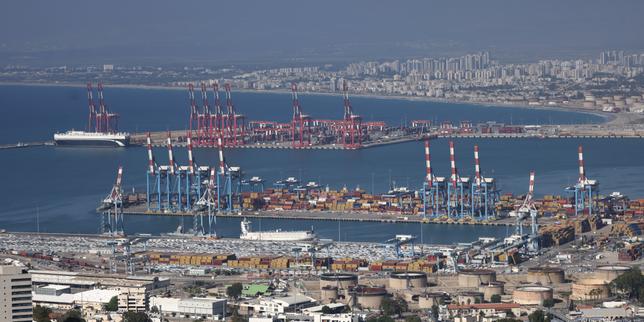
The arrival of the Russian bulk carrier Zhibek Zholy at the port of Haifa did more than just offload thousands of tons of grain. It ignited a diplomatic firestorm that exposed the brittle nature of Middle Eastern neutrality in the face of the war in Ukraine. While the vessel docked quietly, the noise it generated in the corridors of power in Kyiv and Jerusalem revealed a deep-seated friction over the origin of global food supplies. Ukraine maintains that the cargo consists of stolen goods plundered from occupied territories. Israel finds itself trapped between its need for food security and the mounting pressure to enforce international sanctions against Russian assets.
The dispute centers on a specific shipment of corn and wheat that Kyiv claims was illegally seized from the Zaporizhzhia and Kherson regions. For months, Ukrainian officials have tracked these "ghost ships"—vessels that often turn off their AIS transponders to mask their movements before reappearing in neutral ports. When the Zhibek Zholy appeared in Haifa, the Ukrainian embassy in Tel Aviv immediately demanded that the cargo be seized and analyzed. Israel refused. The decision was not a simple administrative oversight; it was a calculated move in a high-stakes geopolitical game where grain has become as much of a weapon as a cruise missile.
The Logistics of Plunder
To understand how a single ship causes a rift between allies, one must look at the mechanics of the black market for grain. Since the early stages of the invasion, Russia has controlled key ports like Berdyansk and Mariupol. Grain elevators in these regions were full when the frontline shifted. Investigative tracking suggests a systematic pipeline where trucks move Ukrainian grain to Crimean ports, where it is mixed with Russian harvests to dilute its "chemical signature."
By the time the grain reaches a terminal in Haifa, the paperwork looks legitimate. The bill of lading says the cargo is Russian. The certificates of origin are stamped by Russian authorities. For a port authority, rejecting such a shipment requires an appetite for legal and diplomatic risk that many are unwilling to stomach. Israel’s Ministry of Foreign Affairs and the Ministry of Transport have largely hidden behind the shield of "proper documentation," arguing that they have no legal basis to seize a private commercial shipment without ironclad proof of a crime.
Kyiv argues that the lack of "ironclad proof" is a deliberate byproduct of the theft. They have offered satellite imagery and DNA testing of the grain—a process that can identify the specific soil composition where the crops were grown—to prove the cargo belongs to Ukraine. Israel’s reluctance to utilize these methods signals a desire to avoid a precedent that would force them to police every Russian-linked vessel entering their waters.
The Haifa Dilemma
Haifa is the gateway for Israel’s food supply. The country is not self-sufficient in wheat or corn, relying heavily on imports from the Black Sea region to feed its population and sustain its livestock industry. When the war began, the sudden spike in global prices put immense pressure on the Israeli economy.
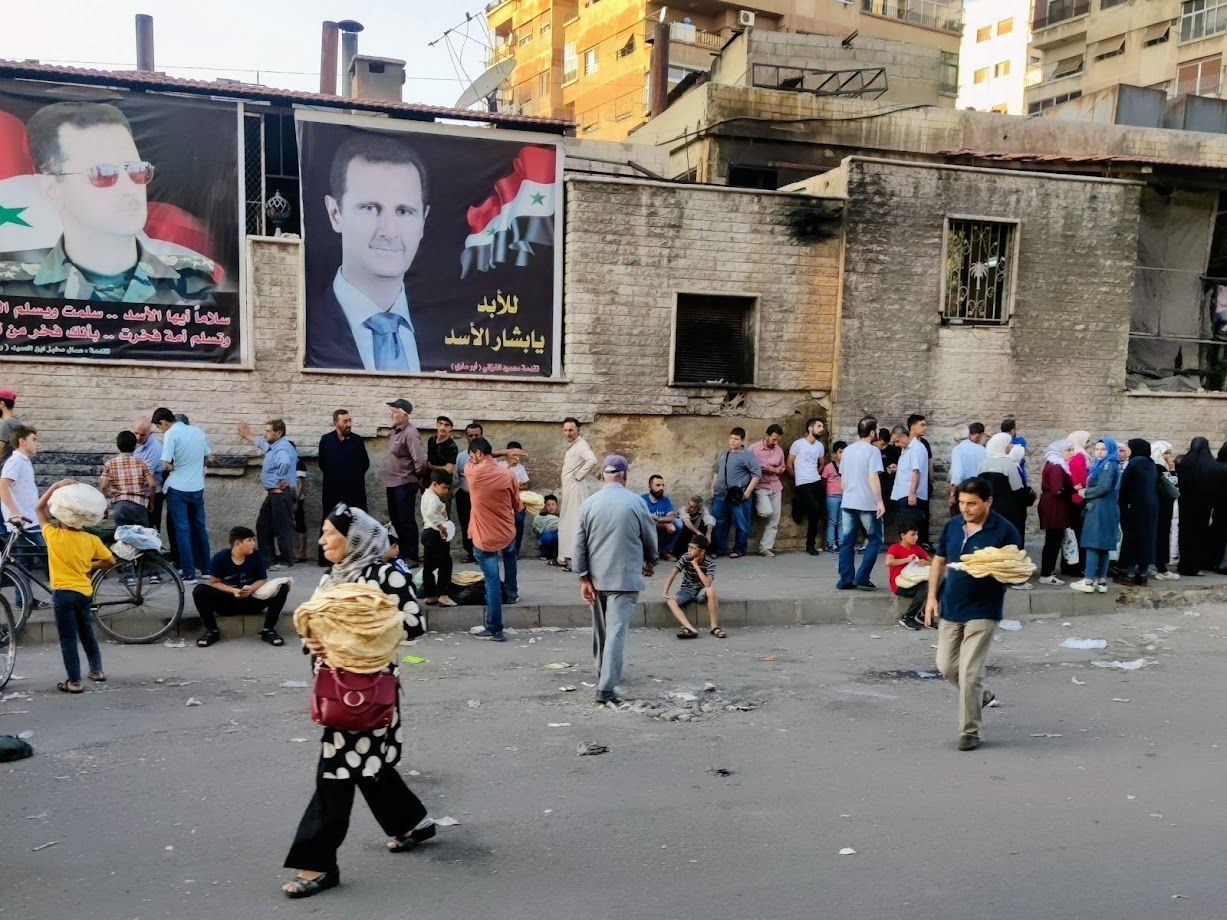
From a purely cold-blooded business perspective, turning away grain is an expensive moral stance. If Israel begins seizing Russian ships, it risks a retaliatory response from Moscow. This is not a minor concern. Russia maintains a massive military presence in Syria, right on Israel’s northern border. The "deconfliction" mechanism that allows the Israeli Air Force to strike Iranian targets in Syria depends entirely on a functional relationship with the Kremlin.
Ukraine sees this as a betrayal of democratic values. President Zelenskyy has repeatedly called on Israel to take a firmer stand, but the grain incident shows the limits of that influence. In the eyes of the Israeli cabinet, a cargo of disputed corn is not worth a military crisis in the Levant. This pragmatic—some would say cynical—approach has turned Israeli ports into a "gray zone" where Russian-flagged or Russian-managed vessels can still find harbor while much of the West is locked down.
Mapping the Shadow Fleet
The Zhibek Zholy is part of what maritime analysts call the "shadow fleet." These are vessels that operate under flags of convenience or belong to companies with complex, layered ownership structures designed to evade scrutiny. The ship itself has a checkered history, having been detained in Turkey previously under similar allegations before being allowed to sail.
The fact that it chose Haifa as its destination suggests that the operators believed they would find a path of least resistance. They were right. While the Ukrainian embassy provided coordinates and vessel tracking data, the ship was processed through the port with routine efficiency. This creates a moral hazard. If one major port accepts the "laundered" grain, it validates the entire supply chain of the occupation.
The Mechanics of Grain Laundering
- Disabling Transponders: Ships go "dark" near the Crimean coast to hide the exact location of loading.
- Ship-to-Ship Transfers: Moving cargo between vessels in international waters to break the paper trail.
- Forged Certifications: Issuing new documents in Sevastopol that claim the grain originated in the Russian interior.
- Physical Mixing: Blending stolen Ukrainian wheat with Russian stocks to make laboratory identification more difficult.
Each of these steps is designed to create plausible deniability for the buyer. The Israeli importers who purchased the cargo from the Zhibek Zholy can claim they are merely buying commodities from a licensed supplier. They are shielded by the very complexity of the system they are exploiting.
The Failure of International Maritime Law
The friction in Haifa highlights a glaring hole in international maritime law. There is currently no unified mechanism to handle "sovereign theft" of commodities on the high seas. While the UN has passed resolutions condemning the seizure of Ukrainian assets, these lack the enforcement teeth required to compel a sovereign state like Israel to act as a maritime policeman.
For the Ukrainian government, the frustration is compounded by the fact that Israel has benefited from the very grain corridors that Ukraine fought to establish. Israel wants the cheap prices that come with a steady supply, but it is seemingly unwilling to perform the due diligence required to ensure that supply isn't stolen. This isn't just about money; it’s about the erosion of the concept of private property on a national scale.
If a state can simply seize the agricultural output of its neighbor and sell it on the global market with impunity, the entire foundation of international trade is compromised. Israel’s defense—that it is simply following standard port protocol—ignores the reality that these are not standard times.
A Growing List of Grievances
The grain dispute is the latest in a series of "points of contention" between Kyiv and Jerusalem. From the refusal to provide the Iron Dome missile defense system to the complexities of visas for Ukrainian refugees, the relationship has been strained for years. The Zhibek Zholy incident serves as a physical manifestation of this tension. It is a 140-meter-long reminder that Israel’s interests do not always align with the Western consensus on Russia.
Critics of the Israeli position point out that the country is quick to demand international action against Iranian vessels carrying oil to Hezbollah, citing the "terrorist origin" of the cargo. Yet, when it comes to Russian grain taken from scorched Ukrainian fields, the legal standard for intervention suddenly becomes impossibly high. This perceived double standard has not gone unnoticed in the European Union, which has been tightening its own port restrictions.
The commercial entities involved in the Haifa shipment have remained largely silent, hiding behind non-disclosure agreements and the anonymity of the global commodities market. This silence is profitable. As long as the grain flows and the bread prices in Tel Aviv remain stable, there is little domestic political pressure to change course.
The Economic Reality vs. The Moral High Ground
We must look at the numbers to see why this persists. Ukraine was providing roughly 50% of Israel’s grain imports before 2022. The war caused a massive supply vacuum. Russia, sensing an opportunity, stepped in to fill that gap, often offering prices that are significantly below the global average. For an Israeli government battling inflation, the temptation to look the other way is immense.
But the long-term cost may be far higher than the short-term savings on a bushel of wheat. By allowing its ports to become a destination for disputed goods, Israel risks being labeled as a "sanction-evasion hub." This could eventually impact its trade relations with the US and the EU, both of whom have shown an increasing willingness to use secondary sanctions against entities that facilitate Russian trade.
The Ukrainian response has shifted from diplomatic requests to public shaming. By publicizing the docking of ships like the Zhibek Zholy, they are betting that the "reputational tax" will eventually become too high for Israel to pay.
The Path of Least Resistance
There is no indication that Israel plans to change its policy. The government’s stance remains that it will comply with "binding" international sanctions—which usually means those issued by the UN Security Council. Since Russia holds a veto on that council, no such sanctions will ever exist. This creates a convenient loop that allows Israel to maintain its neutrality while technically following the letter of the law.
The grain in the silos of Haifa will be milled, baked, and sold. The Zhibek Zholy will sail back to the Black Sea to pick up another load. The documentation will remain impeccable on paper and fraudulent in reality. This is the new normal of the global grain trade, where the origin of the food is less important than the price at the pump and the stability of the local bakery.
Ukraine’s fight to reclaim its grain is a fight for the principle that borders matter, and that the spoils of war should not be tradable on the open market. Israel’s refusal to engage is a reminder that in the cold reality of Middle Eastern geopolitics, survival and stability are the only currencies that matter. The ship in Haifa is just a symptom of a world where the rule of law stops at the water's edge.
Jerusalem is betting that the world will eventually forget about the Zhibek Zholy. Kyiv is betting that the world cannot afford to.