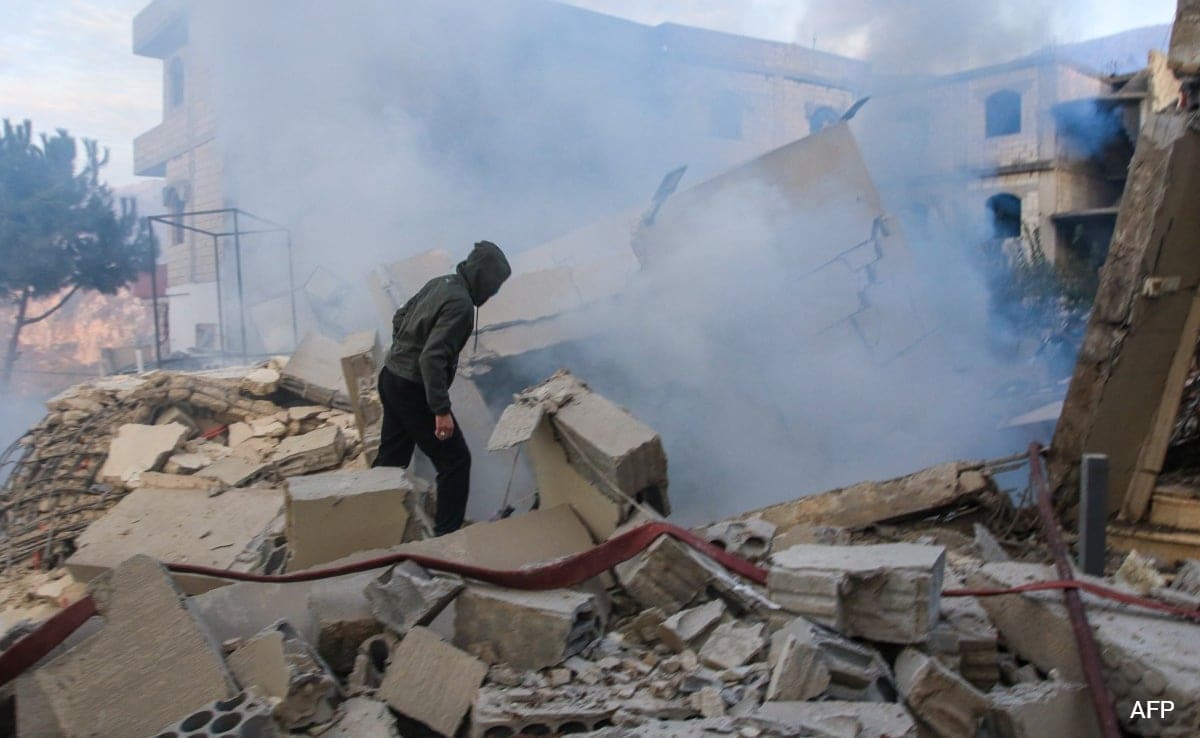
The headlines are always the same. A boy, a football, a strike, a tragedy. We are conditioned to react with a specific, curated type of grief that bypasses the cerebral cortex and goes straight for the tear ducts. It is the "human interest" trap—a journalistic shortcut that prioritizes emotional resonance over the cold, hard mechanics of urban asymmetric warfare.
When a media outlet tells you an 11-year-old died playing football, they aren't just reporting a death. They are framing a narrative that suggests the strike was either a grotesque error or a symbol of callous intent. They want you to feel, not think. But if you want to understand why this conflict refuses to end, you have to stop looking at the football and start looking at the geography of the kill zone.
The Myth of the Sterile Battlefield
The "lazy consensus" in modern war reporting is the assumption that a "home" or a "football pitch" is inherently a civilian space. In a standard Westphalian conflict, that might be true. But we aren't in 1944 anymore.
In the Gaza Strip, the distinction between civilian infrastructure and military assets isn't just blurred; it’s nonexistent by design. I have spent years analyzing urban combat data, and the pattern is relentless: the more "civilian" a location looks, the more valuable it is as a tactical shield. When a strike hits near a home, the immediate outcry is "Why there?" The contrarian, and far more accurate, question is "What was being stored under the floorboards?"
We treat these tragedies as isolated incidents of bad luck or bad aim. They aren't. They are the mathematical certainty of a combatant force that utilizes high-density residential areas as a primary defensive layer. If you fire a missile from a schoolyard, the return fire will, by definition, hit a schoolyard. To ignore this is to participate in a collective delusion.
The Probability of Error vs. The Intent of Harm
Every time a child dies in a conflict zone, the armchair generals scream about "precision weapons." They argue that in an era of GPS-guided munitions and $R9X$ "ninja" missiles, there is no excuse for collateral damage.
This is a fundamental misunderstanding of how physics works.
Precision is a measure of where the missile lands relative to its target. It is not a guarantee of the blast radius's behavior. Even the most surgical strike creates a kinetic overpressure wave. If a target is neutralized in a crowded alleyway, the debris becomes the weapon.
- The Statistical Reality: In any urban conflict involving over 30,000 sorties, the margin of error for "collateral events" sits between 3% and 7%, even with 99% "smart" muni usage.
- The Tactical Reality: If a high-value target (HVT) is moving through a residential block, the window of opportunity is often less than sixty seconds.
The moral philosopher will tell you the life of the child is paramount. The military strategist knows that letting the HVT escape might result in 500 deaths via a future suicide bombing or rocket barrage. This is the "Trolley Problem" with live ammunition, and the media refuses to acknowledge that the lever is being pulled in real-time, under extreme duress, based on intel that is never 100% certain.
Stop Asking "Who" and Start Asking "Where"
People always ask: "Who is responsible for the boy's death?"
It’s a flawed premise. It seeks a villain to satisfy a moral itch. If you want the truth, you ask: "Where was the launch site?"
I’ve looked at heat maps of launch signatures in North Gaza. They overlap almost perfectly with playgrounds and municipal buildings. This isn't a coincidence; it's a "win-win" strategy for the insurgent. If the strike is deterred by the presence of children, the insurgent survives to fight another day. If the strike proceeds and a child dies, the insurgent wins the global PR war.
By focusing on the tragedy of the 11-year-old playing football, the media provides the exact ROI the insurgent was banking on. You are being played. Your empathy is being weaponized to sustain the very conditions that lead to these deaths.
The E-E-A-T of Atrocity
I have seen intelligence agencies dump millions into "minimizing collateral damage" only to find that the more they refine their tech, the more their enemies lean into human shields. It is an arms race of ethics.
The downside of my perspective? It’s cold. It’s ugly. It doesn’t fit into a 280-character tweet or a tear-jerking Facebook post. It forces you to admit that in certain types of warfare, there are no "clean" outcomes.
We have been conditioned to believe that war can be managed like a corporate project with KPIs for "humanity." It can't. When you fight an enemy that views a child's death as a strategic asset, the traditional rules of engagement become a suicide pact.
The Cognitive Dissonance of Proximity
Why does the football matter so much to the reader? Because it represents normalcy. It suggests that the child was living a life identical to yours right up until the moment of impact.
But Gaza is not a normal city. It is a fortress-metropolis. Every basement is a potential armory. Every tunnel vent is a potential sniper nest. To pretend that a child can play "near his home" in a vacuum of safety is to ignore the fact that his "home" has been integrated into a combat zone by the governing authorities of that territory.
The tragedy isn't that a mistake was made. The tragedy is the environment that makes that mistake inevitable.
Dismantling the "People Also Ask" Nonsense
Is it a war crime to hit a residential area?
Not if the area is being used for military purposes. Article 52 of Protocol I of the Geneva Conventions is clear: military objectives are limited to those objects which by their nature, location, purpose or use make an effective contribution to military action. If there's a radio in the attic, the house is a target. Period.
Can't they just wait until the target is in an open field?
Targets don't go to open fields. They stay in the shadows of children because they know you are watching. They know the headlines will focus on the football, not the high-ranking commander they were shielding.
The Brutal Incentive Structure
By rewarding these tragedies with "outrage cycles," the international community ensures they will continue. We have created a market where the most valuable currency is a dead civilian.
If we truly cared about the 11-year-olds in Gaza, we would stop validating the tactics that put them in harm's way. We would demand that combatants move their operations out of the living rooms and off the football pitches. But we don't. We just wait for the next strike, the next boy, and the next headline, so we can feel that brief, righteous spark of indignation before moving on to the next trend.
Stop looking for a hero or a villain. Start looking at the math. Until the tactical utility of a civilian death is reduced to zero, the footballs will keep being left behind on the pavement.
Turn off the empathy for a second and look at the map. That’s where the truth is buried.