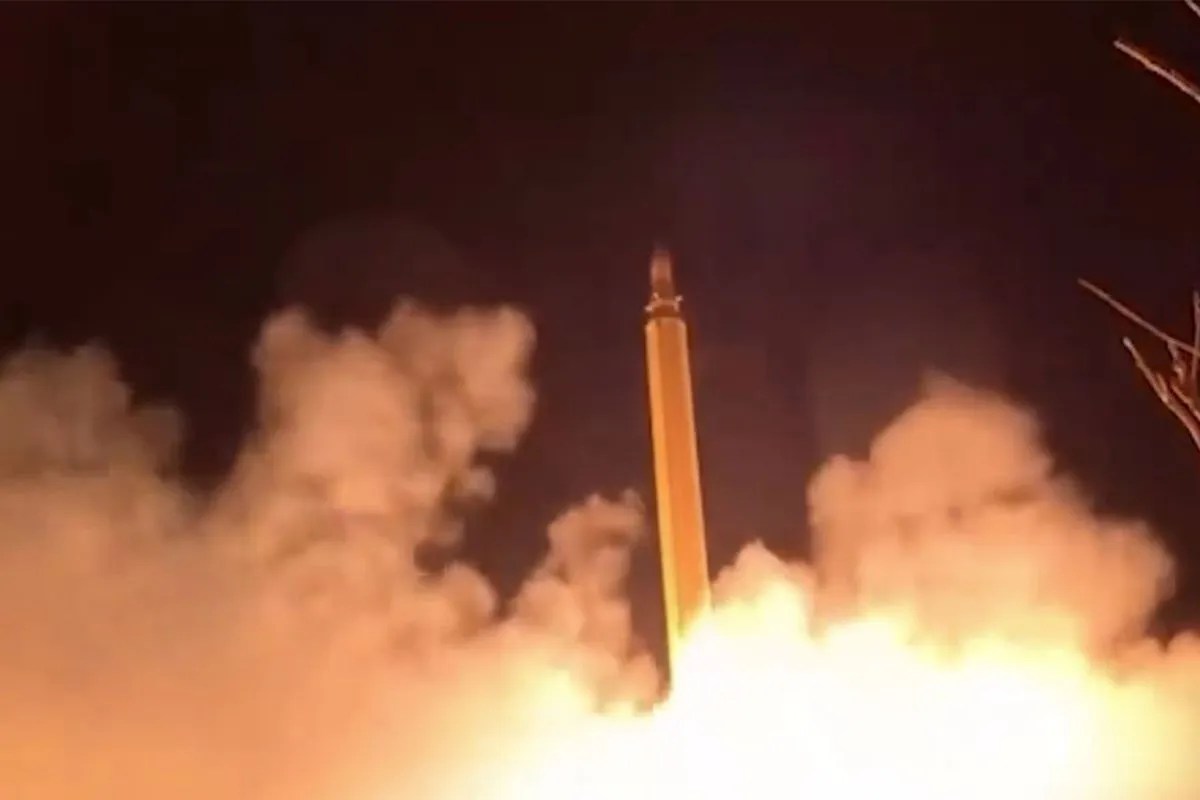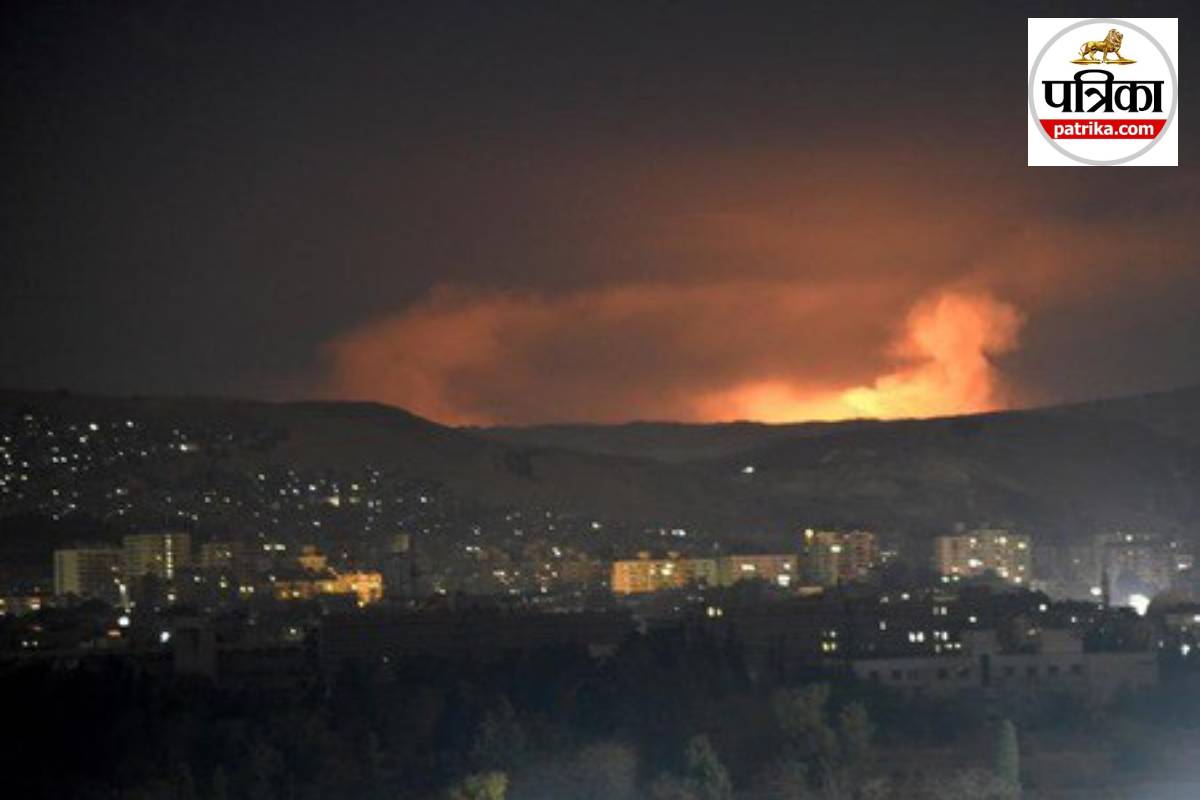
The shadow war is over. We're now watching a direct, high-stakes confrontation that's rewriting the rules of Middle Eastern diplomacy in real-time. When Israel launched its latest round of missile strikes, it wasn't just hitting military targets. It was sending a loud, clear message to Tehran that the old "strategic patience" is dead. Iran responded with a frantic warning to the United States to stay out of the line of fire, but that's easier said than done when the entire region is a tinderbox.
You've probably seen the headlines about "lethal missiles" and "retaliation." But let's cut through the noise. This isn't just about two countries hating each other. It’s about a fundamental shift in how power is projected. For decades, Iran used proxies like Hezbollah and Hamas to do its dirty work. Now, the masks are off. Israel is striking directly at Iranian soil, and Iran is forced to decide whether it wants a full-scale war that could end its current regime or a humiliating climbdown. Learn more on a related issue: this related article.
The Reality of Israel’s Missile Strategy
Israel doesn't fire missiles just to make a point. Every strike is calculated to degrade specific capabilities. In this latest exchange, the focus has been on air defense systems and drone production facilities. Why? Because if you take out the "eyes" of the Iranian military, the next strike becomes ten times easier.
The Israeli Air Force is arguably the most experienced in the world when it comes to long-range precision strikes. They aren't just using standard bombs. We're talking about sophisticated stand-off weapons that can be fired from outside Iranian airspace, making it incredibly difficult for Iran's aging Russian-made S-300 systems to intercept them. It’s a lopsided technological fight. Israel has the F-35 "Adir" stealth fighters; Iran has a collection of 1970s-era American jets and newer, but still outmatched, Russian hardware. Further reporting by Reuters explores related perspectives on the subject.
When Israel hits a target in Isfahan or near Tehran, they're proving they can reach any corner of the Islamic Republic. It's a psychological blow as much as a physical one. They're telling the Iranian leadership, "We know where you sleep, and we can get to you whenever we want."
Iran's Warning to Washington is a Sign of Fear
The most telling part of this entire saga is Iran’s desperate plea for the U.S. to "step aside." Through various Swiss diplomatic channels—the usual way these two talk—Tehran warned Washington that if they interfere, American bases in Iraq and Syria will be targeted.
But look closer. This isn't a position of strength. It's a plea for a fair fight, or rather, a fight where they don't get obliterated by the world's only superpower. Iran knows it can't handle Israel and the U.S. simultaneously. By telling the U.S. to stay back, they're trying to contain the conflict. They want a "controlled" escalation. They want to fire some missiles, claim a "victory" for their domestic audience, and then go back to the status quo.
The problem is that Israel isn't interested in the status quo anymore. The October 7th attacks changed the Israeli mindset. They've decided that living under the constant threat of an Iranian-backed "ring of fire" is no longer acceptable. So, while Iran tries to set boundaries for the U.S., Israel is busy erasing the boundaries Iran thought it had.
Why This Isn't Just Another Border Skirmish
We've seen tensions before, but this feels different because it is different. The sheer scale of the ballistic missile volleys Iran has sent toward Israel in recent months is unprecedented. We're talking about hundreds of projectiles in a single night.
- The Iron Dome isn't the only player. People always talk about the Iron Dome, but for these types of long-range threats, Israel uses the Arrow 2 and Arrow 3 systems. These intercept missiles in the stratosphere.
- The Cost Disparity. It costs Iran a fraction of the price to build a drone or a missile compared to what it costs Israel to intercept it. This is a war of attrition.
- The Intelligence Gap. Israel’s Mossad has repeatedly shown it has deep roots inside Iran. From stealing nuclear archives to using remote-controlled machine guns, their reach is terrifyingly precise.
Iran’s internal stability is also a factor. The regime is dealing with a tanking economy and a population that is increasingly fed up with seeing their national wealth spent on foreign wars while they struggle to buy bread. A massive war with Israel could be the spark that ignites a domestic revolution. The Ayatollahs know this. Every move they make is a balancing act between looking tough and staying alive.
The Role of Global Energy Markets
Let's talk about why you should care, even if you’re thousands of miles away. The Strait of Hormuz. Roughly 20% of the world's oil passes through this narrow waterway. If Iran feels backed into a corner, they’ve always threatened to shut it down.
If that happens, gas prices don't just go up—they rocket. We’re talking about a global economic shockwave that would make the post-COVID inflation look like a walk in the park. This is why the U.S. is so desperate to prevent a total war. It’s not just about defending Israel; it’s about defending the global economy.
Moving Past the Rhetoric
Don't believe every "official statement" coming out of Tehran or Jerusalem. Both sides are masters of psychological warfare. Iran will claim they hit vital targets even when their missiles land in an empty field. Israel will stay silent about most of its operations to keep the enemy guessing.
The real indicators of what happens next aren't found in tweets or press releases. Watch the flight patterns of tanker aircraft. Watch the movement of U.S. carrier strike groups. Watch the price of Brent Crude. Those are the only metrics that don't lie.
If you want to stay ahead of this, stop looking at the day-to-day headlines and start looking at the geography. Iran is physically large and mountainous, making a ground invasion impossible and undesirable for Israel. Israel is tiny, meaning one lucky hit on a major city could be catastrophic. This is why Israel focuses so heavily on "preemptive defense." They can't afford to lose even once.
Stay informed by tracking regional news outlets like Al-Arabiya or Haaretz for localized perspectives, but always verify through satellite imagery analysis if you can find it. The next few weeks will determine if we're headed for a regional realignment or a generational catastrophe. Keep your eyes on the moving parts, not just the loud explosions.