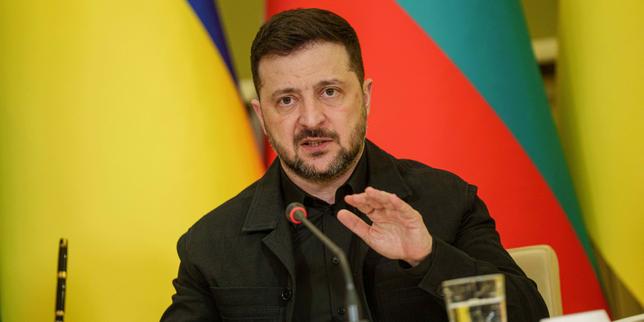
Volodymyr Zelenskyy just dropped a bombshell that many didn't see coming. After years of insisting that Ukraine would only negotiate once every single Russian soldier left its soil, the tone in Kyiv is shifting. It’s not a surrender. Far from it. But the Ukrainian President’s recent admission that he’s open to discussing "any type" of ceasefire marks a massive turning point in the geopolitical chess match.
You've probably seen the headlines. They're often dry or overly cautious. But let’s look at the reality on the ground. Ukraine is tired. The West is distracted. The front lines have turned into a brutal, grinding war of attrition where gains are measured in meters, not kilometers. Zelenskyy isn't just talking to the Kremlin here; he’s talking to Washington, Berlin, and his own people. He's signaling that the era of "all or nothing" might be evolving into something more pragmatic.
The Strategy Behind the Sudden Openness
Don't mistake this for weakness. In the world of high-stakes diplomacy, saying you're "open to talk" is a power move. It puts the ball squarely in Vladimir Putin's court. If Russia refuses to engage with a leader who just said he's willing to discuss a ceasefire, Moscow looks like the sole aggressor to the remaining neutral countries in the Global South.
Zelenskyy’s shift comes at a moment when military aid from the United States feels more like a roller coaster than a reliable pipeline. He knows that 2026 is a different beast than 2022. The initial adrenaline of the invasion has faded. What’s left is a cold, hard calculation about how much more a nation can endure before the social fabric starts to fray.
People often forget that a ceasefire isn't a peace treaty. It’s a pause. It’s a chance to stop the dying while the diplomats argue in wood-paneled rooms in Switzerland or Qatar. By signaling flexibility, Zelenskyy is trying to regain the initiative. He’s essentially saying, "We’re ready to stop the bleeding, are you?"
What a Ceasefire Actually Looks Like in 2026
If you think this means Russia just keeps what it has and everyone goes home, you haven't been paying attention. A ceasefire in the current Ukrainian context is incredibly messy. We aren't just talking about a line on a map. We’re talking about security guarantees.
Ukraine's biggest fear—and it's a valid one—is that a ceasefire is just a breathing spell for Russia. If the fighting stops today, what stops Russia from rebuilding its tank divisions and attacking again in two years? This is why Zelenskyy is tying these talks to NATO or similar ironclad defense pacts.
The Buffer Zone Reality
One specific model being whispered about involves a demilitarized zone. Think of the Korean Peninsula but across a much wider and more complex terrain. This would require international peacekeepers. Who sends them? You won't see American boots there, and Russia won't want NATO soldiers. Maybe the UN? That's been a bureaucratic nightmare in the past.
There's also the "frozen conflict" risk. If the lines freeze where they are, Ukraine loses a significant chunk of its industrial heartland and its access to the Sea of Azov. For Zelenskyy, discussing "any type" of ceasefire means he might be willing to trade immediate territorial return for long-term security. It's a gamble that makes many in his own military nervous.
Why the Timing Matters Right Now
The European political map is changing. Support for Ukraine isn't the political slam dunk it used to be in several EU capitals. High energy prices and inflation have a way of making voters less interested in foreign wars. Zelenskyy is a master of reading the room. He sees the "Ukraine fatigue" setting in and he's moving to address it before it results in a total cutoff of supplies.
Moreover, the internal pressure in Ukraine is mounting. The mobilization laws have been controversial. Families want their fathers and sons back. By showing a willingness to negotiate, Zelenskyy is telling his domestic audience that he isn't a "war president" by choice, but by necessity. He’s showing he’s exhausted every option for peace.
Misconceptions About the Ukrainian Position
Most people think Zelenskyy is being forced to the table by the West. That's a simplified view. While Western pressure exists, the Ukrainian leadership is perfectly capable of doing their own math. They see the casualty counts. They see the drone footage of their cities being leveled.
Another mistake is assuming that "discussing" a ceasefire means accepting Russia's terms. It doesn't. You can sit at a table and say "No" for six months. But the act of sitting there changes the international optics. It moves the conversation from "How many missiles can we send?" to "What does the post-war border look like?"
The Role of China and the Global South
We can't talk about these negotiations without mentioning Beijing. China has been hovering on the sidelines with its own peace plan for a long time. Zelenskyy’s new openness might be an attempt to pull China further into the process. If China puts its weight behind a specific ceasefire framework, it becomes much harder for Putin to ignore.
Brazil, India, and South Africa are also watching. These nations have largely stayed on the fence. By appearing more flexible, Ukraine is making it easier for these countries to support a peaceful resolution that doesn't look like a total Russian victory.
Navigating the Political Minefield at Home
Zelenskyy is walking a tightrope. If he gives away too much, he faces a political crisis or even an uprising at home. The veterans who have spent years in trenches won't accept a deal that feels like a betrayal of their sacrifice.
He’s likely looking for a "partial" ceasefire. Maybe a halt to long-range missile strikes on energy infrastructure first. A way to let the civilians have electricity and heat through the next winter without fear of a Kalibr missile hitting their apartment block. These incremental steps are much more likely than a grand bargain that settles everything overnight.
Immediate Steps to Watch
Watch the diplomatic cables over the next three weeks. Look for increased travel between Kyiv and neutral capitals like Ankara or Riyadh. These are the places where the real groundwork is laid.
Pay attention to the rhetoric coming out of the Kremlin. If Putin doubles down on his "maximalist" goals, then Zelenskyy’s offer will have served its purpose as a PR victory. If Moscow starts softening its language, we might actually be seeing the beginning of the end of the most violent phase of this war.
If you're following this closely, keep an eye on the specific phrasing used by the Ukrainian Ministry of Foreign Affairs. Words like "territorial integrity" are non-negotiable in public, but the definition of "interim arrangements" is where the actual deal will be hidden. The reality is that the map of Ukraine might look different for a generation, even if neither side ever officially admits it. Zelenskyy is finally acknowledging that reality, and it's about time.
Check the latest updates from the Institute for the Study of War (ISW) for daily frontline changes and monitor the official statements from the Ukrainian Presidency's website to see how this new "openness" is being framed to the local population. The shift in language is the first real crack in the wall of this conflict since 2022.