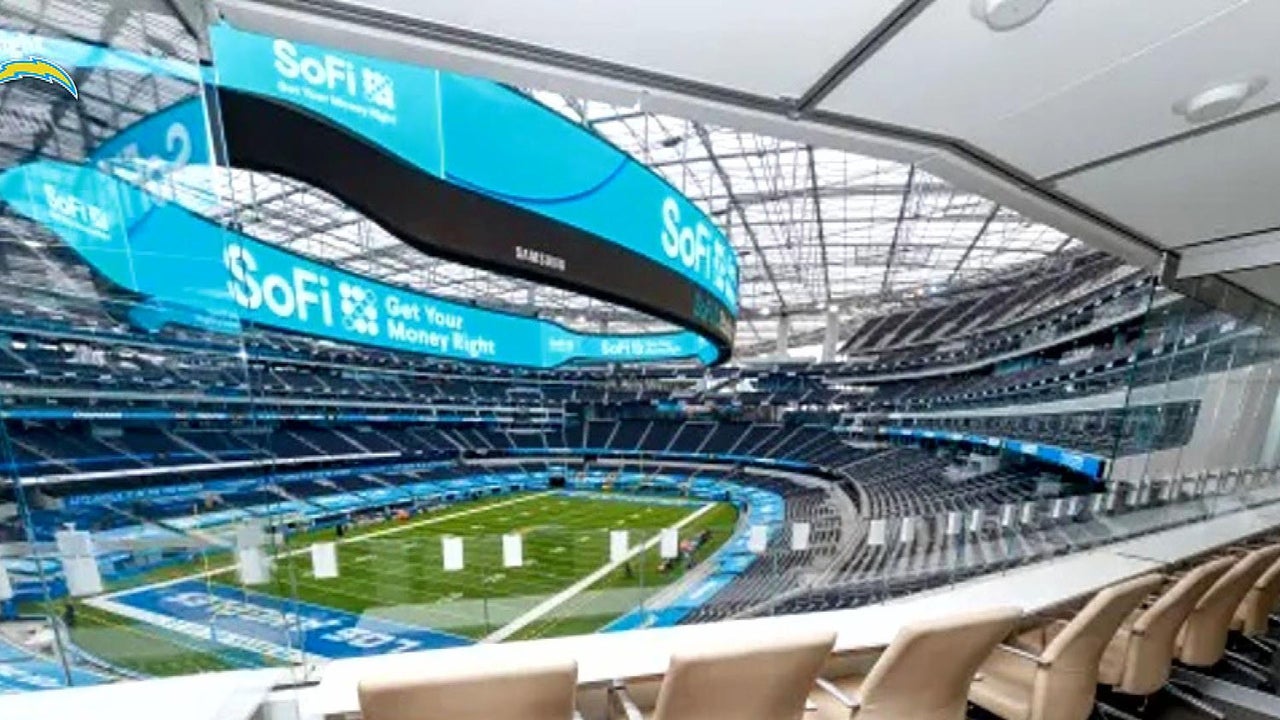
He stood there in the center of the world's most expensive stadium. No microphone. No live band. Just a masked figure moving through a thick haze of strobe lights and heavy bass. If you expected a traditional concert, you were in the wrong place. The Ye comeback show at SoFi Stadium wasn’t about "performing" in the way we've been taught to see it. It was a massive, expensive, and deeply polarizing statement about how art survives in a cancel-culture economy.
People came to Inglewood expecting a disaster. They stayed for a masterclass in atmospheric tension. While the media loves a car crash narrative, what actually happened inside SoFi was a calculated shift in how stadium-level entertainment functions. It didn't matter that the audio was played off a hard drive. It didn't matter that the guest list shifted until the very last second. What mattered was the energy of 70,000 people collectively holding their breath.
The SoFi Spectacle Was Never About the Music
The acoustics at SoFi Stadium are tricky. It's a massive concrete bowl designed for the roar of NFL fans, not the nuances of a soul sample. But Ye doesn't care about your ears; he cares about your eyes and your heart rate. The production design was stripped back to an almost uncomfortable degree. We’ve seen the floating stages and the mountain sets. This time, the emptiness was the point.
When you strip away the dancers and the pyrotechnics, you’re left with the raw presence of a man who has spent the last few years being the most discussed human on the planet. The scale of the stadium makes the individual feel tiny, yet Ye managed to reverse that. He made the stadium feel like a claustrophobic living room where he was the only one allowed to speak. Or, in this case, not speak.
Most artists use these shows to promote an album. Ye uses them to build a myth. You didn't leave humming a new hook. You left wondering how one person could command that much gravity without saying a single word to the crowd. It’s a power move that few others could pull off. Kendrick might have the lyrics, and Taylor might have the production, but Ye has the sheer, unadulterated audacity to make you wait three hours for a playlist.
What the Critics Missed About the Crowd Dynamics
If you read the mainstream reviews, they’ll tell you about the delays. They’ll complain about the lack of "live" elements. They’re missing the forest for the trees. I talked to fans who flew in from three different continents just to be there. They weren't there for a 1:1 recreation of the studio tracks. They were there for the communal experience of a subculture that feels increasingly alienated from the mainstream.
There’s a specific tension in a Ye crowd. It’s a mix of die-hard loyalty and genuine curiosity about what he’ll do next. In the halls of SoFi, you didn't see the "outrage" that dominates Twitter. You saw kids in black hoodies discussing production credits like they were analyzing holy texts. The gap between the online narrative and the physical reality of the show was massive.
Why the No Mic Approach Worked
- It removes the ego of the performance. By not singing, the focus shifts to the composition and the environment.
- It creates a cinematic feel. The show felt more like a live-scored film than a gig.
- It forces the audience to listen. Without a hype man screaming "L.A. make some noise," the crowd had to actually pay attention to the sonics.
The Financial Reality of the Comeback
Let’s talk numbers. Filling SoFi isn't cheap. The logistics of a show this size, with the level of security and insurance required for a high-profile target like Ye, are staggering. Despite the controversies, the merchandise lines were hours long. People weren't just buying clothes; they were buying proof of attendance at a historical pivot point.
The industry likes to pretend certain artists are untouchable. Then a show like this happens and the spreadsheets tell a different story. The demand is there. The "Vultures" era, for all its chaos, has proven that there’s a massive audience that prioritizes the art over the artist’s public relations standing. This isn't an endorsement of his personal views—it’s an observation of market reality. If you can sell out a stadium in a matter of hours without a traditional marketing campaign, you’re not just an artist. You’re a market force.
How the Visuals Redefined Stadium Art
The lighting wasn't just bright; it was oppressive. It used the architecture of the stadium to create shadows that felt physical. Most stadium shows try to reach the back of the house by making everything bigger. Ye did it by making everything darker. It’s a counter-intuitive approach that works because it creates a sense of exclusivity. Even if you were in the nosebleeds, you felt like you were seeing something you weren't supposed to see.
Technical Innovations in the Shadows
- Monochromatic saturation. Using single-color palettes to wash out the features of the performers.
- Industrial soundscapes. Moving away from radio-friendly mixing toward something more abrasive and physical.
- Negative space. Leaving huge portions of the "stage" empty to emphasize the isolation of the figures within it.
The Guest Appearances and the Politics of Loyalty
Who shows up for Ye says as much as who doesn't. The stage was a rotating door of collaborators who have stayed in his orbit despite the heat. This isn't just about music; it’s about a specific kind of industry defiance. When you see major names standing on that stage, it sends a clear message to the labels and the festivals. The gatekeepers don't have the keys anymore.
It was a stark contrast to the highly polished, choreographed appearances we see at the Grammys or the Super Bowl. It felt like a pirate radio broadcast on a multi-million dollar scale. It was messy. It was unpolished. It was exactly what the fans wanted.
Stop Looking for the Old Kanye
The biggest mistake people make is comparing every new move to the "College Dropout" era. That person is gone. The artist we saw at SoFi is interested in texture, mood, and provocation. He’s moved past the need for 16-bar verses and catchy choruses. If you’re looking for "Gold Digger," you’re living in the past.
The SoFi show was a bridge. It bridged the gap between his high-fashion avant-garde experiments and his stadium-rap roots. It wasn't always comfortable to watch, but art shouldn't always be comfortable. It should make you feel something, even if that something is confusion or frustration.
The Logistics of a High Stakes Return
Planning a show at SoFi involves months of coordination with the city of Inglewood and the stadium's management. For Ye, this meant navigating a minefield of permits and potential protests. The fact that the event went off without any major security incidents is a testament to the professional team behind the curtain, regardless of how chaotic things look on the surface.
You have to look at the sheer scale of the operation. Thousands of staff members, complex pyrotechnic inspections, and a massive sound system upgrade just for one night. This wasn't a "pop-up" show. It was a logistical feat that proved he can still operate at the highest levels of the industry.
What Happens When the Music Stops
The show ended as abruptly as it began. No "thank you L.A." No encore. Just the lights coming up and the crowd blinking in the sudden brightness. It left a lot of people wondering what they’d just witnessed. Was it a concert? A performance art piece? A public exorcism?
It was all of them. Ye’s comeback show at SoFi Stadium didn't fix his public image, and it didn't answer all the questions about his future. But it did prove that he remains the only person in music who can turn a stadium into a private, terrifying, and beautiful world of his own making.
If you want to understand where the culture is going, stop looking at the charts. Look at the people who are willing to stand in the dark for three hours just to see a man in a mask stand still. That’s where the real influence lives. Go back and listen to the "Vultures" tracks again, but this time, turn the volume up until the bass hurts. That’s the only way to get the SoFi experience at home.