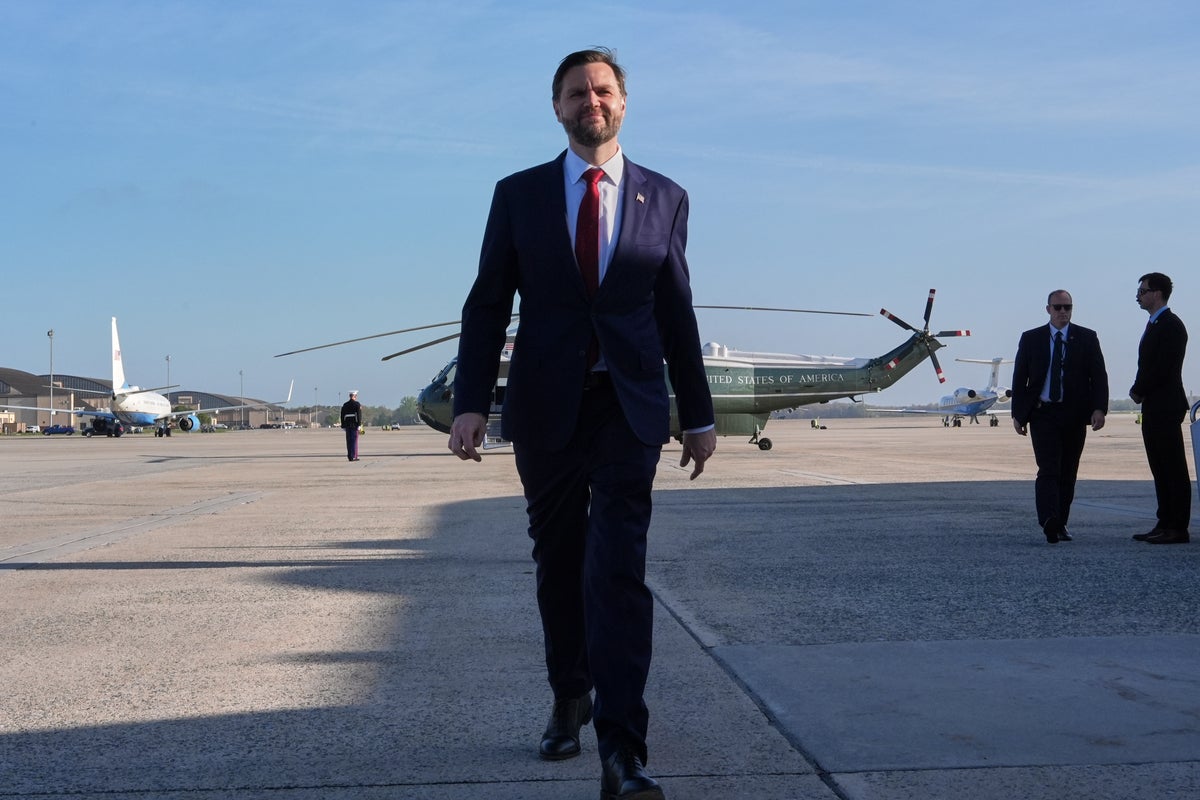
Vice President JD Vance touched down in Islamabad this morning, ostensibly to broker a regional peace that has eluded American diplomats for the better part of four decades. But the shadow over the tarmac wasn't cast by the Karakoram mountains; it was cast by Tehran. Before the wheels of Air Force Two even hit the runway, Vance issued a blunt, unvarnished warning to the Iranian leadership, telling them not to "play" the United States while he negotiates on their doorstep. It is a high-stakes gamble that attempts to use Pakistan as a lever against Iranian influence, but the reality on the ground suggests that the "tough talk" doctrine is hitting a wall of complex regional dependencies that don't respond to threats.
The primary objective of this mission is to stabilize the border regions and prevent a wider sectarian spillover, but Vance’s rhetoric suggests a shift in the administration's posture. He is signaling that the era of back-channel nuances is over. By making Islamabad the stage for a message directed at Tehran, the administration is trying to force Pakistan to pick a side in a cold war it has spent years trying to navigate with a foot in both camps. You might also find this related coverage interesting: The Brutal Truth Behind the New Push for Americans Held in Iran.
The Pakistan Pivot and the Iran Problem
Vance’s arrival comes at a moment of extreme fragility. Pakistan is currently grappling with a suffocating economic crisis and a resurgence of domestic militancy. By choosing Islamabad as the venue for a direct broadside against Iran, Vance is effectively leveraging American financial aid and military cooperation against Pakistan’s proximity to Tehran. It is a classic "with us or against us" maneuver, updated for a multipolar world where the US is no longer the only lender in town.
The Iranians, meanwhile, have shown a remarkable ability to weather American rhetoric. Tehran views the US presence in Islamabad not as a peace mission, but as an encirclement strategy. When Vance warns Iran not to "play" the US, he is referring to the intricate web of proxy groups and regional influence that Iran uses to offset American conventional power. The problem with this warning is that it assumes Iran sees the current US administration as a credible threat to its regional survival. As reported in recent coverage by Al Jazeera, the implications are notable.
Past decades of Middle Eastern policy have shown that "warnings" rarely translate into behavioral changes unless backed by a specific, painful cost. Vance has yet to articulate what that cost is, other than a vague promise of further isolation. In the hallways of power in Islamabad, the concern is that this rhetoric will provoke a reaction from Tehran that Pakistan will be the one to pay for.
The Reality of Borderland Geopolitics
One cannot understand the Vance mission without looking at the 560-mile border between Iran and Pakistan. This is not a line on a map; it is a porous, volatile stretch of territory where smuggling, insurgent movements, and energy pipelines intersect. Pakistan needs Iranian gas. It also needs to ensure that its Balochistan province doesn't become a permanent battleground for Iranian-backed groups and local separatists.
Vance’s "tough" stance overlooks the sheer necessity of the Pakistan-Iran relationship. While the US sees Iran through the lens of nuclear proliferation and regional hegemony, Pakistan sees a neighbor that can either be a source of energy and stability or a source of perpetual internal unrest.
The Energy Equation
The Iran-Pakistan gas pipeline, often called the "Peace Pipeline," has been a ghost project for years, haunted by the threat of US sanctions. Vance’s visit is intended to drive the final nail into that coffin. If he succeeds, he leaves Pakistan in an energy lurch that the US will be expected to fill. If he fails, the US looks impotent. There is no middle ground in this specific diplomatic theater.
- US Position: Zero tolerance for Iranian energy exports.
- Pakistan Position: Desperate need for cheap, reliable fuel to prevent total grid collapse.
- The Vance Strategy: Offer security guarantees and IMF leniency in exchange for a total freeze on Iranian cooperation.
This is a transactional approach to diplomacy. It treats sovereign nations like regional franchises of a larger corporate entity. The risk is that if the "deal" doesn't provide immediate relief to the average Pakistani citizen, the anti-American sentiment already simmering in the country will boil over, making the peace Vance seeks impossible to maintain.
Why the Tough Talk Might Backfire
There is a certain theatricality to Vance’s approach. He is playing to a domestic audience that wants to see an assertive America. However, in the bazaars and briefing rooms of South Asia, this looks like a man trying to put out a fire with a megaphone. Iran has spent the last twenty years perfecting the art of "playing" the US by staying just below the threshold of direct conflict while slowly expanding its "axis of resistance."
By telling Iran not to "play" the US, Vance might actually be inviting the very behavior he intends to stop. Iran’s strategic depth is built on the idea that they can outlast any American administration. They know that Vance’s focus is split between Islamabad, the upcoming election cycle, and the ongoing tensions in Eastern Europe and the Pacific.
The Credibility Gap
For a warning to be effective, it must be credible. The US has used similar language for years with varying results. When Vance speaks, the Iranian Revolutionary Guard Corps (IRGC) isn't looking at his words; they are looking at the carrier strike group deployments and the appetite of the American public for another foreign entanglement. Right now, that appetite is at an all-time low. Vance is aware of this, which is why he is attempting to use Pakistan as a force multiplier. If he can turn Islamabad into a hard barrier against Iranian interests, he doesn't need to deploy more American boots.
The Shadow of the Taliban and Kabul
We cannot ignore the third player in this room: Afghanistan. The Taliban’s control of Kabul has fundamentally changed the math for both Iran and Pakistan. Both countries are dealing with the fallout of a post-US Afghanistan, including refugee surges and extremist spillover. Vance’s peace talks in Islamabad are inevitably tied to how Pakistan manages its western border.
Iran has been cautiously engaging with the Taliban to ensure the safety of the Shia minority in Afghanistan and to manage water rights. If the US forces Pakistan into a hard anti-Iran stance, it disrupts the fragile regional consensus that has kept the Afghan situation from devolving into a total regional war. Vance is essentially asking Pakistan to burn its bridges with a neighbor at the exact moment the region is at its most unstable since 2001.
The Intelligence Landscape
Behind the scenes, the CIA and Pakistan’s ISI have a relationship that is best described as "frenemies." They share intelligence when it suits them and undermine each other when it doesn't. Vance’s mission relies heavily on the ISI’s willingness to squeeze Iranian operatives within Pakistan.
Sources within the intelligence community suggest that the ISI is hesitant. They remember the aftermath of the "War on Terror" all too well—a period where Pakistan lost thousands of soldiers and civilians to domestic blowback from US-led initiatives. To them, Vance is a transient figure. Iran is a permanent neighbor.
Counter-Arguments to the Vance Doctrine
Critics of Vance's approach argue that the US should be seeking a regional "grand bargain" rather than picking individual fights. They suggest that by isolating Iran so aggressively during a trip to Pakistan, Vance is pushing Tehran further into the arms of Beijing and Moscow. This creates a bloc of sanctioned nations that have nothing to lose by disrupting American interests.
Furthermore, there is the question of the Pakistani military's domestic standing. The military is the real power in Pakistan, and it is currently facing unprecedented criticism from a public frustrated by economic hardship and perceived political interference. If the military is seen as taking orders from Vance to the detriment of Pakistani energy security, it could trigger a domestic crisis that would make the current instability look mild.
The Tactical Misstep of Public Ultimatums
Diplomacy usually happens in the dark for a reason. By making his "don't play us" comment public and loud, Vance has backed both himself and the Iranians into a corner. If Iran continues its regional activities, Vance must respond or look weak. If Iran backs down, they look like they were bullied by an American Vice President on foreign soil—a narrative Tehran cannot afford to let take root.
This public posturing limits the "off-ramps" available to both sides. It turns a complex geopolitical negotiation into a schoolyard face-off. For a veteran journalist watching this unfold, it feels less like a strategic move and more like a campaign stunt designed for social media clips back home.
A Brittle Peace
The peace Vance is chasing in Islamabad is brittle. It is built on the hope that Pakistan will prioritize American approval over its own regional realities. It assumes that Iran will be intimidated by a change in tone. Most importantly, it assumes that the United States can dictate the terms of South Asian security without addressing the underlying economic and social drivers of the region’s instability.
Vance’s flight to Islamabad is a gamble on the power of the American brand at a time when that brand is under heavy scrutiny. If he leaves without a concrete commitment from Pakistan to distance itself from Tehran—and without a plan to replace the lost Iranian energy—the mission will be remembered as a high-altitude exercise in futility.
The Iranian leadership doesn't respond to warnings delivered from 30,000 feet. They respond to the reality of power on the ground. Until the US addresses the fact that Pakistan cannot afford to be an American outpost at the cost of its own survival, these warnings will continue to fall on deaf ears in Tehran. The "high-stakes" aren't just about peace; they are about whether the US still has the leverage to back up its words in a region that has learned to live without American permission.
Vance can speak as loudly as he wants on the tarmac in Islamabad, but the silence from Tehran in the coming weeks will be the real measure of his success. If the proxy attacks continue and the pipelines keep being discussed, the world will know that the warning was just noise. Real power doesn't need to tell people not to "play" it; it simply makes the cost of doing so unbearable. Vance hasn't shown the bill yet.