The deaths of two UN peacekeepers in Southern Lebanon mark more than a tactical escalation in the ongoing conflict between Israel and Hezbollah. They represent the functional disintegration of the United Nations Interim Force in Lebanon (UNIFIL), a mission that has spent nearly five decades trying to maintain a peace that neither side truly desires. For years, these "blue helmets" have served as a thin, often ignored line of defense. Now, that line is being actively erased.
When an artillery shell or a targeted strike hits a UN position, the official statements usually follow a predictable script of "grave concern" and "investigation." But the reality on the ground is far more clinical. The peacekeeping mission is being squeezed by two opposing military strategies that no longer view a neutral presence as a benefit. To Israel, the UNIFIL footprint is an obstacle to clearing out entrenched Hezbollah infrastructure. To Hezbollah, the UN presence provides a convenient shield, ensuring that any strike against their positions risks an international diplomatic crisis.
The Mechanics of a Failed Mandate
To understand why peacekeepers are dying now, we have to look at the toothless nature of Resolution 1701. Passed in 2006, it was supposed to ensure that the area between the Litani River and the Blue Line was free of any armed personnel other than the Lebanese army and UNIFIL. It never happened.
Hezbollah spent the last eighteen years building a sophisticated subterranean network right under the noses of the international community. UNIFIL observers, limited by a mandate that requires them to coordinate movements with the Lebanese Armed Forces (LAF), were effectively sidelined. If the LAF didn't want the UN to see a specific tunnel entrance or a missile cache, the UN simply didn't see it. This created a dangerous paradox. The UN was providing the world with a false sense of security while the theater of war was being meticulously prepared.
The current violence is the bill for that negligence coming due. As Israeli Defense Forces (IDF) push north, they are encountering a landscape where UN outposts and Hezbollah firing positions are inextricably linked. This isn't accidental. It is a fundamental shift in how modern asymmetrical warfare treats international observers.
The Myth of the Neutral Observer
In the corridors of power in New York, the Blue Helmet is a symbol of global consensus. On a ridgeline in Southern Lebanon, it is a target. The recent fatalities indicate a shift from accidental "collateral" incidents to a more aggressive stance regarding UN positioning.
Peacekeepers are currently being told to remain in their bunkers. They are effectively hostages to a geography they can no longer control. When an army tells a neutral force to vacate a position and that force stays, the neutrality disappears. The force becomes a physical barrier. In the eyes of a commander mid-battle, a barrier is something to be removed.
We are seeing the limits of "soft power" in a "hard power" environment. UNIFIL lacks the heavy armor, the air support, and—most importantly—the ROE (Rules of Engagement) to defend its own perimeter against a modern state military or a well-equipped paramilitary group. They are armed for a police action but are trapped in a high-intensity theater of operations.
The Lebanese Armed Forces Problem
The strategic failure of UNIFIL is also a failure of the Lebanese state. The original plan was for the UN to support the LAF in asserting sovereignty over the south. However, the LAF is a fractured institution. It is underfunded and, in many ways, infiltrated or intimidated by Hezbollah’s political and military wings.
By tethering UNIFIL's legitimacy to the LAF, the international community essentially outsourced its eyes and ears to a group that couldn't afford to be honest. This created a "blind spot" diplomacy. Every report sent back to the Security Council was filtered through the necessity of maintaining "local cooperation," which is diplomatic shorthand for not upsetting the people with the most guns.
The current casualty count is a direct result of this long-term compromise. Because the UN could not enforce the demilitarized zone during peacetime, they are now caught in the crossfire during wartime.
Why Withdrawal Isn't an Option for the UN
You might ask why the UN doesn't simply pull out. If the mission is failing and the soldiers are dying, what is the point of staying?
The answer is bureaucratic and existential. For the United Nations, a total withdrawal from Southern Lebanon would be an admission that the Security Council is irrelevant in the face of regional conflict. It would signal the end of the "Peacekeeping Era" as we know it. So, they stay. They stay in bunkers, they take casualties, and they issue press releases.
But the soldiers on the ground—mostly from countries like Italy, Ireland, France, and Spain—are paying the price for this institutional pride. They are being used as "tripwires" in a game where the players have already decided to ignore the wire.
The Strategic Shift in Urban and Frontier Warfare
The death of peacekeepers highlights a broader trend in global conflict. The "Safe Zone" is a dying concept. In the 1990s, the failure in Srebrenica showed that UN presence without the will to fight is a death sentence for civilians. In the 2020s, Lebanon is showing that UN presence without a clear military superiority is a death sentence for the peacekeepers themselves.
Israel's military objective is the total removal of Hezbollah's "Radwan" units from the border. This objective is binary. There is no room for a third party to stand in the middle and ask for a pause. On the other side, Hezbollah views any UN movement that might expose their positions as a betrayal. The peacekeepers are squeezed in a vice that is tightening every hour.
Operational Reality vs Diplomatic Fantasy
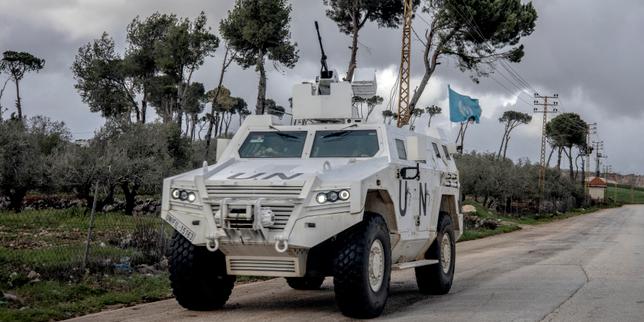
We have to stop treating UNIFIL as a shield. It is a sensor at best, and a broken one at that. When we look at the logistics of these recent deaths, we see a pattern of visibility issues. Even with high-tech communication and bright white vehicles, the fog of war is being used as a convenient excuse for targeting.
The equipment used by UNIFIL is often outdated compared to the thermal imaging and AI-driven targeting systems used by the IDF, or the Iranian-supplied drones used by Hezbollah. The "Blue Helmets" are operating in a 20th-century framework while a 21st-century war rages around them. They are effectively analog players in a digital slaughter.
The Impending Collapse of the Blue Line
The "Blue Line" is not a border; it is a withdrawal line. It has no physical substance. For years, the international community pretended it was a wall. Now that the wall has been breached, the entire legal framework of the region is in tatters.
Every time a UN post is hit, the international response is a flurry of phone calls between world capitals. These calls rarely result in a change of tactics on the ground. The commanders in the field know that the political appetite for a major intervention is zero. This gives both combatants a "green light" to continue their operations with only a slight nod toward avoiding the UN outposts.
The deaths of these two peacekeepers will not be the last. Unless the mandate is changed to either a full combat role—which no country will agree to—or a total withdrawal, we are simply watching a slow-motion catastrophe. The "Interim" in UNIFIL has lasted since 1978. It is no longer an interim force; it is a permanent fixture of a failed peace process.
A New Precedent for Global Conflict
What happens in Lebanon sets the tone for future disputes in Eastern Europe and the Pacific. If a UN flag no longer provides protection, the very idea of international law as a deterrent is dead. We are moving back to a "Might Makes Right" era where the presence of a neutral party is seen as an annoyance to be managed rather than a boundary to be respected.
The investigation into these deaths will likely be buried in a committee. The findings will be inconclusive. The rhetoric will remain heated but empty.
Governments contributing troops to UNIFIL must now face a brutal reality. They are not sending their sons and daughters to keep a peace. They are sending them to be witnesses to a war they are not allowed to stop and cannot survive if it comes for them directly. The white paint on those armored carriers is no longer a suit of armor. It is a bullseye.
The international community must decide if it wants a force that can actually enforce a zone, or if it is content to keep sending people to die for the sake of a diplomatic fiction. The current middle ground is a graveyard. Move the peacekeepers out or give them the means to hold the ground they occupy. Anything else is just waiting for the next casualty report to hit the wires.
The era of the passive observer is over. The battlefield has no room for those who can only watch.
Stop the pretense that Resolution 1701 still exists. It died the moment the first tunnel was dug, and it was buried the moment the first peacekeeper fell this month. The only thing left to decide is how many more flags will be draped over coffins before the UN admits its mission is a ghost.