The click of the fuel nozzle is a sound we barely register. It is the rhythmic heartbeat of a world that assumes movement is a birthright. You pull up, you swipe a card, and the liquid legacy of a million years flows into a plastic tank so you can make it to a soccer game or a shift at the hospital. We don’t think about the Strait of Hormuz. We don’t think about the invisible tethers connecting a suburban driveway in Ohio to the jagged coastlines of the Middle East.
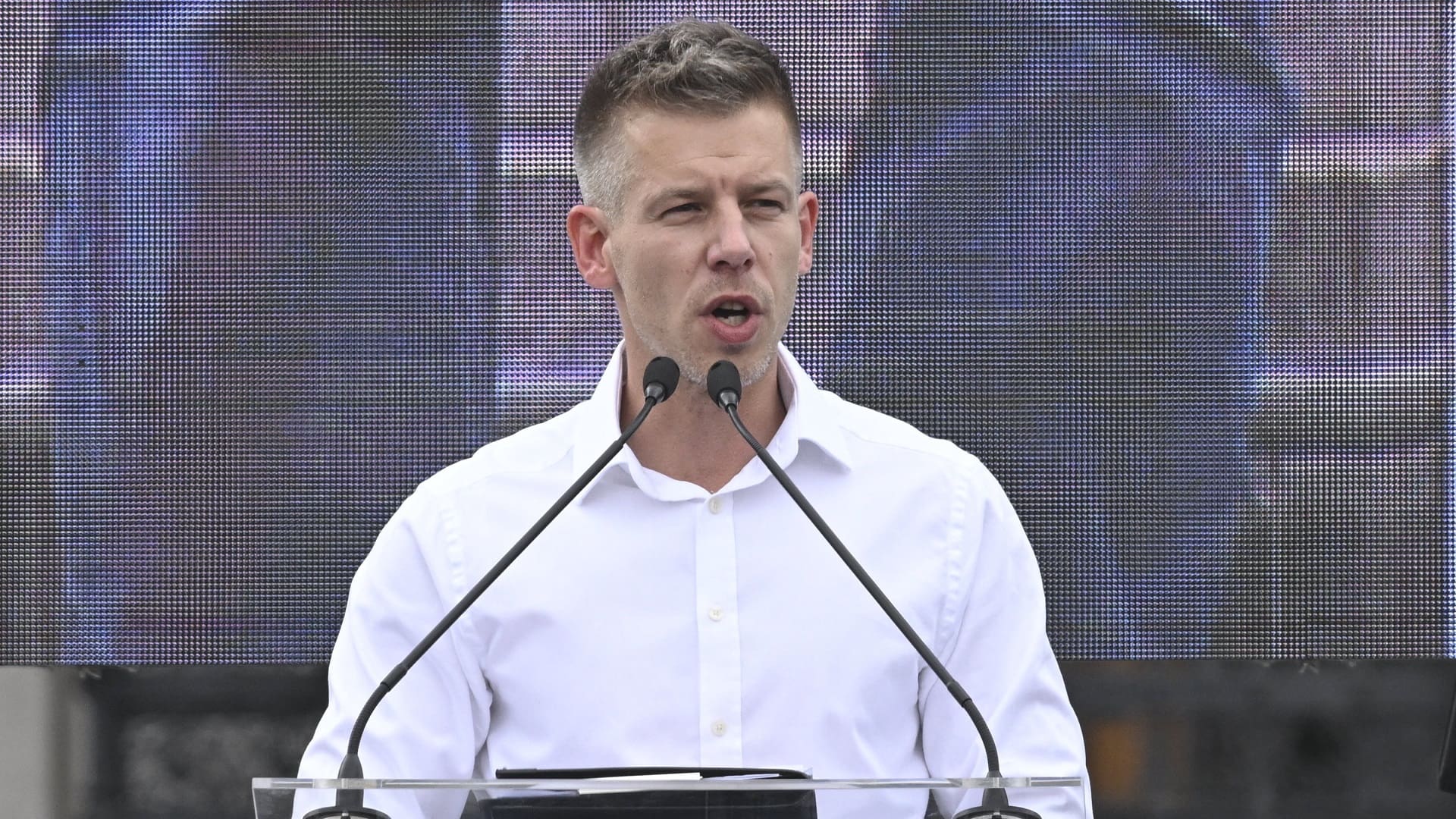
But the heartbeat is skipping. Recently making news in this space: Péter Magyar and the Brutal Reality of Dismantling the Orbán State.
When the energy chief stood before the microphones this week, the numbers he dropped weren't just data points. They were a sentence. Two years. That is how long he expects the global economy to stumble through the dark before the gears of energy production find their teeth again. The cause is a conflict in Iran that many saw coming but few prepared for, a geopolitical fracture that has effectively severed one of the world's primary arteries.
Energy isn't a luxury. It is the baseline of existence. When it vanishes, or even when it just thins out, the world doesn't just get more expensive. It gets smaller. Further insights into this topic are explored by The New York Times.
The Invisible String
Consider Sarah. She represents millions. She drives a delivery van in a mid-sized city, a job that relies entirely on the predictable math of overhead. When fuel prices were stable, Sarah’s math worked. She could pay her rent, keep the van maintained, and put a little away for her daughter’s education.
Then the war in Iran escalated. The tankers stopped moving. The supply chains, those delicate webs we spent decades perfecting, began to fray.
For Sarah, the energy chief’s "two-year recovery" isn't an abstract economic forecast. It is a daily erosion of her dignity. Every cent that climbs on the digital display at the pump is a cent taken from her daughter's future. This is the human cost of a "fuel shortage." It is the quiet, agonizing choice between a full tank and a full refrigerator.
The crisis isn't just about the price of gas. It is about the price of everything that gas moves. Bread. Medicine. Construction materials. When the energy chief warns of a 730-day slog back to normalcy, he is describing a world where the friction of daily life has suddenly, violently increased.
The Mechanics of the Void
Why two years? Why can’t we just turn on a different tap?
The global energy market is often described as a pool, but it is more like a pressurized vascular system. You cannot simply cut off a major source and expect the rest of the body to compensate instantly. Iran’s position in the energy hierarchy isn't just about its own crude; it’s about the geography of the Strait.
Metaphorically, think of the global energy supply as a massive, high-speed train. It takes an immense amount of track to get it up to speed. If you pull the emergency brake—which is what this war has done—you don't just lose the distance you were supposed to cover that day. You lose the momentum.
Restoring that momentum requires more than just peace treaties. It requires the physical repair of infrastructure, the clearing of shipping lanes, and the agonizingly slow process of recalibrating refineries that were designed for specific grades of fuel. It is a logistical nightmare wrapped in a political cage.
The Cold Math of the Energy Chief
The warning issued this week was stark: the world is currently operating at a deficit of millions of barrels per day. The "spare capacity" that politicians love to talk about—the idea that Saudi Arabia or the United States can just "pump more"—is largely a myth. We are already running close to the red line.
- Refineries are at their limit.
- Strategic reserves are being drained to keep the lights on.
- Investment in new oil and gas projects has lagged for a decade.
The energy chief pointed out that even if the shooting stopped tomorrow, the psychological scars on the market would remain. Risk premiums would stay high. Insurers would hesitate to cover tankers. Traders would continue to bet on chaos.
We are not just waiting for the oil to flow again. We are waiting for the world to feel safe again.
The Ripple Effect
The shortage creates a cascading failure. In Europe, factories that rely on natural gas are slowing down. In Asia, the cost of moving goods to market is skyrocketing, leading to "shrinkflation" where you pay more for less.
But the most dangerous impact is in the developing world. In places where the margin for error is razor-thin, a fuel shortage isn't an inconvenience; it’s a catastrophe. Farmers cannot run tractors. Without tractors, there are no harvests. Without harvests, the political stability of entire nations begins to wobble.
The energy chief’s two-year window is a ticking clock for global stability. It suggests that for the next twenty-four months, we will be living in a state of hyper-fragility. Any further shock—a bad hurricane season in the Gulf, a pipeline strike in Eastern Europe, a strike by refinery workers—could be the blow that breaks the system entirely.
The Great Adaptation
We are forced into a period of forced evolution.
For decades, we treated energy like air—ubiquitous and free. Now, we are being forced to treat it like water in a desert. Businesses are desperately trying to pivot to renewables, but you cannot build a million wind turbines in a weekend. The technology exists, but the scale is staggering.
We are seeing a return to the local. The "global village" is being forced to contract. If it costs too much to ship a widget from across the ocean, we have to learn how to make that widget in our own backyard. This sounds romantic until you realize we have spent forty years dismantling our ability to do so.
The irony is thick. The very conflict that is starving the world of oil might be the ultimate catalyst that finally pushes us away from it. But that transition is a bridge made of glass, and we are walking across it in heavy boots.
The Weight of 730 Days
Two years.
That is 104 weeks of checking the news before you check your bank account. It is 17,520 hours of wondering if the supply chain will hold together long enough for your car part to arrive or your grocery store to restock the essentials.
The energy chief wasn't just giving a speech. He was delivering a weather report for a storm that has already made landfall. He is telling us to hunker down.
We often think of history as a series of names and dates, of kings and generals making grand gestures. But history is actually made of the Sarahs of the world, sitting in their vans, looking at a glowing red needle on a dashboard, and wondering how they are going to make it to Wednesday.
The fuel is gone. The wait has begun.
The silence at the pump is the loudest sound in the world.