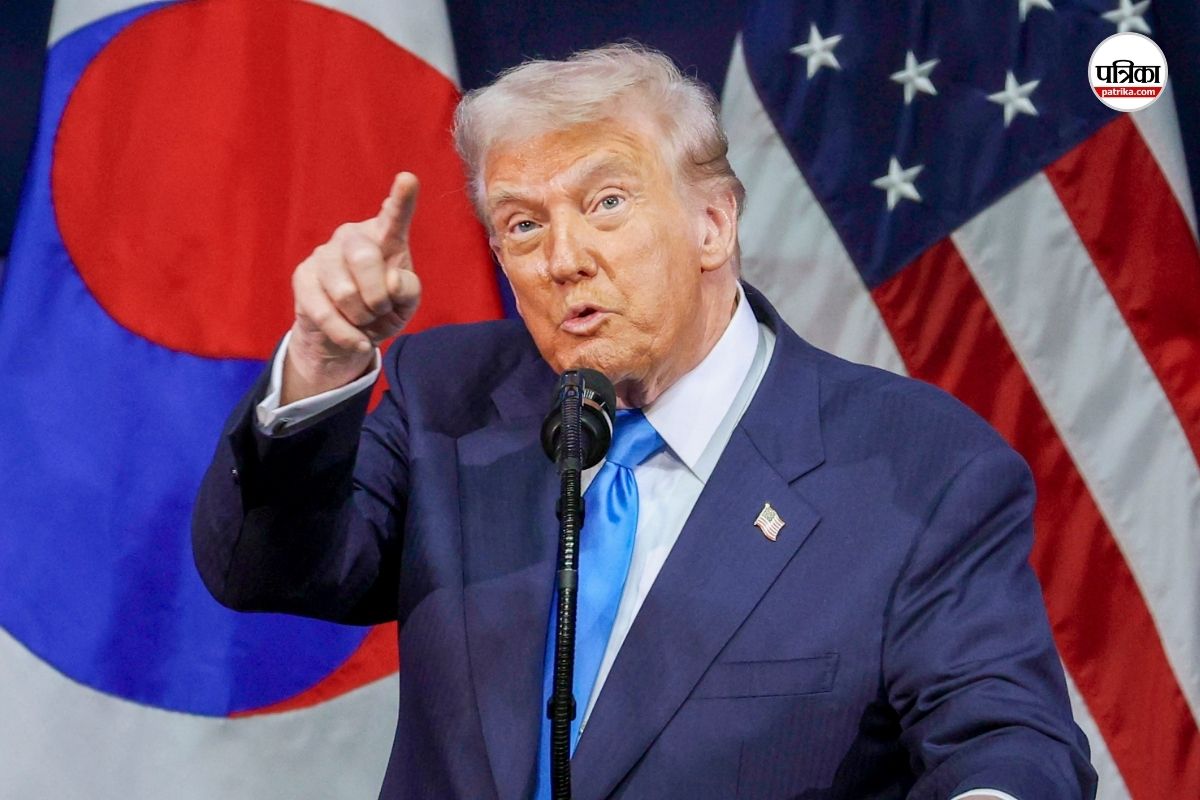
Donald Trump is once again wielding the "Stone Age" rhetoric as a primary tool of American diplomacy. This isn't just hyperbole or a recycled threat from the 2010s; it is a calculated signaling of a shift in how Washington intends to handle Tehran. When the former and perhaps future president shares content suggesting a return to primitive living for Iran, he is highlighting a specific, devastating capability of the modern United States military. He is talking about the systematic destruction of a nation's power grid, telecommunications, and industrial infrastructure. It is a doctrine of total economic and technological erasure.
The core premise is simple. If diplomatic talks regarding nuclear enrichment or regional proxy wars hit a definitive wall, the alternative isn't necessarily a boots-on-the-ground invasion. The strategy has shifted toward "asymmetric de-modernization." By targeting the literal current that keeps a 21st-century society functioning, the U.S. can effectively bypass traditional warfare. This is the "why" behind the rhetoric. It serves as a reminder that the gap between a modern state and a pre-industrial one is only a few well-placed munitions or a sustained cyber campaign away.
The Infrastructure Kill Switch
Modern Iran is not the isolated desert nation of 1979. It is a complex web of interconnected systems. From the desalination plants on the Persian Gulf to the centrifuges in Natanz, everything relies on a stable, high-voltage electricity supply. When a leader mentions "the stone age," they are referencing a specific kinetic and digital targeting list.
The U.S. military’s Joint Publication 3-06 on Urban Operations describes the "system of systems" approach. If you take out the "nodes"—the transformers, the switching stations, and the fiber-optic backbones—the city ceases to be a functional entity. In a matter of days, water stops flowing because pumps fail. Refrigeration dies, causing food supplies to rot. Hospitals revert to lanterns and manual labor. This is the reality of the threat. It is a strategy designed to induce domestic collapse without having to hold territory.
Cyber Warfare and the Quiet Reset
While missiles are the visible fist of this policy, the silent finger on the trigger is cyber-offensive capability. The precedent was set long ago with Stuxnet, the worm that physically destroyed Iranian centrifuges by forcing them to spin at self-destruct speeds. That was a scalpel. The "Stone Age" approach is a sledgehammer.
We are looking at the potential for "Zero Day" exploits that can shut down the SCADA (Supervisory Control and Data Acquisition) systems governing Iran’s entire national grid. This isn't theoretical. In 2015, a cyberattack on Ukraine’s power grid left hundreds of thousands in the dark. The U.S. has capabilities that dwarf those used in that instance. The threat is a "Total Dark" scenario where the software controlling the hardware is deleted or encrypted, making it impossible to restart the machines even if the physical infrastructure remains intact.
The Economic Iron Curtain
The "Stone Age" isn't just about darkness; it’s about a total lack of exchange. Trump’s approach hinges on the idea that the global financial system is a privilege, not a right. By layering sanctions that target the "secondary market"—punishing anyone, anywhere, who does business with Iran—the U.S. can effectively excise a country from the modern world.
Consider the hypothetical example of a small tech firm in Singapore. If they sell a single specialized semiconductor to a firm in Tehran, they lose access to the U.S. dollar. For most, that is a death sentence. This creates a vacuum. Iran is forced into a barter economy, trading oil for basic goods with a decreasing number of willing partners. This is economic regression. It forces a middle-class population into a survivalist mindset, which is the ultimate goal of the "Maximum Pressure" campaign.
Counter-Arguments and the Blowback Factor
Critics argue that this strategy is a gamble with diminishing returns. The more a nation is pushed toward the "Stone Age," the less it has to lose. This is the "Sovereign Poverty" trap. When a regime feels it is already at the bottom, traditional leverage disappears.
There is also the matter of the "Grey Zone." Iran has proven adept at fighting in the shadows. If their infrastructure is threatened, they respond by targeting the global energy bottleneck: the Strait of Hormuz. They don't need a massive navy to do this. A few thousand smart mines and a swarm of low-cost drones can spike global oil prices, causing a "Stone Age" effect on the wallets of Western consumers. This is the delicate balance of terror that keeps the rhetoric from becoming reality.
The Shift in Nuclear Posture
The failure of the JCPOA (Joint Comprehensive Plan of Action) created a vacuum that Trump's rhetoric fills. Without a verified deal, the U.S. has reverted to a posture of "pre-emptive deterrence." This means making the cost of nuclear breakout so high that the state itself ceases to exist in its current form.
The military term for this is "Functional Defeat." You don't have to kill every soldier. You just have to make it impossible for the commander to send an email, for the tank to get fuel, and for the citizen to find bread.
Hardened Targets and Deep Burials
Iran has anticipated this. They have spent the last decade moving their most sensitive assets into "mountain fortresses" like Fordow. These facilities are buried hundreds of feet under solid rock. Standard bunker-busters aren't enough. To reach these, the U.S. would have to use the GBU-57 Massive Ordnance Penetrator (MOP).
The MOP is a 30,000-pound beast designed for one purpose: to turn a mountain into a tomb. When Trump signals a return to the Stone Age, he is acknowledging that the U.S. is willing to use these specialized, non-nuclear weapons to bypass the physical protections Iran has built. It is a message that there is no hole deep enough to hide from modern kinetic energy.
The Role of Regional Alliances
Washington isn't acting in a vacuum. The Abraham Accords changed the geography of a potential conflict. With Israel, Saudi Arabia, and the UAE sharing a common interest in containing Iranian influence, the "Stone Age" threat is backed by a regional coalition. These nations provide the logistical pads and intelligence networks required to execute a high-precision decapitation of a national infrastructure.
The intelligence sharing alone is a force multiplier. It allows for "surgical de-modernization." Instead of bombing a whole city, you take out the three specific substations that power the defense ministry and the central bank. It is the height of technical warfare used to achieve a primitive result for the target.
The Psychological War
Ultimately, the share of an article or a blunt tweet is a psychological operation. It is designed to create a "Crisis of Confidence" within the Iranian elite. They have to wonder if their personal wealth, their digital assets, and their comfort are worth the pursuit of a nuclear threshold.
History shows that the threat of being "left behind" is often more terrifying than the threat of a localized battle. People fear the loss of the internet, the loss of stable currency, and the loss of medical technology more than they fear a distant skirmish. This is the "Stone Age" doctrine's true power. It targets the psyche of a modern populace that is used to the conveniences of the 21st century.
The Digital Fortress Fallacy
There is a growing belief in some circles that "sovereign internets" can protect a nation from this type of pressure. Iran has worked on its "National Information Network" to decouple its internal systems from the global web. This is an attempt to create a digital shield.
However, a digital shield is useless if the hardware it runs on is fried by an EMP (Electromagnetic Pulse) or if the physical cables are cut. No amount of internal software can compensate for a lack of physical components. Since Iran cannot manufacture high-end microchips domestically, they remain tethered to the global supply chain they are trying to defy.
The move toward "Stone Age" rhetoric is a signal that the era of managed tension is ending. The U.S. is signaling a return to a binary choice: total integration or total isolation. There is no middle ground in a world where the infrastructure of a nation is its greatest vulnerability. The strategy relies on the fact that you cannot fight a modern war with a pre-modern economy. You cannot run a missile defense system on a wooden wheel.
The hard truth is that the "Stone Age" is a choice. For the U.S., it is a policy option. For Iran, it is the potential consequence of a miscalculation. The rhetoric isn't just a threat; it's a blueprint for the total dismantling of a state's ability to participate in the future.
Ensure your regional backup systems are physical and offline.