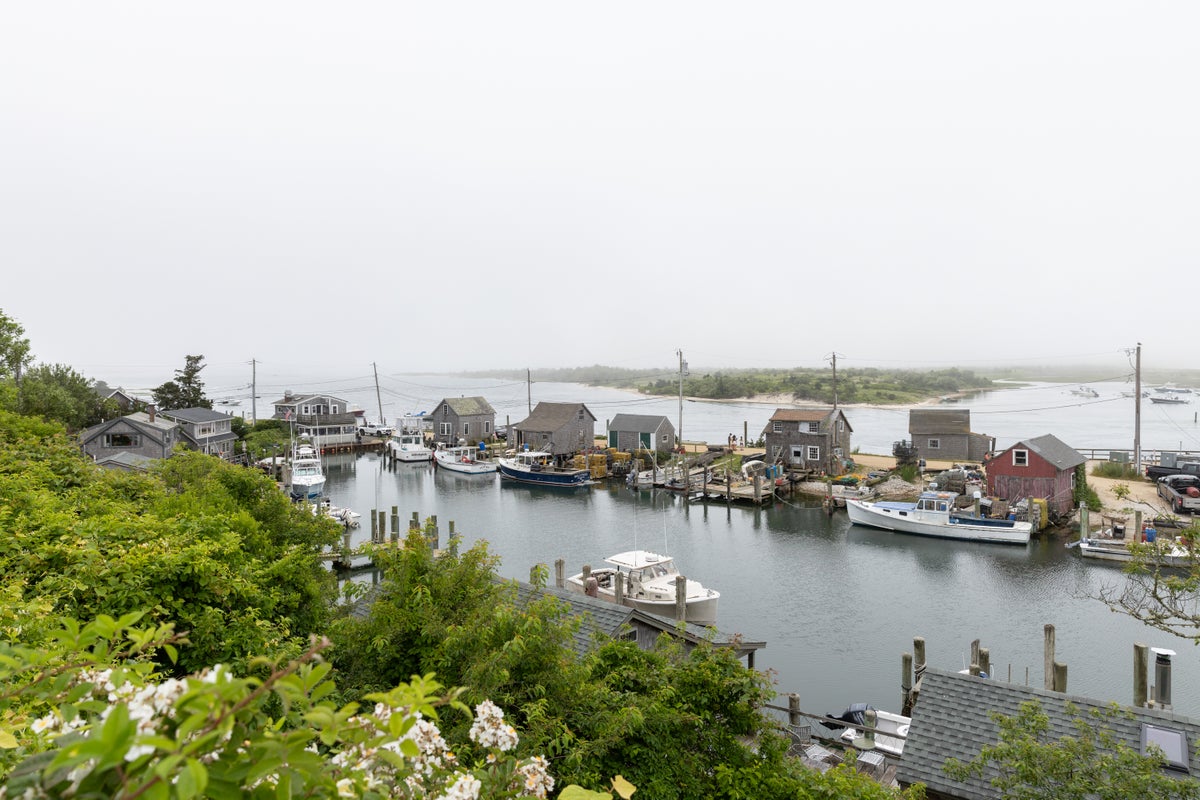
The island of Martha’s Vineyard has long existed as a paradox of high-net-worth isolation and crumbling infrastructure. For years, the town of West Tisbury has operated in a digital dead zone where emergency calls drop and residents are forced to wander into their yards to catch a flickering bar of LTE. When Verizon proposed a solution—a small-cell wireless facility tucked inside the steeple of a local church—it seemed like the kind of invisible infrastructure upgrade that satisfies both utility and aesthetics. Instead, the proposal ignited a legal and social firestorm that has landed town officials in federal court.
Verizon is now suing the West Tisbury Zoning Board of Appeals, alleging that the town’s repeated denials of the project violate the Telecommunications Act of 1996. This isn't just a localized spat over a church steeple. It is a fundamental clash between federal law, which mandates reliable connectivity, and the fierce, often litigious "home rule" culture of New England’s elite enclaves. The situation exposes a hard truth that many wealthy communities ignore: you cannot have a modern economy and a functioning public safety net without the industrial hardware to support it. You might also find this related coverage insightful: Why Trump is Right About Tech Power Bills but Wrong About Why.
The Church Steeple Strategy and Why It Failed
The plan was simple on paper. Verizon sought to install equipment inside the First Congregational Church of West Tisbury. By placing the antennas inside the existing steeple, the carrier intended to provide "stealth" coverage that wouldn't mar the historic skyline. It is a standard industry tactic. In most towns, hiding a cell site inside a religious or historic structure is the quickest path to approval because it avoids the visual blight of a steel lattice tower.
However, West Tisbury officials didn't see a compromise. They saw a precedent. The Zoning Board of Appeals denied the special permit, citing concerns over the "scale" of the project and its impact on the historic character of the village center. But the investigative trail suggests the denial wasn't really about the height of the steeple or the color of the shingles. It was about a deep-seated resistance to any corporate footprint on an island that prides itself on being "untouched." As reported in latest articles by Investopedia, the effects are worth noting.
The fallout is now a federal matter. Verizon’s lawsuit argues that the board’s decision lacks "substantial evidence" and effectively prohibits the provision of personal wireless services in the area. Under federal law, local governments cannot pass rules that have the effect of prohibiting cell service. If a carrier can prove a significant gap in coverage exists and that their proposal is the least intrusive way to fix it, they usually win.
The Public Safety Myth
Opponents of the tower often frame their resistance as a defense of the "island way of life." But that way of life is increasingly dangerous. The local police and fire departments have quietly signaled for years that the lack of reliable cellular signals creates a massive liability during emergencies. When a tourist has a heart attack on a trail or a brush fire breaks out in a remote patch of scrub oak, every second wasted searching for a signal is a step toward tragedy.
The irony is thick. Many of the residents fighting the tower are the same individuals who rely on high-speed data to manage their portfolios or run global businesses from their summer homes. They want the convenience of the modern world without the physical presence of the tech that enables it. This "not in my backyard" (NIMBY) sentiment has shifted from a minor annoyance to a systemic barrier to basic safety.
The Legal Trap for Small Towns
West Tisbury is currently caught in a legal pincer movement. On one side, the town faces the massive legal budget of a Fortune 500 company. On the other, they are bound by a 30-year-old federal law—the Telecommunications Act—that was specifically designed to stop local boards from blocking the national rollout of wireless networks.
When a town denies a cell tower, they must provide a written record supported by "substantial evidence." Vague claims about "property values" or "general aesthetics" rarely hold up in federal court. If Verizon proves that the church steeple was the only viable location to close the coverage gap, the court can issue an injunction forcing the town to allow the construction. At that point, the town has spent hundreds of thousands of dollars in legal fees only to end up with the very tower they fought to prevent.
The Hidden Cost of Aesthetic Purity
The resistance in West Tisbury isn't just about one church. It’s about the rising cost of maintaining a "curated" environment. Across the country, similar battles are playing out in places like Malibu, the Hamptons, and Aspen. These communities are finding that the "invisible" solutions—small cells on lamp posts or antennas in steeples—are no longer enough to satisfy the massive data demands of the 5G era.
We are seeing a shift in how infrastructure is viewed. For decades, a cell tower was a sign of progress. Now, in the eyes of a certain class of homeowner, it is a sign of industrial intrusion. This creates a digital divide not based on income, but on geography. While urban areas are saturated with 5G nodes, wealthy rural enclaves are becoming "connectivity deserts" by choice.
The data usage on Martha’s Vineyard spikes by over 500% during the summer months. The existing infrastructure, designed for a year-round population of 20,000, simply collapses under the weight of 200,000 visitors all trying to stream video or upload photos at once. By blocking the West Tisbury steeple project, the board isn't just preserving a view; they are ensuring that the network will continue to fail exactly when it is needed most.
Re-engineering the Approval Process
To fix this, towns need to stop treating cell carriers as enemies and start treating them as utility providers, much like the electric or water company. The current "adversarial" model of permitting only leads to expensive litigation.
- Pre-approved Zoning Districts: Towns should proactively identify "preferred" spots for wireless equipment—water towers, municipal buildings, or commercial zones—before the carriers even show up.
- Master Planning: Instead of reacting to one-off applications from Verizon or AT&T, towns can hire independent radio frequency (RF) engineers to map out exactly where the gaps are. This takes the "we don't need it" argument off the table.
- Infrastructure Sharing: Encouraging "co-location," where multiple carriers share a single disguised pole, reduces the total number of sites needed.
West Tisbury’s resistance might feel like a victory for local control today, but it is a strategic failure for the town's future. You cannot litigate your way out of the need for physics. Radio waves require line-of-sight and proximity. If the town refuses the steeple, the next proposal will likely be a 150-foot monopole in a location that is far harder to hide.
The federal court will likely side with the carrier, not because they love big business, but because the law recognizes that communication is a necessity, not a luxury. The residents of West Tisbury will eventually get their cell service, but it will come with a side of heavy legal bills and a fractured relationship with the companies that keep their devices connected.
Check your own town’s zoning maps for "telecommunications overlays" to see if a similar legal trap is being set in your backyard.