The collapse of Long Island’s oyster yields following extreme winter conditions is not merely a localized weather event; it is a systemic failure of biological risk management. While casual reporting focuses on the "harsh winter," a technical audit reveals that the supply shortage is the result of a specific intersection between physiological thresholds, ice-related mechanical destruction, and a rigid distribution model that lacks geographic diversification. The market now faces a structural deficit where demand—fueled by year-round raw bar consumption—remains inelastic while the primary production hubs have entered a period of forced fallowing.
The Physiology of Mortality: The Critical Temperature Threshold
Oysters (Crassostrea virginica) are remarkably resilient, yet they operate within a narrow metabolic window during winter months. The mortality observed across Long Island beds can be categorized into two distinct biological failure modes: Don't miss our earlier article on this related article.
- Metabolic Exhaustion: When water temperatures drop below 4°C, oysters enter a state of dormancy. Their metabolic rate slows significantly, and they cease feeding. However, if the duration of this cold snap extends beyond the organism’s stored glycogen reserves, the oyster enters a state of irreversible cellular degradation. The "harsh winter" in question was characterized not just by peak cold, but by the duration of sub-optimal temperatures that depleted these reserves before the spring phytoplankton bloom could provide a caloric refill.
- Ice Scouring and Crushing: Physical damage represents the second pillar of the supply crisis. Shallow-water leases, common in the Great South Bay and Peconic Estuary, are vulnerable to "ice jacking." As surface ice thickens and shifts with tidal movements, it exerts immense lateral pressure on cages and equipment. In many instances, the oysters were not killed by the cold itself but by the mechanical failure of the containment systems, which resulted in the bivalves being crushed or buried in anaerobic sediment where they suffocated.
The Cost Function of Bivalve Recovery
Replacing lost stock is not a simple matter of purchasing new seed. The economic recovery of a decimated oyster farm is governed by a multi-year lag that creates a "supply trough."
- Growth Cycle Constraints: A typical Long Island oyster requires 18 to 36 months to reach a marketable size of 3 inches. A total loss of the 2023 or 2024 cohort means that even if a farmer replants today, the revenue gap will persist until late 2026 or 2027.
- Seed Scarcity: Mass mortality events often affect hatcheries and nurseries simultaneously. When a region-wide freeze occurs, the demand for oyster seed spikes exactly when the supply of broodstock is most compromised. This creates a bottleneck in the upstream supply chain, driving up the input costs for the remaining viable farms.
- Labor and Infrastructure Overhead: Unlike terrestrial crops, maritime infrastructure requires constant maintenance. The destruction of cages, floats, and sorting equipment during a freeze necessitates immediate capital expenditure (CAPEX) at a time when the business has zero cash flow from harvests.
Market Distortions and the Elasticity of Luxury Seafood
The Long Island oyster occupies a specific "premium" niche in the Atlantic seafood market. Because the brand is tied to the specific terroir of the New York bays, substitution is difficult. From a strategic standpoint, the shortage creates several immediate market shifts: To read more about the context of this, Reuters Business offers an excellent summary.
The primary distortion is the premium-gap inflation. As the supply of Long Island Blue Points or Peconic Gold oysters vanishes, wholesalers must source from the Chesapeake Bay or Atlantic Canada. However, transportation costs and the "origin premium" associated with New York’s proximity to Manhattan’s high-end dining scene mean that margins for local restaurateurs will compress. They cannot easily pass a 40% increase in wholesale oyster prices onto a consumer already sensitive to menu inflation.
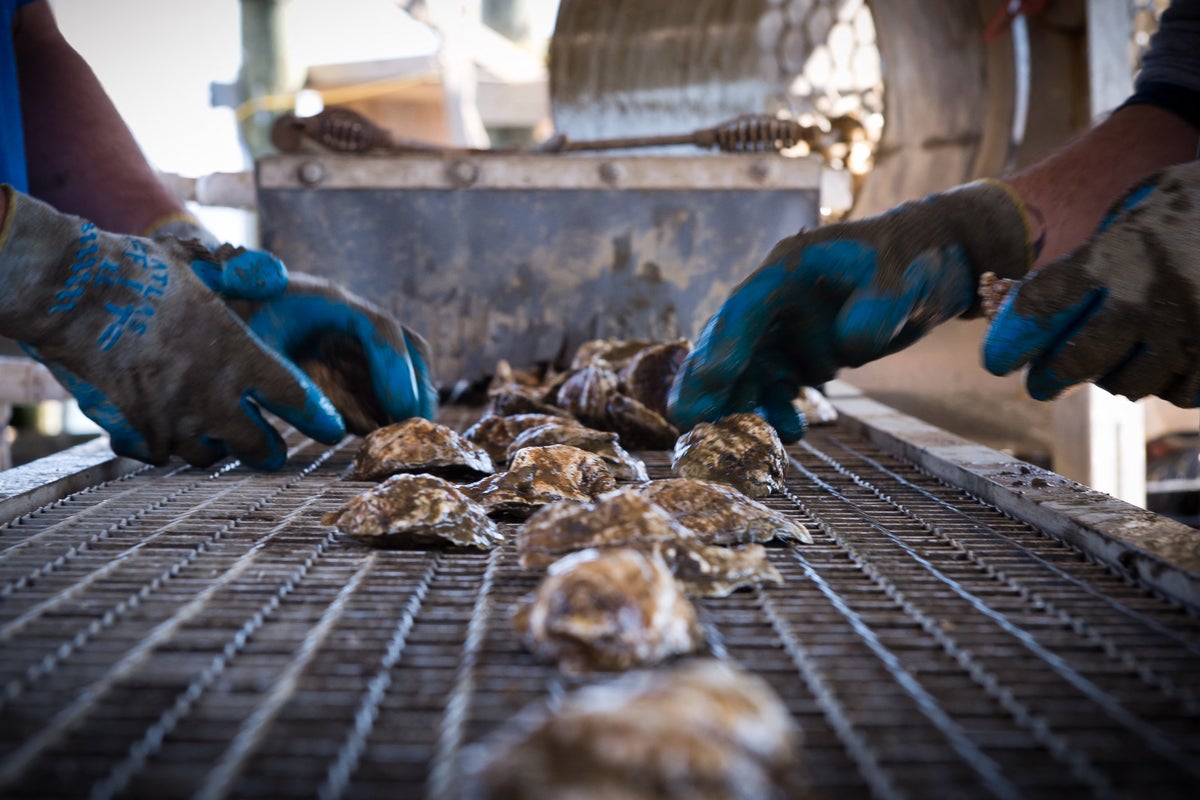
The second distortion is the quality-consistency bottleneck. Cold-stressed survivors of a harsh winter often exhibit brittle shells and watery liquor (the fluid inside the oyster). Even the oysters that survived are technically inferior for the half-shell market, forcing farmers to either sell a subpar product—damaging their brand—or hold the stock longer, further delaying cash realization.
Risk Mitigation Frameworks for Aquacultural Resilience
To prevent a recurrence of this systemic collapse, the industry must transition from artisanal farming to a model of high-resilience aquaculture. This requires the implementation of three specific structural changes:
Vertical Relocation and Depth Stratification
The majority of the mortality occurred in shallow-water leases where the water column lacks thermal mass. Moving aquaculture operations to deeper water—typically 20 feet or more—provides a thermal buffer. At these depths, water temperatures remain more stable, staying slightly above the lethal freezing point even when surface ice forms. This requires more sophisticated hoisting equipment and diving capabilities, but it de-risks the biological asset.
Genetic Selection for Cold-Hardiness
Current hatchery practices often prioritize growth rate and shell shape. There is a critical need to pivot toward "winter-stable" strains of Crassostrea virginica. This involves selective breeding of individuals that demonstrate higher glycogen retention and a lower basal metabolic rate during dormancy.
Redundant Inventory Management
Farmers must adopt a "split-fleet" strategy. Rather than keeping all inventory in a single geographic lease, diversifying stock across multiple micro-climates within the Long Island Sound and the South Shore bays can prevent a localized weather event from resulting in a 100% loss. This increases operational complexity but functions as a biological insurance policy.
The Breakdown of the Distribution Chain
The current crisis highlights the fragility of the "farm-to-table" logistics model. When a primary production node fails, the entire downstream chain—comprising specialized seafood distributors, shucking houses, and hospitality venues—faces an inventory vacuum.
- The Lead-Time Trap: Retailers who rely on weekly "just-in-time" deliveries are the most vulnerable.
- The Contractual Pivot: Large-scale buyers are now moving away from "single-origin" sourcing toward "regional-blend" sourcing to ensure shelf stability, which threatens the brand equity of independent Long Island growers.
Strategic Outlook for the 2026 Season
The inventory deficit will likely peak in the third quarter of 2026. Data suggests that the loss of the "sub-market" seed during the freeze has created a "missing year" in the population pyramid of local oyster beds. Consequently, the market should anticipate a sustained price floor of approximately 15-20% above the five-year average.
The immediate strategic play for growers is an aggressive shift toward over-wintering in protected wet-storage. By removing oysters from the water and storing them in climate-controlled, recirculating aquaculture systems (RAS) during the peak of January and February, farmers can eliminate the risk of ice damage and metabolic collapse entirely. While this increases the energy cost per unit, the "scarcity premium" achievable in a post-winter market—where competitors have lost their stock—justifies the investment.
The Long Island oyster industry is at a crossroads: it must either evolve into a technology-integrated, climate-shielded production system or remain a high-variance gambling operation subject to the volatility of the North Atlantic climate. The current shortage is the market's loudest signal that the era of low-tech, shallow-water farming is reaching its environmental limit.