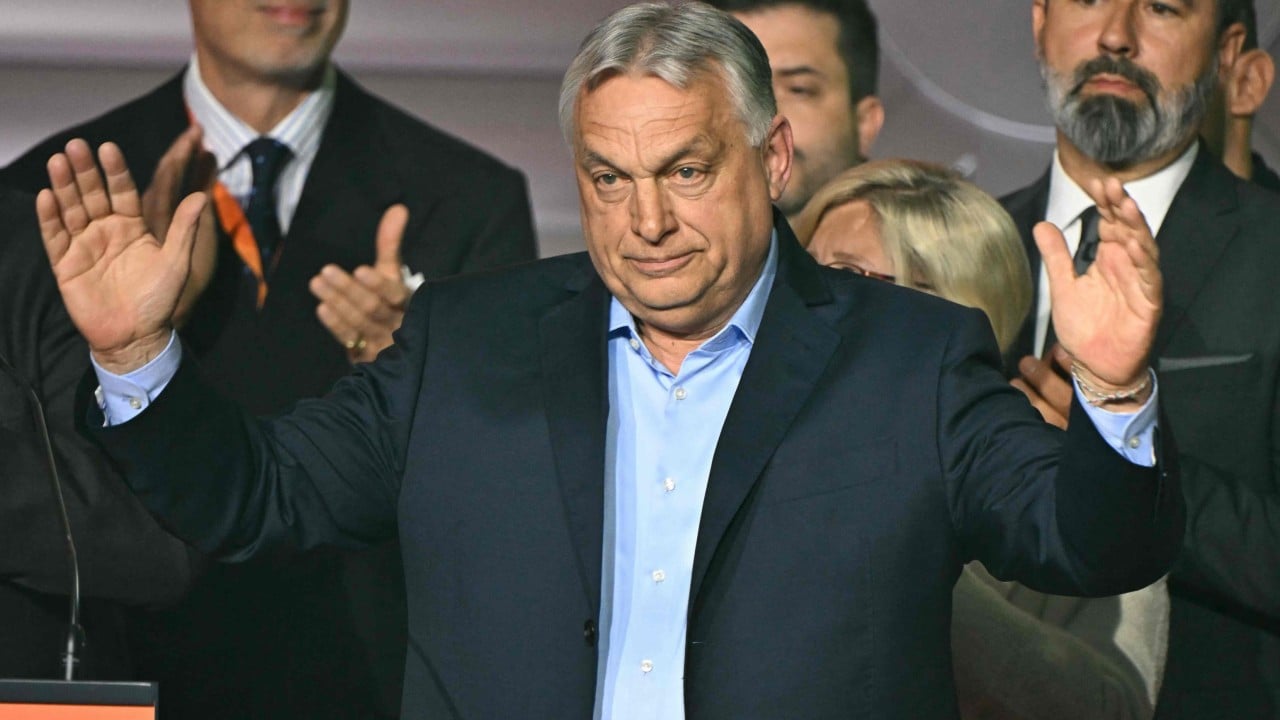
The sixteen-year tenure of Viktor Orbán in Hungary did not conclude due to a singular policy failure but through the exhaustion of a specific political business model. By treating the state as a closed-loop system of patronage and information control, the Fidesz administration created a predictable trajectory of diminishing returns. The electoral results of April 12, 2026, represent the systemic correction to this model, driven by a record turnout of 79.51 percent, which bypassed the barriers to entry established over the preceding decade and a half.
The Mechanics of Systemic Exhaustion
Political regimes that rely on the consolidation of media and the redirection of public funds to a loyalist base require constant growth to satisfy their constituents. This is the Clientelism Feedback Loop. Initially, this model functions efficiently; by channeling EU subsidies and state contracts through a trusted network, the regime builds a foundation of high-loyalty support. However, this creates two structural vulnerabilities:
- Administrative Atrophy: As positions of influence are filled based on loyalty rather than competency, the state’s capacity to solve complex problems—such as health care, education, and infrastructure—declines. When external shocks occur, or when fiscal conditions tighten, the administration lacks the institutional agility to adapt.
- The Information Vacuum: By controlling the narrative via state-aligned media outlets, the regime isolates itself from the feedback necessary for mid-course correction. The leadership begins to believe its own propaganda, failing to perceive the genuine dissatisfaction building within the labor force and the middle class until it manifest as an electoral landslide.
The Rise of a New Operational Variable
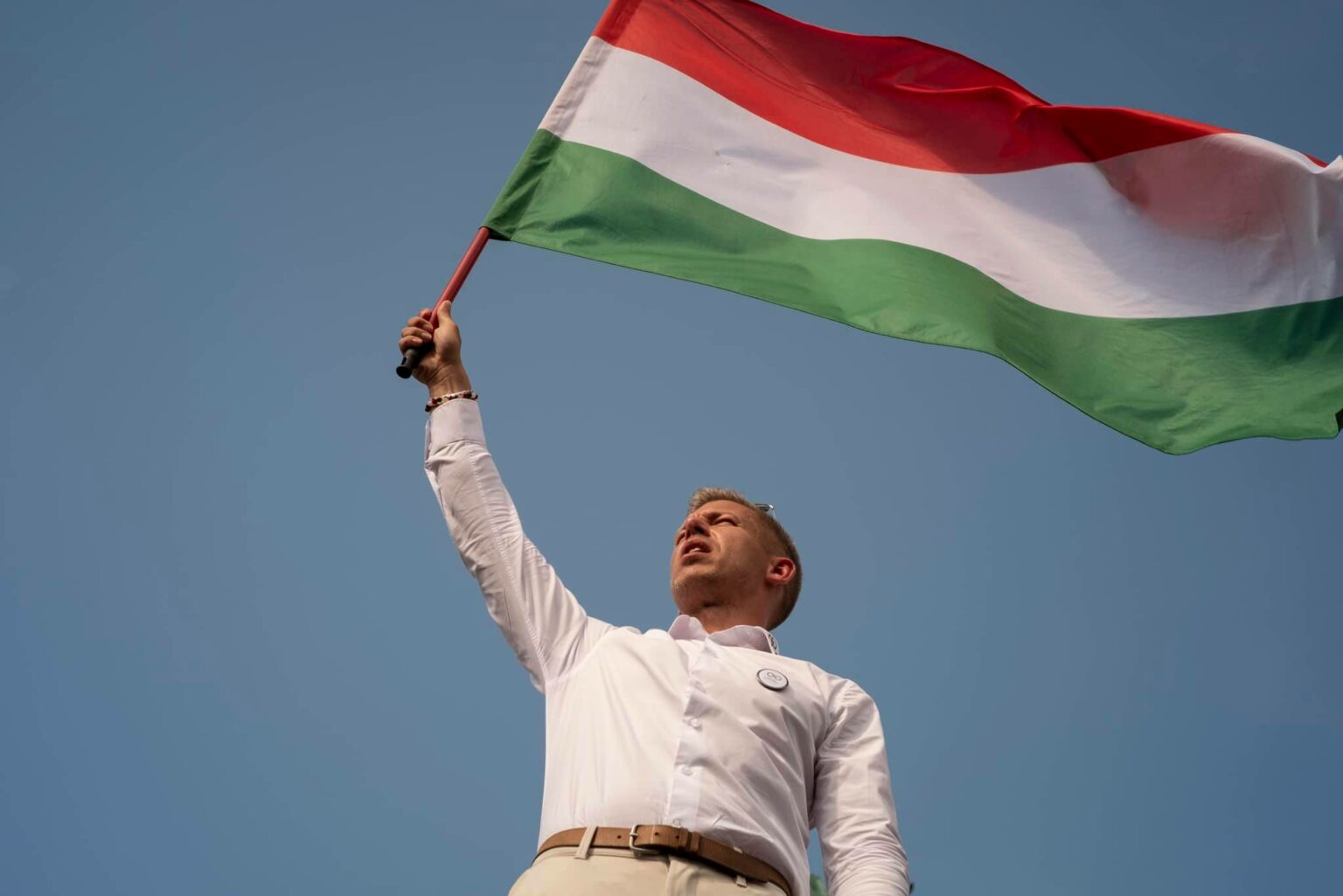
Péter Magyar’s Tisza party did not merely capitalize on anti-incumbency; it successfully executed a strategy that neutralized the state's traditional defenses. In authoritarian or hybrid systems, the greatest challenge for an opposition is coordination. By framing his movement as a return to core national values—stripping the regime of its monopoly on the definition of "patriotism"—Magyar created a high-bandwidth alternative that forced the electorate to choose between entrenched patronage and systemic reform.
The shift in voting behavior was not ideological in the traditional left-right sense. Instead, it was an empirical rejection of the performance metrics of the previous government. When voters see high inflation, decaying public infrastructure, and the visible enrichment of a small circle of elite stakeholders, the ideological marketing of the regime loses its weight.
The Cost of International Misalignment
Orbán’s foreign policy was an exercise in high-risk diversification. By positioning Hungary as the primary conduit for Russian influence within the European Union and NATO, he assumed that the EU would remain constrained by its internal rules regarding unanimity. This was a calculated gamble that relied on the perpetual fragmentation of the West.
The strategy failed because it neglected the Institutional Inertia of international alliances. As security risks in the region increased, the tolerance threshold for a "spoiler" state decreased. Hungary became a liability to the operational effectiveness of both the EU and its regional neighbors, leading to the freezing of vital economic funds. This loss of financial liquidity was the death knell for the patronage system. Without the ability to distribute resources, the loyalty of the lower-tier enablers evaporates, leading to the rapid internal collapse seen in the final weeks of the campaign.
Strategic Implications for the Incoming Administration
The transition to a Tisza-led government will not be an instant fix; it will be an exercise in cleaning a saturated balance sheet. The incoming leadership faces three immediate constraints:
- Institutional Capture: The deep-state infrastructure built by Fidesz remains in place. Purging these networks requires surgical precision to avoid a paralysis of the civil service.
- Fiscal Reconstruction: Redirecting funds from private patronage networks back into public services requires an immediate audit of all state contracts from the last 16 years.
- Rebuilding Credibility: Restoring access to EU funds is not merely a matter of policy change; it requires convincing the European Commission that the foundational mechanisms of the rule of law have been restored and protected against future reversal.
The strategic priority is to decouple the state from the party. The first act of the new government must be the establishment of independent, automated oversight mechanisms for all state expenditure. This serves as the primary barrier against the resurrection of the patronage model. By standardizing procurement and depoliticizing the judiciary, the new administration can create a transparent environment that prevents the re-concentration of power, ensuring that the structural corrections of 2026 are codified rather than merely a temporary fluctuation.