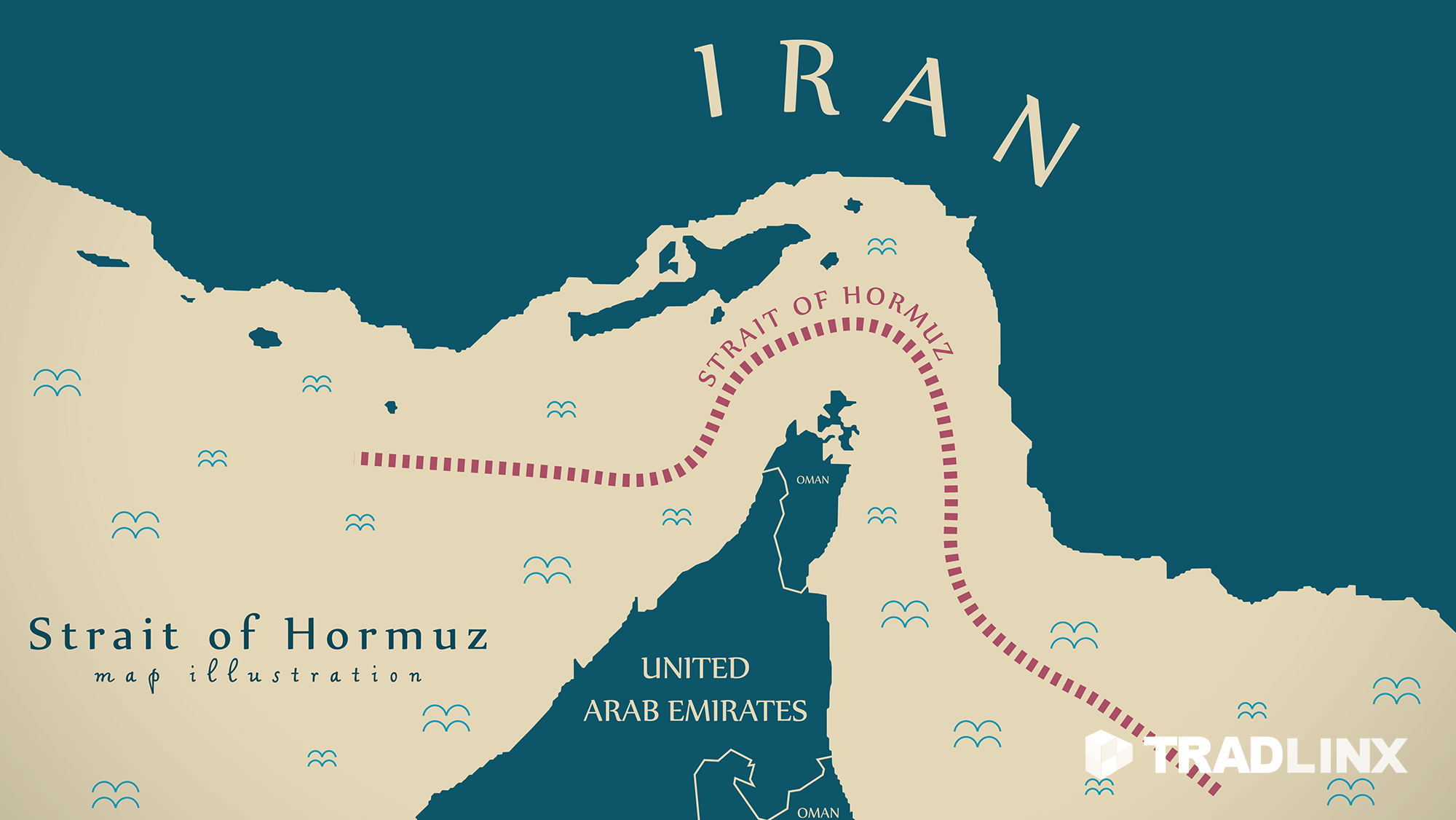
Most people look at a map of the Middle East and see a single, narrow blue line as a heart monitor for the global economy. They think if the Strait of Hormuz closes, gas prices go up, and that’s the end of the story. It’s a lazy way to look at geography. While the flow of 20 or 21 million barrels of oil every day is a massive deal, focusing only on crude misses the real danger. This tiny stretch of water between Oman and Iran is a bottleneck for food, high-tech manufacturing, and the very stability of the global supply chain.
If you want to understand why every major navy on earth keeps a ship nearby, you have to look past the tankers. The Strait isn't just a gas station. It’s a vital artery for liquefied natural gas (LNG), a massive transit point for grain, and a psychological anchor for the entire world’s financial markets. When things get tense in these waters, it doesn't just hit your wallet at the pump. It hits the cost of heating a home in Europe and the price of bread in North Africa.
The massive LNG factor nobody mentions
We talk a lot about oil, but the real "quiet" giant in the Strait is Qatar’s LNG. Qatar is one of the world’s top exporters of liquefied natural gas. Almost all of that gas has to pass through the Strait of Hormuz to reach buyers in Japan, South Korea, and China. In the last few years, especially with the shifts in European energy needs, that gas has become even more critical.
Imagine a sudden halt. You aren't just looking at more expensive fuel for cars. You’re looking at power plants in Asia shutting down. You're looking at a complete breakdown of industrial manufacturing that relies on steady, cheap energy. Unlike oil, which many countries keep in strategic reserves (like the U.S. Strategic Petroleum Reserve), LNG is harder to store in massive quantities for long periods. It’s a "just-in-time" energy source. If the Strait narrows or closes, the lights go out in places thousands of miles away.
A logistical nightmare for global trade
The Strait of Hormuz is about 21 miles wide at its narrowest point. But the actual shipping lanes—the "roads" big ships have to stay in—are only about two miles wide in each direction. It's a crowded, high-stakes game of Tetris played with vessels the size of skyscrapers.
Think about the sheer volume of non-oil cargo. The ports in the United Arab Emirates, specifically Jebel Ali in Dubai, are some of the busiest on the planet. They handle millions of containers filled with everything from iPhones to car parts and heavy machinery. When the Strait gets sketchy, insurance premiums for every single one of those ships skyrocket. These "war risk" surcharges aren't absorbed by the shipping companies. They're passed directly to you.
I’ve seen how markets react when a single tanker gets harassed or a drone flies too close to a deck. It isn't just a localized military problem. It’s a tax on global trade. If a cargo ship carrying semi-conductors or medical equipment has to wait out a conflict, the delay ripples through every factory in Europe and America.
Food security and the regional hunger gap
This is the part that gets ignored in the glossy financial news reports. Many countries in the Gulf region import up to 90% of their food. Much of that grain and livestock comes through the Strait. While some countries like Saudi Arabia and the UAE have built ports on the Red Sea to bypass the Strait, the infrastructure isn't nearly enough to handle the total volume required to feed the region.
A prolonged disruption creates an immediate humanitarian crisis. It’s not just about the "global North" losing money. It’s about the "global South" losing access to basic calories. We saw how the grain disruptions in the Black Sea sent shockwaves through the world. The Strait of Hormuz carries a similar weight. If the ships stop moving, the silos go empty.
The myth of the easy bypass
You’ll hear "experts" say we can just use pipelines. It sounds simple on paper. Saudi Arabia has the East-West Pipeline. The UAE has the Habshan–Fujairah pipeline. These are great tools, but they’re like trying to empty a swimming pool with a straw.
The combined capacity of all existing pipelines that bypass the Strait is roughly 6.5 to 7 million barrels per day. Remember that 21 million barrels pass through the water. You can't fit 21 million into a 7-million-barrel pipe. The math doesn't work. Pipelines are also static targets. They can be sabotaged, bombed, or shut down by technical failures. The sea is vast; a pipe is a fixed line on a map. Relying on them as a "total solution" is a dangerous gamble that ignores the physical reality of energy transport.
Why the geography is a permanent headache
Iran sits on the northern shore with a long, jagged coastline. They have hundreds of small, fast boats, sea mines, and coastal missile batteries. On the southern side, you have the Musandam Peninsula, an exclave of Oman. The shipping lanes actually pass through Omani territorial waters.
This creates a weird legal and military mess. Under the United Nations Convention on the Law of the Sea (UNCLOS), ships have the right of "transit passage." This basically means they can go through as long as they keep moving and don't cause trouble. But Iran hasn't ratified everything in UNCLOS, and they often claim they have more right to "police" the water than the West admits.
This isn't just a military standoff. It’s a legal one that stays in a constant state of "almost boiling." Every time a Western destroyer escorts a tanker, the tension goes up a notch. It’s a delicate dance where one nervous radar operator could trigger a global recession.
Watching the right indicators
If you want to know if things are actually getting bad, don't just look at the price of Brent Crude. Look at the Baltic Dry Index or the insurance rates for "Clean" vs "Dirty" tankers in the Middle East Gulf. Look at the shipping schedules for Fujairah. That’s where the real story is told.
The Strait of Hormuz is a psychological weapon as much as a geographic one. The threat of closing it is often more effective than actually closing it. Actually closing it would be an act of war that would likely result in the destruction of the perpetrator's own navy and economy. But keeping the world on edge? That’s free.
To stay ahead of the curve, pay attention to the port expansions in Oman. They are the biggest tell for how much the world actually fears a Hormuz shutdown. The more money that goes into ports like Duqm—which sits safely outside the Strait on the Arabian Sea—the more you know the big players are terrified of that narrow blue line. Keep an eye on regional naval drills and the specific types of ships being deployed. If you see an increase in mine-countermeasure vessels, start worrying. Until then, it’s mostly just loud talk in a very crowded room.