The G7 Foreign Ministers’ recent assertion regarding the "absolute necessity" of a "safe and toll-free" Strait of Hormuz functions as more than a diplomatic platitude; it is a formal recognition of the terminal vulnerability in the global energy supply chain. When the G7 invokes "safe and toll-free" passage, they are defining the baseline requirements for global price stability. Any deviation from this baseline—whether through kinetic kinetic interference, "shadow tolls" in the form of skyrocketing insurance premiums, or state-sponsored harassment—acts as a regressive tax on the global economy. The strategic imperative is to decouple the physical transit of hydrocarbons from the political volatility of the Persian Gulf littoral states.
The Mechanics of the Hormuz Chokepoint
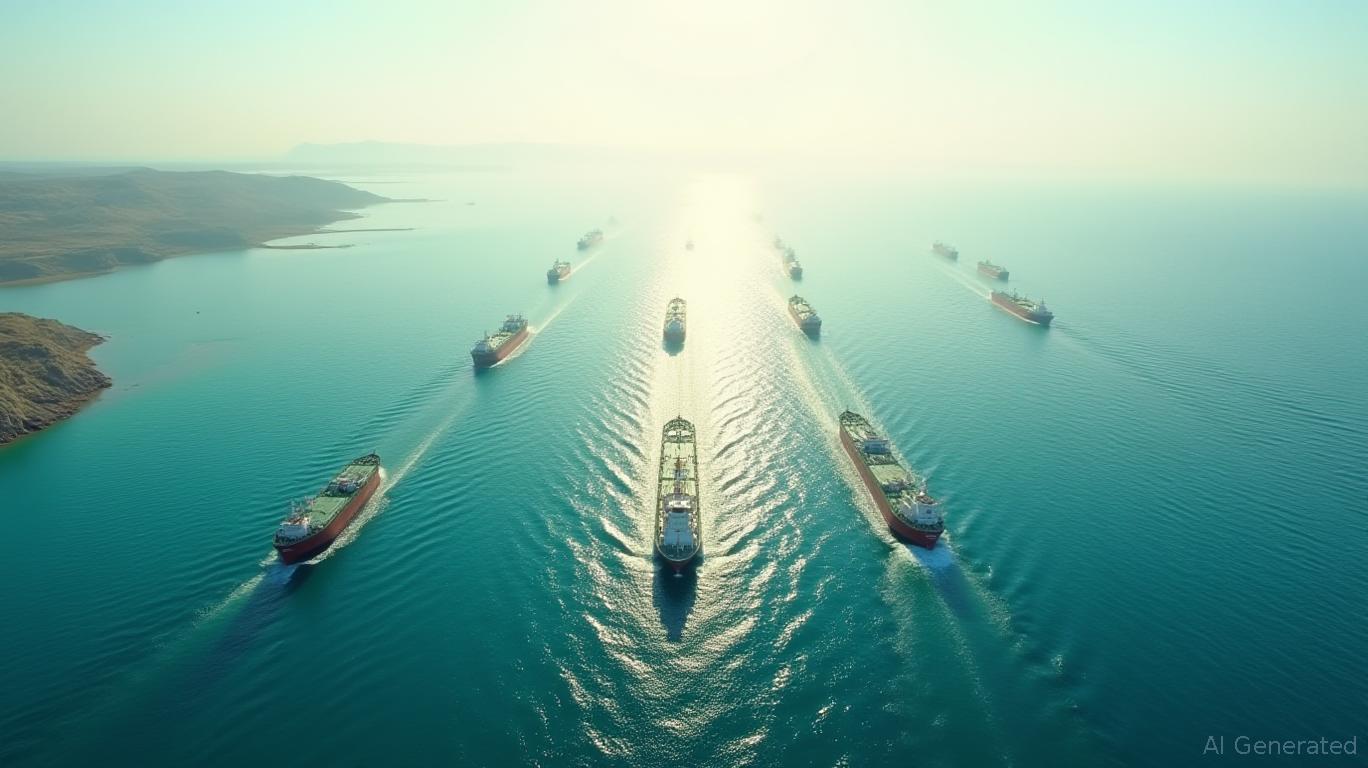
The Strait of Hormuz is a geographic constraint that dictates global fiscal policy. Approximately 20% of the world’s liquid petroleum and nearly 25% of its liquefied natural gas (LNG) pass through a 21-mile wide channel at its narrowest point. However, the operational reality is even more constricted. The shipping lanes, governed by a Traffic Separation Scheme (TSS), consist of two-mile-wide channels for inbound and outbound traffic, separated by a two-mile buffer zone.
Disruption in this corridor follows a predictable escalation ladder:
- The Insurance Escalation: Before a single shot is fired, the "toll" manifests as a War Risk Surcharge. Underwriters at Lloyd’s of London monitor regional friction to adjust premiums. A move from "stable" to "active threat" can increase shipping costs by hundreds of thousands of dollars per transit, effectively creating a non-state toll.
- The Tactical Harassment Phase: This involves the use of Fast Attack Craft (FAC) and unmanned aerial vehicles (UAVs) to disrupt the psychological and operational flow of commercial shipping. The goal is not destruction, but the erosion of the "safe" designation, forcing naval escorts and increasing the logistical friction of every barrel moved.
- The Kinetic Interdiction: This is the "absolute" failure state. It involves sea mines, anti-ship cruise missiles (ASCMs), or physical seizures. At this stage, the "toll-free" nature of the strait is replaced by a hard blockade.
The Cost Function of Maritime Insecurity
The G7’s focus on a "toll-free" strait addresses the hidden economic costs of maritime insecurity. When a chokepoint becomes contested, the global economy absorbs three distinct types of "tolls":
The Direct Premium Toll
This is the immediate increase in freight and insurance rates. For a Very Large Crude Carrier (VLCC) carrying 2 million barrels, even a marginal increase in insurance can shift the landed cost of oil significantly.
The Inventory Buffer Toll
Uncertainty regarding Hormuz forces nations to maintain larger Strategic Petroleum Reserves (SPR) and commercial inventories. The capital tied up in these "just-in-case" stocks is capital removed from productive investment. The G7's insistence on safety is an attempt to reduce the global requirement for these expensive hedges.
The Rerouting Inefficiency
While some pipelines exist (such as the Habshan–Fujairah pipeline in the UAE and the East-West Pipeline in Saudi Arabia), their aggregate capacity cannot compensate for a full closure of the Strait. Rerouting adds days to transit times and increases carbon intensity, creating a secondary environmental and logistical cost.
Sovereignty vs. International Commons
The tension in the G7 statement stems from the legal status of the Strait. While the waters fall within the territorial seas of Iran and Oman, the United Nations Convention on the Law of the Sea (UNCLOS) provides for "transit passage." This legal framework is the foundation of the "toll-free" requirement.
The challenge arises because Iran is not a party to UNCLOS, though it has signed it. They argue for the more restrictive "innocent passage" regime, which allows a coastal state to suspend transit if it deems the passage prejudicial to its peace or security. The G7’s emphasis on "absolute necessity" is a preemptive rejection of this interpretation. By framing the strait as an international common, the G7 is signaling that any attempt to impose a sovereign "toll"—political or financial—will be treated as a violation of international order rather than a local maritime dispute.
The Deterrence Framework
To maintain a "safe and toll-free" environment, the G7 relies on a multi-layered deterrence strategy that moves beyond simple naval presence.
Information Integration
Security is predicated on the ability to distinguish between commercial traffic and asymmetric threats. The International Maritime Security Construct (IMSC) and its operational arm, Task Force Sentinel, utilize persistent overhead surveillance and AI-driven pattern recognition to identify "dark" ships—vessels that turn off their Automatic Identification System (AIS) to evade sanctions or conduct illicit operations. Maintaining the "safe" status of the strait requires a transparent digital ledger of all movements.
Asymmetric Counter-Measures
The threat in Hormuz is rarely a conventional navy-to-navy engagement. It is a "swarm" threat. G7 members have shifted their procurement toward smaller, modular platforms capable of countering FACs and UAVs. The objective is to make the cost of interference higher than the political gain for the regional actor.
Diplomatic Multilateralism
By issuing a joint statement, the G7 removes the "US vs. Iran" binary. It frames the security of the Strait as a global requirement for the "Global South" and Asian economies (specifically China, India, and Japan), which are more dependent on Persian Gulf exports than the United States is. This creates a diplomatic shield, making any disruption an affront to the entire global trade network rather than a targeted strike against a Western superpower.
The Limits of Naval Power
It is a strategic error to assume that naval superiority alone can guarantee a "toll-free" strait. Naval assets are finite and expensive. Constant patrolling creates a "readiness debt" where maintenance cycles are deferred to keep ships on station.
The second limitation is the "threshold of response." If a regional actor uses a sea mine that damages a tanker but doesn't sink it, does that trigger a full military response? The ambiguity of "gray zone" tactics is designed to stay just below the threshold that would justify a G7-led kinetic intervention. Consequently, the "absolute necessity" of a safe strait is often maintained through a fragile equilibrium of shadow-boxing and economic sanctions rather than overt force.
The Energy Transition Variable
The G7’s stance must be viewed through the lens of the energy transition. As these nations move toward decarbonization, their physical dependence on Hormuz may decrease, but their exposure to global price shocks does not. Oil is a fungible global commodity. A disruption in Hormuz that spikes prices in Shanghai will simultaneously spike prices in Berlin and New York.
This creates a paradox: the G7 must commit significant military and diplomatic capital to protect a resource they are actively trying to phase out. This commitment is necessary to prevent a "disorderly transition" where energy price volatility triggers a global recession, thereby stripping the capital needed for green energy investments.
Strategic Imperatives for Market Participants
The G7 statement serves as a signal for long-term strategic planning. Stakeholders should operate under the following logical deductions:
- Hardening of Supply Chains: Expect a permanent shift toward bypassing the Strait where possible. Investment in pipelines and storage facilities outside the Gulf (e.g., in Fujairah or Duqm) will carry a "security premium" that justifies higher capital expenditure.
- Technological Monitoring: Shipping companies will increasingly adopt independent, satellite-based tracking and encrypted communication systems to mitigate the risk of AIS spoofing and electronic warfare in the Strait.
- Contractual "Conflict" Clauses: Future energy contracts will see more sophisticated "Force Majeure" and "Hardship" clauses specifically tied to the G7-defined metrics of "safe and toll-free" passage.
The G7’s rhetoric is a desperate attempt to maintain the status quo in a region where the status quo is under constant erosion. By quantifying the "absolute necessity" of the Strait, they have drawn a line in the water. The effectiveness of this line depends not on the strength of the prose, but on the credibility of the underlying military and economic architecture to enforce a zero-tolerance policy for maritime interference.
Maintain a focus on the Habshan–Fujairah pipeline capacity and the development of the Duqm port in Oman as the primary physical hedges against Hormuz failure. If these infrastructures reach a critical mass where they can handle 50% or more of the region's output, the strategic leverage of the Strait—and the necessity of the G7's intervention—will fundamentally shift from an existential requirement to a manageable risk. Until then, the Strait remains the single most important variable in the global inflation equation.