Iran’s recent diplomatic overture regarding the Strait of Hormuz—the suggestion that maritime security is largely a matter of "politeness"—is a calculated rhetorical masterstroke designed to obscure a brutal geopolitical reality. By framing the control of the world’s most vital oil transit point as a matter of behavioral norms rather than military posturing, Tehran is attempting to shift the burden of escalation onto Western naval powers. But behind the talk of manners lies a sophisticated strategy of asymmetric warfare and economic leverage that holds 20% of the world’s liquid petroleum consumption hostage.
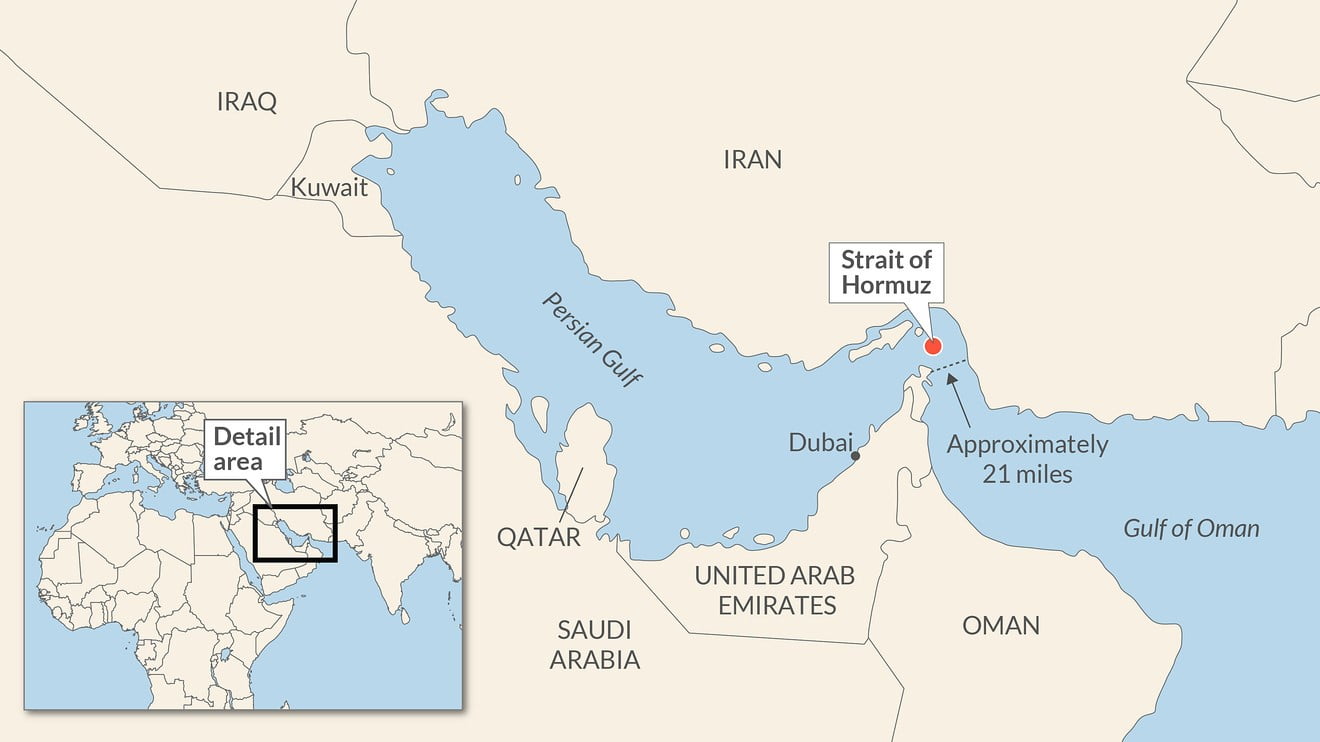
The Strait of Hormuz is not just a geographical feature. It is a 21-mile-wide jugular vein for the global economy. At its narrowest point, the shipping lanes consist of only two miles of navigable water for inbound and outbound traffic, separated by a two-mile buffer zone. Most of these lanes fall within the territorial waters of Iran and Oman. When Iranian officials suggest that foreign vessels, specifically the U.S. Navy and its allies, should simply "be polite," they are asserting a legal and physical dominance over a passage that cannot be bypassed by any existing pipeline infrastructure at scale. Read more on a similar issue: this related article.
The Illusion of the Simple Solution
The "politeness" doctrine presented by Tehran isn't about seafaring etiquette. It is a demand for the recognition of Iranian hegemony in the Persian Gulf. For decades, the presence of the U.S. Fifth Fleet has served as the guarantor of "freedom of navigation," a principle established by the UN Convention on the Law of the Sea (UNCLOS). Iran, however, has never ratified UNCLOS. Instead, it adheres to a strict interpretation of "innocent passage," which it argues can be revoked if a foreign vessel threatens the peace, good order, or security of the coastal state.
By demanding "polite" behavior, Iran is essentially redefining what constitutes a threat. In their view, the mere presence of an aircraft carrier strike group is an act of aggression. If the West complies with this "polite" standard, it effectively cedes operational control of the Strait to the Islamic Revolutionary Guard Corps (IRGC). If the West refuses, Iran gains a pretext for harassment, citing a breach of maritime decorum as a justification for seizing tankers or conducting "inspections." Further reporting by Reuters highlights related perspectives on the subject.
The Math of a Blockade
Closing the Strait of Hormuz is often discussed as a binary event—it is either open or it is closed. This is a misunderstanding of how modern maritime disruption works. Iran does not need to sink every ship to win. It only needs to raise the cost of insurance to a level that makes transit commercially non-viable.
Consider the current economics of a Very Large Crude Carrier (VLCC). These vessels carry roughly two million barrels of oil. At current market rates, a single cargo is worth upwards of $160 million. When tensions spike in the Strait, "war risk" insurance premiums skyrocket. In previous periods of friction, these premiums have jumped from a few thousand dollars per voyage to over $200,000. For a shipping company operating on thin margins, these costs, combined with the physical risk to the crew and the hull, create a de facto blockade even without a single shot being fired.
The IRGC utilizes a "swarm" tactic involving hundreds of fast-attack craft, sea mines, and shore-based anti-ship missiles. This is the "how" of their strategy. They don't need a blue-water navy to challenge a superpower; they only need to make the environment unpredictable. By oscillating between calls for "politeness" and threats of closure, Tehran keeps the global energy market in a state of permanent anxiety.
Why Pipelines are a Failed Security Blanket
To counter this vulnerability, several regional powers have invested billions in bypass routes. The Abu Dhabi Crude Oil Pipeline (ADCOP) can carry 1.5 million barrels per day to the port of Fujairah on the Gulf of Oman. Saudi Arabia has the East-West Pipeline, which can move five million barrels per day to the Red Sea. On paper, these numbers look impressive. In reality, they are insufficient.
Total oil flow through the Strait of Hormuz averages about 20 million barrels per day. Even if every bypass pipeline in the region operated at maximum capacity—which they rarely do due to maintenance and technical constraints—more than 60% of the oil would still be trapped. Furthermore, the Red Sea is no longer a "safe" alternative, as recent activity by Houthi rebels in the Bab el-Mandeb strait has proven. The "politeness" solution offered by Iran is framed as the only alternative because, mathematically, it is. There is no infrastructure on Earth that can replace the Strait of Hormuz today.
The Intelligence Gap in Maritime Security
Western intelligence services often focus on the movement of large Iranian frigates, but the real threat is hidden in plain sight. The IRGC has perfected the use of civilian-looking dhows and commercial vessels to shadow tankers and deploy sophisticated electronic warfare suites. These "ghost" monitors provide real-time targeting data for shore-based batteries.
When an Iranian official speaks of "politeness," they are also referring to the deactivation of certain surveillance and defensive postures by Western ships. They want a "dark" Gulf where their movements cannot be tracked with the same precision. This isn't just a diplomatic request; it is a tactical requirement for their doctrine of plausible deniability. If a tanker hits a mine in a "polite" environment where Western sensors have been dialled back to avoid "provocation," Iran can more easily claim it was a rogue actor or an old relic from a previous conflict.
The Role of the Global South
Tehran’s rhetoric is also aimed at a specific audience: Beijing and New Delhi. China is the largest buyer of Iranian oil, often skirted through "dark fleet" transfers and creative accounting. By framing the Strait’s tension as a localized issue of "bad manners" by Western powers, Iran is signaling to its Eastern customers that their energy security is only being threatened because of "unnecessary" U.S. interference.
This narrative finds fertile ground in a multipolar world. Many nations in the Global South are weary of the high energy prices caused by Middle Eastern instability. If Iran can convince the world that the "simple solution" is for the U.S. Navy to go home and be "polite," they isolate Washington from its allies. It is a soft-power play intended to complement their hard-power capabilities.
The Strategic Fallacy of De-escalation
There is a dangerous tendency in diplomatic circles to take these "simple solutions" at face value. The logic suggests that if we just lower the temperature, the threat will dissipate. History tells a different story. Every time the international community has eased pressure in the Gulf without securing a formal, multi-lateral maritime treaty, Iran has used the breathing room to further fortify its positions on the islands of Abu Musa and the Greater and Lesser Tunbs.
These islands are the literal gatekeepers of the Strait. They serve as unsinkable aircraft carriers, bristling with radar and missile silos. Any "polite" agreement that does not address the militarization of these specific points is merely a stay of execution for global energy markets.
The "simple solution" isn't a solution at all. It is a demand for unconditional surrender of the maritime commons. In the world of high-stakes geopolitics, politeness is often the mask worn by those who have already placed their hand on the hilt of the sword. The real challenge is not learning how to talk to Tehran, but learning how to operate in a corridor where the rules of the road are being rewritten by the very power that benefits most from their violation.
For the shipping industry, the takeaway is clear: do not mistake a change in tone for a change in intent. Hardened hulls, private security details, and diversified supply chains remain the only real defense against a chokepoint that can be closed by a sentence. The "politeness" of a predator is never a guarantee of safety for the prey. It is merely a choice of how the encounter begins.
Stop looking for a diplomatic fix to a structural geographic nightmare. Until the world finds a way to move 20 million barrels of oil through solid rock or over mountains, the Strait of Hormuz will remain a theater of shadow boxing and brinkmanship. Tehran knows this. It’s time the rest of the world stopped pretending otherwise.
Prepare for a decade of volatile premiums and "gray zone" incidents. The era of the open ocean is being challenged by the era of the sovereign gatekeeper. If you aren't ready to pay the price of admission, find a different way to power your cities. There are no more easy exits.