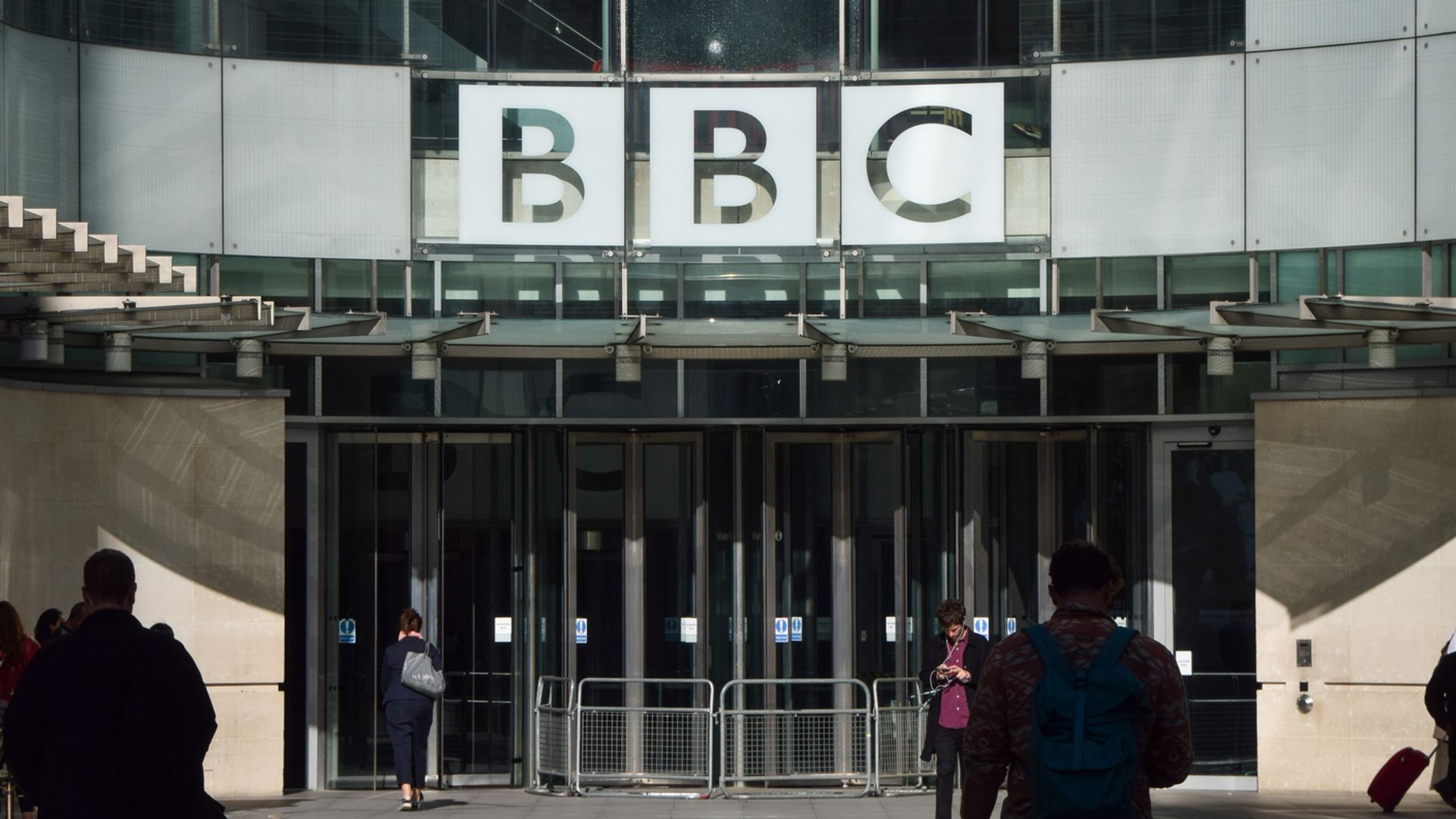
The coffee in the canteen at Broadcasting House tastes the same as it did twenty years ago. It is slightly burnt, overpriced, and served in a paper cup that softens at the edges if you linger too long over a conversation. But the conversations themselves have changed. They are quieter now. People lean in closer. They glance at their phones not for news alerts, but for emails from HR that might determine if they can keep their mortgages.
The BBC is thinning out. The announcement of up to 2,000 job cuts isn't just a line item on a balance sheet or a "strategic realignment" in a press release. It is a tectonic shift in the British cultural landscape. When you strip away 2,000 roles, you aren't just removing desks; you are erasing the specialized knowledge, the local connections, and the institutional memory that keeps a century-old engine running.
Consider a hypothetical producer named Sarah. She has spent fifteen years in a local radio station in the North of England. She knows which local councillors are dodging questions and which community leaders actually get things done. She is the one who notices when a local library quietly loses its funding. In the new lean reality of the BBC, Sarah’s role is consolidated. Her "patch" becomes three counties instead of one. The granular, messy, vital details of local life begin to blur into a generic regional feed.
This is the hidden cost of the digital-first mandate.
The Math of a Shrinking Giant
The numbers are stark. The corporation needs to find £500 million in annual savings. To get there, the plan involves a radical pivot toward digital platforms like iPlayer and BBC Sounds, while simultaneously hacking away at the traditional broadcast structures that built its reputation. It is a high-stakes gamble: can you dismantle the foundation of a house while trying to build a skyscraper on the roof?
The license fee, that uniquely British quirk of public funding, has been frozen for two years. Combined with soaring inflation, this has created a financial black hole. The BBC isn't just fighting for relevance against Netflix or TikTok; it is fighting for its literal breath.
Every cut is a choice. Reducing the headcount in local news means fewer journalists on the ground. Merging the World Service’s language outputs means a quieter British voice in corners of the globe where that voice is often the only one providing objective truth. These aren't just administrative efficiencies. They are amputations.
The Digital Ghost in the Machine
The strategy is simple on paper: follow the audience. Young people don't sit in front of a linear television schedule waiting for the 6 PM news. They scroll. They stream. They snack on content. To survive, the BBC must become a tech company as much as a broadcaster.
But technology is expensive.
Building a world-class streaming infrastructure requires engineers, data scientists, and UX designers who command salaries far higher than the average radio researcher. To pay for the future, the BBC is cannibalizing its present. It is a brutal irony. The very people who create the content that makes the BBC worth watching are being let go to fund the platform that will host the content.
Imagine an editor who has spent thirty years perfecting the art of the long-form documentary. They understand pacing, the weight of a silence, and the ethics of a difficult interview. In the new digital-first era, that editor is often replaced—or "upskilled"—into a producer of short-form clips designed for an algorithm. The depth is sacrificed for the sake of the feed.
The static is getting louder.
A Culture of Managed Decline
Walking through the corridors of the BBC today feels like being in a grand old hotel that has decided to close half its wings to save on heating. The lights are still on, but the sense of limitless possibility has been replaced by a grim determination to survive.
Staff are tired. They have lived through "Efficiency Reviews" and "Quality First" initiatives and "Delivering Quality Specially." They have seen their colleagues leave and their workloads double. When 2,000 more are told they are redundant, the remaining staff don't feel lucky. They feel burdened.
There is a psychological toll to working in an institution that is constantly apologizing for its own existence. The BBC is attacked from the right for being too woke, from the left for being too establishment, and from the treasury for being too expensive. In the middle of this crossfire are the people who just want to make good radio or tell a story that matters.
The Invisible Stakes
Why does this matter to someone who doesn't work in media?
It matters because the BBC is the "glue" of the British identity. It is the common language spoken from the Highlands to the South Coast. When you erode its ability to report on local issues, you create information vacuums. And we know what fills those vacuums: misinformation, partisan echo chambers, and the loudest voices in the room.
The loss of 2,000 jobs is the loss of 2,000 pairs of eyes on the world. It is 2,000 fewer people checking facts, challenging authority, and documenting the small, human stories that don't make it to the national headlines but mean everything to the people involved.
We are witnessing the slow-motion dismantling of a public square. The BBC is attempting to transform into a sleek, global streaming competitor, but in the process, it risks losing the very thing that makes it different from Netflix: its soul.
A computer can recommend a show you might like. An algorithm can predict what will keep you scrolling. But a machine cannot care about a community. A machine cannot feel the weight of a story. Only people can do that. And right now, there are 2,000 fewer people to do the work.
The screen stays bright, the audio stays clear, but the human pulse beneath the broadcast is growing harder to find.