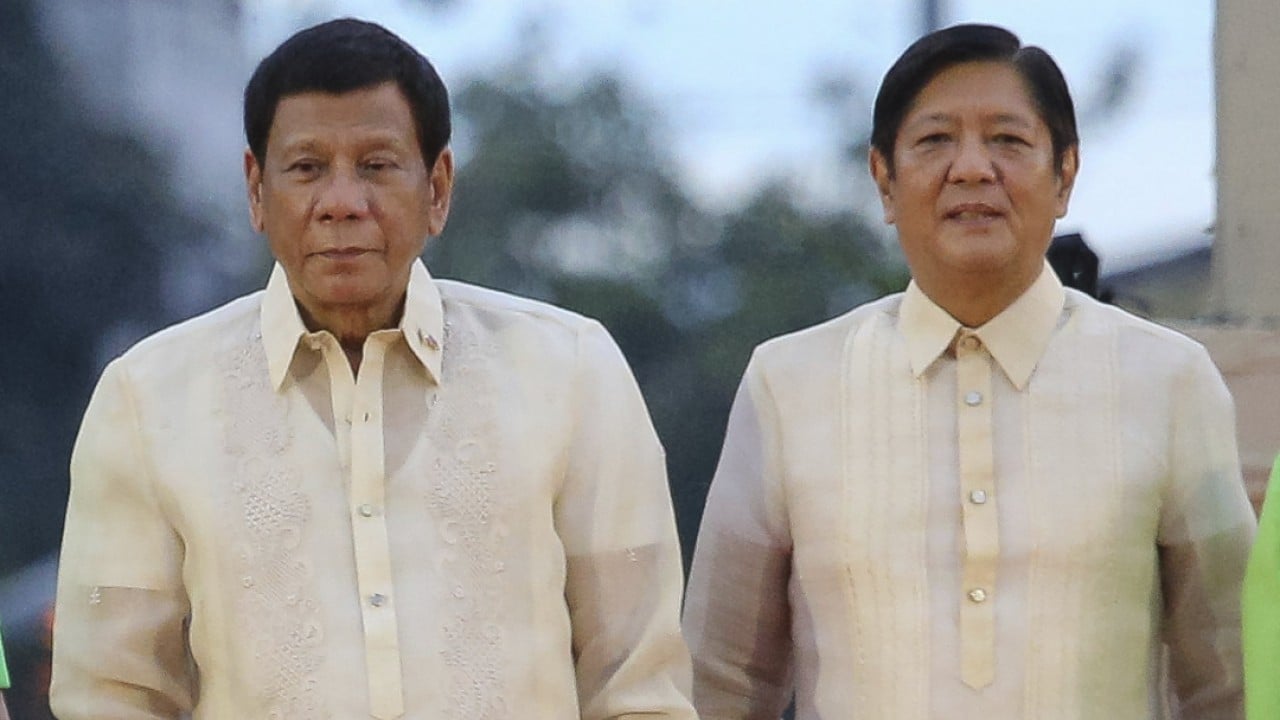
The air in a Philippine prison cell is heavy, a thick soup of humidity and the unspoken weight of secrets. For most, these walls represent the end of a story. But for a man named Peter Joemel Advincula, they became the backdrop for a confession that has sent tremors through the Malacañang Palace. This isn't just about a legal deposition. It is about the fraying of a marriage of convenience between two of the most powerful families in Southeast Asia.
History in Manila doesn't move in a straight line. It moves in circles.
The Architect in the Cell
Advincula, currently serving time for perjury and cyber-libel, isn't exactly the kind of man you’d expect to hold the keys to a national crisis. Yet, his recent testimony suggests he was a fly on the wall during meetings that never should have happened. He describes a world of hushed voices and high-stakes plotting. According to his account, the man behind the curtain was none other than the former president, Rodrigo Duterte.
The goal? A cold, calculated move to unseat the current president, Ferdinand Marcos Jr.
To understand why this matters, you have to look past the official press releases. You have to see the Philippines not as a collection of government agencies, but as a chessboard where the pieces are legacy, survival, and bloodlines. In 2022, the "UniTeam" alliance between Marcos and Sara Duterte (Rodrigo’s daughter) looked invincible. It was a union of the north and the south, a political juggernaut that promised stability.
That stability was a mirage.
A House Divided by Ambition
Imagine a dinner party where everyone is smiling, but half the guests have knives hidden under the tablecloth. That was the reality of the Marcos-Duterte alliance from day one. The friction started as a low hum—disagreements over the constitutional reform, different approaches to the South China Sea, and the looming shadow of the International Criminal Court (ICC).
When Marcos began to pivot away from the previous administration's hardline pro-China stance, the hum turned into a roar.
Advincula claims that the elder Duterte, a man who built his reputation on being an outsider who breaks things, was not content to sit quietly in retirement in Davao. The testimony paints a picture of a "Davao Group" working tirelessly to undermine the sitting president. They weren't just criticizing policy. They were, if Advincula is to be believed, laying the groundwork for a transition of power that didn't involve an election.
This isn't just "politics as usual." It is a fundamental struggle for the soul of the Philippine state.
The Logistics of a Ghost Coup
How do you topple a president in the modern era? You don't always need tanks in the streets. Sometimes, you just need doubt. You need a narrative that the current leader is weak, or compromised, or illegitimate. You use social media—the modern town square of the Philippines—to broadcast discontent until it feels like a physical force.
Advincula’s role, according to his own words, was to be a mouthpiece. He speaks of scripted narratives and coordinated campaigns designed to paint Marcos Jr. in the worst possible light. It’s a messy, gritty business. It involves late-night meetings in nondescript rooms and the constant fear that today’s ally will be tomorrow’s informant.
The tragedy of this situation is the human cost at the bottom of the ladder. While the titans of industry and politics clash in Manila, the average citizen is left wondering if the ground beneath their feet is solid. When the two most powerful factions in the country are at war, the machinery of government grinds to a halt. Laws don't get passed. Infrastructure projects stall. The focus shifts from the welfare of the people to the survival of the dynasty.
The ICC Shadow
There is a ghost haunting this entire narrative: the International Criminal Court. The investigation into the bloody "War on Drugs" is the sword of Damocles hanging over the Duterte family. Marcos, for his part, has played a delicate game. He hasn't fully handed over the keys to the ICC, but he hasn't slammed the door shut either.
That ambiguity is terrifying for those who might find themselves in the crosshairs of an international tribunal.
If you feel like the walls are closing in, you lash out. You look for a way to regain control. For the Duterte camp, regaining control means ensuring that the presidency remains within the family or under the influence of someone they can trust. Marcos Jr., a man trying to burnish his own family name and carve out a distinct legacy, is no longer that person.
Consider the irony. A man who was once the face of a campaign to smear the opposition is now the primary witness against the people who allegedly hired him. Advincula is a flawed messenger, certainly. His history is checkered, and his motives are often questioned. But in the world of high-level political espionage, you rarely find witnesses with clean hands. You find the people who were in the room.
The Fragility of the Union
The "UniTeam" is now a ghost. Sara Duterte’s resignation from the cabinet was the final, public crack in the facade. Now, the battle is out in the open. It is a war of words, of leaked testimonies, and of increasingly pointed accusations.
The stakes are invisible but absolute. They involve the alignment of the Philippines with global powers like the US and China. They involve the internal security of a nation that has struggled with insurgency for decades. Most of all, they involve the trust of a population that has seen this play before.
When we look at the news, we see names and dates. We see "Marcos vs. Duterte." But if we look closer, we see the terrifying fragility of democratic institutions when they are treated as personal property. The Advincula testimony is just one thread in a much larger, much darker tapestry. It suggests that behind the grand speeches and the televised inaugurations, the real business of power is conducted in the dark, driven by fear and a desperate need to stay ahead of the consequences.
The sun sets over Manila Bay, painting the sky in bruises of purple and gold. In a cell somewhere in the city, a man waits to see if his words will be his salvation or his final undoing. In the palace, a president weighs his options, knowing that the people who helped him into power are now the ones most likely to pull the rug from under him. The drama isn't over. It’s just moving into the next act, and the script is being written in real-time.
The silence in the corridors of power is never actually quiet. If you listen closely enough, you can hear the sound of a foundation cracking.