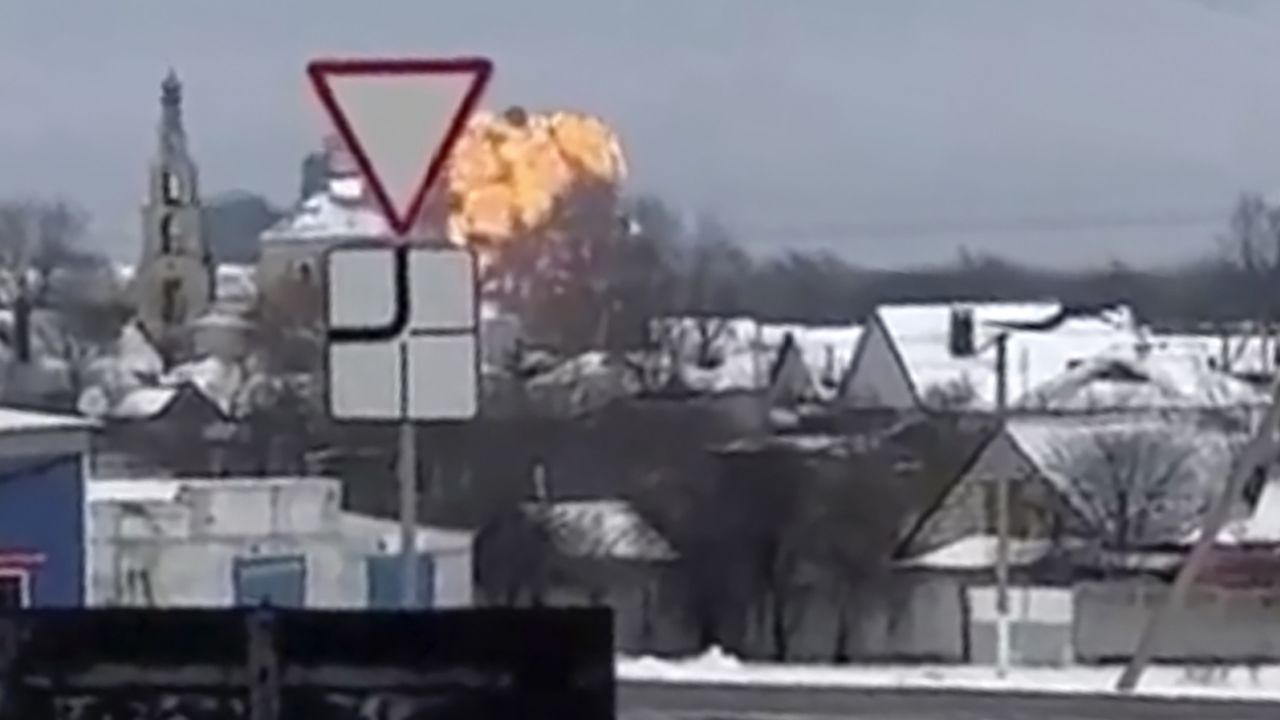
Twenty-nine people are dead after a Russian military transport plane slammed into the ground in Crimea. It’s a staggering loss of life. Initial reports from the ground describe a chaotic scene of twisted metal and smoke near the crash site. This isn't just another headline in a long-running conflict. It’s a massive blow to the Russian Aerospace Forces and raises serious questions about how they’re maintaining their aging fleet under the pressure of constant operations.
When a heavy lift aircraft goes down, it doesn't just disappear. It leaves a crater of questions about mechanical failure, pilot fatigue, or potential interference. We know 29 people were on board. We know there are no survivors. What we don't know yet is exactly what happened in those final seconds before impact, but the pattern of Russian aviation losses lately suggests a system pushed to its absolute limit.
The Reality of Russian Aviation Failures in Crimea
Crimea has become a pressure cooker for military hardware. The tempo of flights is relentless. You can only run these machines so hard before something snaps. Most analysts looking at this specific incident point toward the sheer age of the transport fleet. Russia relies heavily on Soviet-designed frames that have been retrofitted, but metal fatigue doesn't care about a fresh coat of paint.
Maintenance crews are working around the clock. Spare parts are getting harder to find because of international sanctions. When you combine those two factors, you get a recipe for disaster. It’s likely that a critical engine component or a hydraulic system failed at an altitude where recovery was impossible.
The Kremlin is tight-lipped. They usually are. But you can't hide 29 funerals. The families of these service members are left waiting for answers that might never come in a transparent way. Moscow’s standard move is to blame "technical malfunction" without ever specifying what actually broke. This lack of transparency doesn't just hurt the families; it keeps the rest of the fleet at risk.
Why Military Transports Are Vulnerable Right Now
Flying a military transport isn't like a commercial hop from London to New York. These pilots are flying heavy, often overloaded planes into contested environments. They’re dodging radar, staying low to avoid detection, and operating out of airfields that aren't exactly pristine.
The Il-76, a common workhorse for these missions, is built like a tank, but even tanks have breaking points. If this was an engine fire, the crew had seconds to react. At low altitudes, which are common in Crimean flight paths to avoid Ukrainian detection systems, there’s no room for error. You lose an engine or a control surface, and you’re a brick.
It's also worth considering the human element. We talk about machines, but people fly them. These crews are exhausted. They’ve been flying high-stakes missions for years now. Sleep deprivation leads to slow reflexes. Slow reflexes in a cockpit lead to cemeteries.
The Logistics of a Crash Site Investigation
Investigating a crash in a militarized zone like Crimea is a nightmare. It’s not like a civilian crash where the NTSB rolls in with a team of scientists. The military cordons everything off. They’re more worried about protecting classified cargo or sensitive tech than they are about publicizing the root cause.
Heavy equipment has to be brought in to move the wreckage. Black boxes, if they’re even recovered and functional, will be sent to Moscow for analysis. We likely won't see the data. What we will see is a brief statement weeks from now claiming the investigation is "ongoing" or that the pilots were "heroes who stayed with the plane to avoid a populated area." That’s the script.
What This Means for Future Operations
You can't lose 29 trained personnel and a multi-million dollar airframe and act like it’s business as usual. This creates a hole in the logistics chain. Every time a plane like this goes down, the remaining fleet has to pick up the slack. That means more hours on the remaining engines. More stress on the remaining aircrews.
It’s a vicious cycle.
If you're tracking the stability of the Russian military presence in Crimea, watch the flight patterns over the next few weeks. Usually, there's a brief pause or a "safety stand-down" after a mass casualty event. If they don't pause, it means they’re so desperate for supplies and troop movements that they’re willing to gamble with more lives.
Keep an eye on the specific tail numbers and units involved. These units are tight-knit. Losing nearly thirty people in one go can gut the morale of an entire airbase. It’s a heavy price to pay for a mechanical oversight or a pressured flight schedule.
If you want to understand the true state of a military, don't look at their parades. Look at their accidents. This crash tells a story of a force that's fraying at the edges, struggling to keep its most vital transport links in the air.
Stop waiting for the official Russian state media to give you the full story. They won't. Instead, monitor independent satellite imagery of Crimean airfields and watch for changes in transport frequency. That’s where the real data lives. Check the local social media groups in the regions near the crash; that’s where the first-hand accounts of the engines sounding "off" or the plane flying "too low" always pop up first. Pay attention to the silence as much as the noise.


