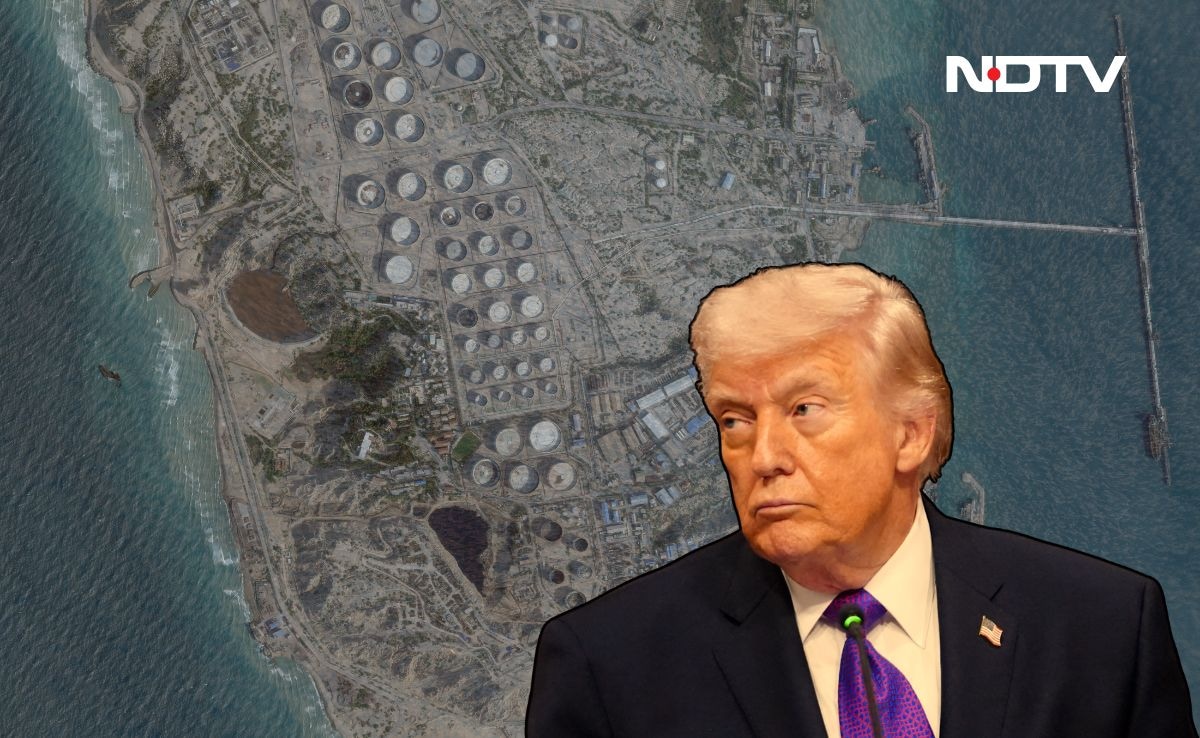
The mainstream media is vibrating with the word "chilling." They see a ultimatum; I see a desperate bid for a seat at the bargaining table. When Donald Trump issues a public threat to the Iranian leadership, he isn’t preparing for an invasion. He is inflating the price of the asset before he tries to buy it.
Most geopolitical analysts are currently reading the situation through a lens of 1990s neoconservatism. They assume that "ultimatum" equals "imminent war." They are wrong. They are ignoring the fundamental mechanics of how a property developer turned president views global friction. To Trump, Iran isn't a "rogue state" to be dismantled for the sake of democracy; it is a distressed asset with a high-maintenance management team.
The Fallacy of Kinetic Regime Change
Let’s dismantle the biggest lie in the room: the idea that the United States is one "chilling update" away from toppling the Islamic Republic through military force. I have spent years watching the defense industry salivate over the prospect of a Persian campaign. It’s a fantasy that ignores the brutal reality of urban warfare and the logistical nightmare of the Iranian plateau.
Iran is not Iraq. It is a mountainous fortress with a population that, while frustrated with its leaders, has a historical tendency to consolidate under the flag the moment a foreign boot touches the soil.
The "lazy consensus" says that if the U.S. squeezes hard enough, the regime will collapse. History says otherwise. Sanctions don't kill regimes; they professionalize them. The Iranian leadership has spent forty years building a "resistance economy" that thrives on the black market and gray-zone shipping. By issuing an ultimatum, Trump isn't ending the game; he’s resetting the stakes for a deal he thinks only he can close.
Why D.C. is Reading the Room Wrong
The Beltway is obsessed with "maximum pressure." They think of it as a dial that goes from 1 to 10. They assume that at 10, the Ayatollah simply hands over the keys to the palace.
In reality, pressure is a volatile chemical. Too much, and you lose your leverage because the target has nothing left to lose. I’ve seen private equity firms make this mistake repeatedly—squeezing a company so hard that the management burns the building down for the insurance money.
The current ultimatum is a classic high-anchor negotiation tactic. You start by demanding the impossible (regime change) so that the "compromise" (a new nuclear deal that covers ballistic missiles and regional proxies) looks like a win for the other side.
The $100 Billion Miscalculation
Critics love to talk about the morality of the regime. Businessmen talk about the flow of capital. The Iranian Rial is in the gutter, yes. Inflation is rampant. But look at where the money is moving.
Tehran has pivotally—and I use that word in its literal sense, as an axis of rotation—moved toward the "Shadow Fleet." They are moving millions of barrels of oil to China through ship-to-ship transfers that Western tracking software barely registers.
When Trump threatens "total destruction" or "regime change," he is actually signaling to the Chinese buyers that their cheap energy source is under threat. The ultimatum isn't for Khamenei; it’s for Xi Jinping. It’s a demand for China to stop underwriting the Iranian economy or face secondary sanctions that would hurt Beijing more than a trade war.
The Risk of the "Contractor Trap"
The most dangerous part of this "chilling" rhetoric isn't the threat of war—it’s the risk of being ignored.
If you issue an ultimatum and nothing happens, your currency as a superpower devalues instantly. This is the "Contractor Trap." I’ve seen developers threaten to sue contractors every day for six months. By the seventh month, the contractor knows the developer can’t afford the legal fees, so they stop showing up to the site entirely.
If Trump’s update on regime change doesn’t include a specific, credible mechanism for internal collapse, it’s just noise. And the Iranian leadership knows how to tune out noise. They are betting that the American electorate has zero appetite for a third Middle Eastern war in twenty years. They are right.
The Real Ultimatum: A Grand Bargain or a Slow Burn
The status quo is actually quite comfortable for many actors in this play.
- The Defense Industry: Profits from the "threat" of Iran without the costs of a full-scale war.
- Regional Rivals: Enjoy seeing Iran contained without having to fight them directly.
- The Iranian Hardliners: Use the "Great Satan" as a convenient scapegoat for their own economic failures.
The contrarian view? Trump doesn't want the regime to change. He wants the regime to behave.
Imagine a scenario where the "ultimatum" leads not to a coup, but to a televised summit. The goal isn't to bring democracy to Tehran; it’s to bring Tehran into a security framework that protects the flow of oil and stabilizes the Abraham Accords.
Dismantling the "Chilling" Narrative
The competitor article wants you to feel afraid. Fear drives clicks. But fear is a poor analytical tool.
If you want to understand what is actually happening, stop looking at the rhetoric and start looking at the maps of the Strait of Hormuz. Look at the insurance premiums for tankers. Look at the gold reserves in the Iranian central bank.
The "update" on regime change is a marketing campaign for a new set of sanctions. It’s about optics. It’s about showing the American voter that the administration is "tough" without actually committing a single division of the 82nd Airborne to a desert they can’t win in.
The Brutal Truth About Internal Dissent
Yes, there are protests in Iran. Yes, the youth are tired of the morality police. But "People Also Ask" if a revolution is coming.
The answer is: Not as long as the IRGC (Islamic Revolutionary Guard Corps) stays paid.
The IRGC is not just a military; it’s a conglomerate. They own the construction companies, the telecommunications, and the airports. They are the ultimate stakeholders. Unless an ultimatum offers them a way to keep their wealth in a post-regime world, they will fight to the last man. You don't change a regime by threatening it; you change it by bribing the guys with the guns.
The Strategy for the Smart Money
If you are an investor or a policy observer, don't buy the "regime change" hype. It’s a high-risk, low-probability outcome that serves as a useful distraction.
The real play is watching for the "Backdoor Deal." Watch for the moments when the rhetoric is at its loudest—that’s usually when the quietest meetings are happening in Oman or Switzerland.
The ultimatum is the smoke. The deal is the fire.
Stop asking when the regime will fall. Start asking what the price of their cooperation is. Because in the world of high-stakes geopolitics, everything—even a "chilling" ultimatum—is just an opening bid.
The biggest mistake you can make is believing the performer is the play. Trump is the performer; the play is a cold, hard recalculation of American interests that prioritizes "America First" over the expensive, bloody hobby of nation-building.
The ultimatum isn't a funeral notice for the Iranian regime. It’s an invitation to a shakedown. And in a shakedown, the goal is always to get paid, not to kill the mark.
Don't look at the finger pointing at the moon. Look at the moon. The moon, in this case, is a world where Iran is a neutered, regional player that doesn't mess with the global oil price or the stability of the dollar. Everything else is just theater for the cheap seats.
The regime isn't going anywhere. The only thing that's changing is the cost of their survival.
If you’re waiting for the "chilling" update to turn into a "game-changing" revolution, you’ll be waiting until the mountains of Iran crumble into the sea. The status quo is a stubborn beast, and it takes more than a press release to kill it.
Accept the reality: the ultimatum is the endgame. There is no plan B.
Now, stop reading the headlines and start following the money.