Money has a specific sound when it’s spent in the service of diplomacy. It is the muffled thud of a heavy cabin door sealing shut. It is the rhythmic click of polished Oxfords on the marble floors of an airport lounge in Dubai or San Francisco. It is the silent, digital slide of HK$46.6 million moving from a public ledger into the global slipstream of aviation fuel and hotel stays.
That number—HK$46.6 million—is a heavy weight. It represents the total bill for the Hong Kong ministerial team’s overseas travel over the past three fiscal years. To some, it is the necessary fuel for a city trying to reclaim its status as "Asia’s World City." To others, it is a staggering sum spent on optics while the streets below remain quiet. You might also find this related story interesting: The Twenty First Hour in Islamabad.
Numbers alone are cold. They don't tell you about the jet lag, the tight smiles in fluorescent-lit meeting rooms, or the desperate need to prove that a city is still open for business after years of isolation.
The Cost of Coming Back
Imagine a high-ranking official, let’s call him a Secretary, sitting in a business-class seat over the Pacific. Outside the window, there is only the dark expanse of the ocean. Inside, he is reviewing a briefing note on "telling the Hong Kong story." This isn't just a trip; it is an exercise in brand management. As highlighted in latest reports by BBC News, the implications are worth noting.
Between 2021 and 2024, these journeys became more frequent and more expensive. As the world shed its masks and opened its borders, Hong Kong found itself at the back of the line. The mission was clear: get back on the map. But maps are expensive to draw.
The data reveals a steep climb. In the 2021-22 fiscal year, when quarantine rules were still a choking reality, the travel bill was a modest HK$1.5 million. By 2023-24, that figure exploded to HK$27.1 million. This wasn't just a return to normal. It was a frantic, high-stakes sprint.
Consider the Commerce and Economic Development Bureau. They were the biggest spenders, accounting for nearly a quarter of the total. Their objective? To convince a skeptical world that the gears of trade were still turning. When they flew to APEC summits or trade forums, they weren't just buying tickets; they were buying relevance.
The Invisible Stakes of a Business Class Ticket
There is a visceral tension in how this money is perceived. If you are a small business owner in Mong Kok, struggling with rising rents and dwindling foot traffic, HK$46.6 million feels like an insult. It is a sum that could have been a lifeline. It could have subsidized local markets or fueled grassroots innovation.
But the logic of the ministerial suite operates on a different scale. In that world, a missed meeting is a missed billion-dollar investment.
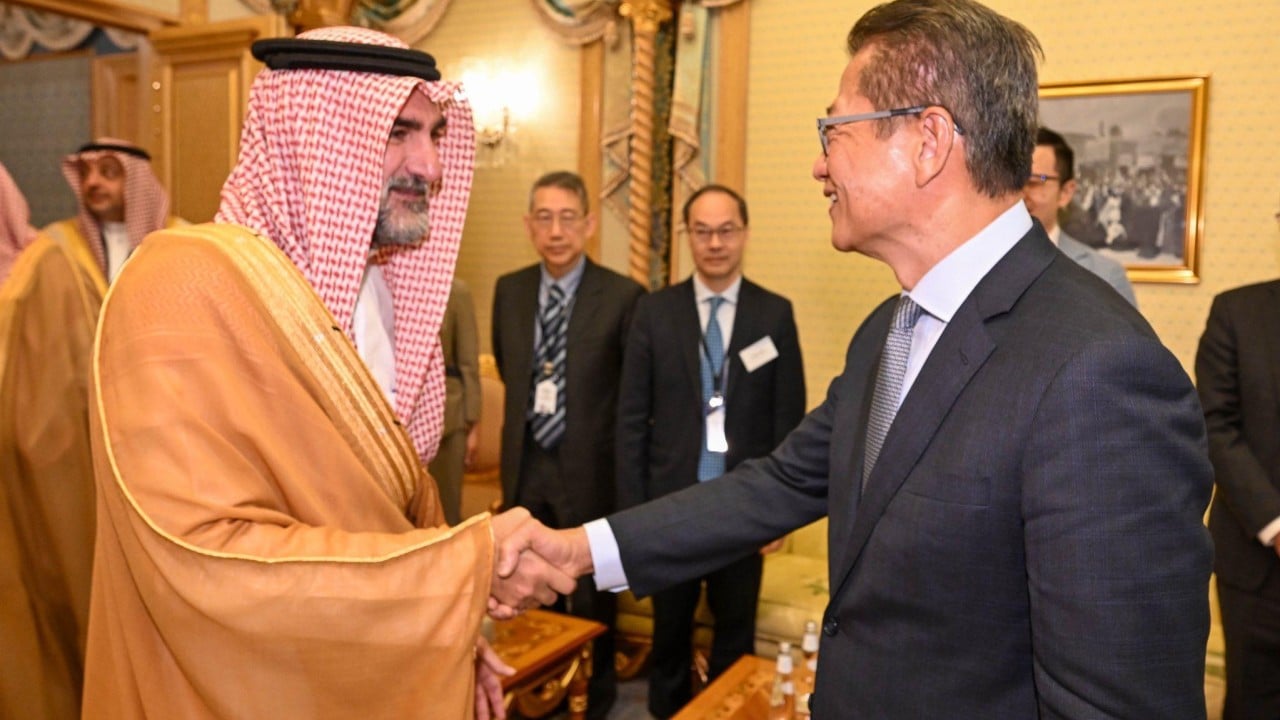
They argue that you cannot secure a regional trade headquarters via a Zoom call. You cannot look a CEO in the eye through a webcam and convince them that their capital is safe. The "human element" here is the physical presence of a representative. It is the handshake that seals a deal.
The Financial Secretary’s office alone spent HK$6.6 million over three years. That’s a lot of handshakes.
But the question remains: what is the return on investment for a smile? We see the expense reports, but we rarely see the direct correlation between a trip to Davos and a new factory in the New Territories. The public is asked to trust that the friction of travel leads to the grease of commerce.
A Tale of Two Cities
There is a metaphor for this gap in understanding. Think of a grand old hotel that has been closed for renovations. The management is spending millions on billboards in foreign cities, telling everyone the lobby is more beautiful than ever.
Meanwhile, the staff who live in the basement are wondering why the roof still leaks.
The government’s travel spree is that billboard. It is an outward-facing strategy designed to counter "misinformation" and project strength. The Chief Executive, John Lee, led the charge with high-profile missions to Southeast Asia and the Middle East. These weren't just casual visits; they were signals. They were intended to say that Hong Kong’s future lies in new directions, pivoting away from traditional Western dependencies toward the "Belt and Road" markets.
This shift has its own price tag. Traveling to Riyadh or Abu Dhabi requires a different kind of infrastructure, a different level of ceremony.
The logistics of these trips are immense. It’s not just the Secretary. It’s the press officers, the security detail, the assistants. It is a traveling circus of bureaucracy, all of it funded by the taxpayer. When the delegation from the Education Bureau spends HK$2.8 million to promote Hong Kong as a "post-secondary education hub," they are betting that international students will eventually pay that back in tuition and talent.
It is a gamble on a future that hasn't arrived yet.
The Weight of the Ledger
We must look at the breakdown to understand the priorities.
| Department | Expenditure (HKD Millions) |
|---|---|
| Commerce and Economic Development | 11.2 |
| Financial Secretary's Office | 6.6 |
| Chief Executive's Office | 5.4 |
| Education Bureau | 2.8 |
The numbers tell a story of a government obsessed with two things: money and image. The social welfare bureaus, the ones dealing with the "human element" at home, are barely represented in the travel logs. This tells the public everything they need to know about where the priority lies. The focus is on the macro, the global, and the elite.
But the macro is made of the micro. Every million spent in a London hotel is a million not spent on a local clinic. This is the trade-off that defines modern governance.
Is it fair? That depends on whether you believe a city is a community or a corporation. If Hong Kong is a corporation, then HK$46.6 million is a rounding error in a global marketing budget. If it is a community, it is a debt that needs to be justified with more than just press releases.
The real problem lies elsewhere, beyond the receipts and the flight paths. It lies in the silence that follows these trips. The ministers return, the "success" is heralded in the official gazette, and the cycle repeats. But the atmospheric pressure in the city doesn't always change. The sense of unease, the feeling that the world has moved on while we were locked away, remains.
The Ghost in the Departure Lounge
The most poignant part of this narrative is the ghost of the city that used to be. The one that didn't have to try so hard. There was a time when Hong Kong was the default. You didn't need to spend HK$46.6 million to tell people where it was or why it mattered.
Now, every trip is a defense. Every speech is a rebuttal.
The ministers fly out to convince the world that the "One Country, Two Systems" framework is robust. They use words like "resilient" and "dynamic." But words are cheap; it’s the flights that are expensive.
Consider the "hypothetical" taxpayer, a nurse working double shifts at Queen Mary Hospital. She sees the headline about the HK$46 million. She doesn't see a "holistic strategy for global engagement." She sees 400 years of her own salary. She sees a government that is more concerned with how it is viewed from a skyscraper in Dubai than how it is felt in a subdivided flat in Sham Shui Po.
This is the emotional core of the controversy. It is not about the act of traveling; it is about the distance between the traveler and the people they represent.
The jet fuel burns, the miles accumulate, and the ministers return with folders full of "memorandums of understanding." These documents are often non-binding. They are the diplomatic equivalent of a "we should do lunch sometime" text. They look good in a photo op, but they don't always put food on the table.
The Final Receipt
We are living in an era where the optics of power are becoming more expensive than the exercise of it.
The HK$46.6 million spent over the last three years is a testament to a city in transition. It is a city trying to find its voice in a world that has grown louder and more crowded. Whether those trips were "pivotal" or merely "performative" will only be revealed in the tax receipts of the next decade.
For now, the planes keep taking off. The ministers keep adjusting their ties in the mirror of the VIP lounge. They are chasing a version of the city that they hope still exists in the minds of foreign investors.
They are selling a story.
But as any storyteller knows, the most expensive script in the world doesn't matter if the audience has already left the theater.
The sun sets over Chek Lap Kok airport, casting long shadows across the tarmac. Another delegation boards. Another million is committed to the air. In the quiet of the cabin, before the engines roar to life, there is a moment of profound uncertainty.
Is anyone actually listening on the other side?
The door closes. The seal is tight. The flight departs, leaving the city behind, carrying its hopes and its mounting debts into the clouds.