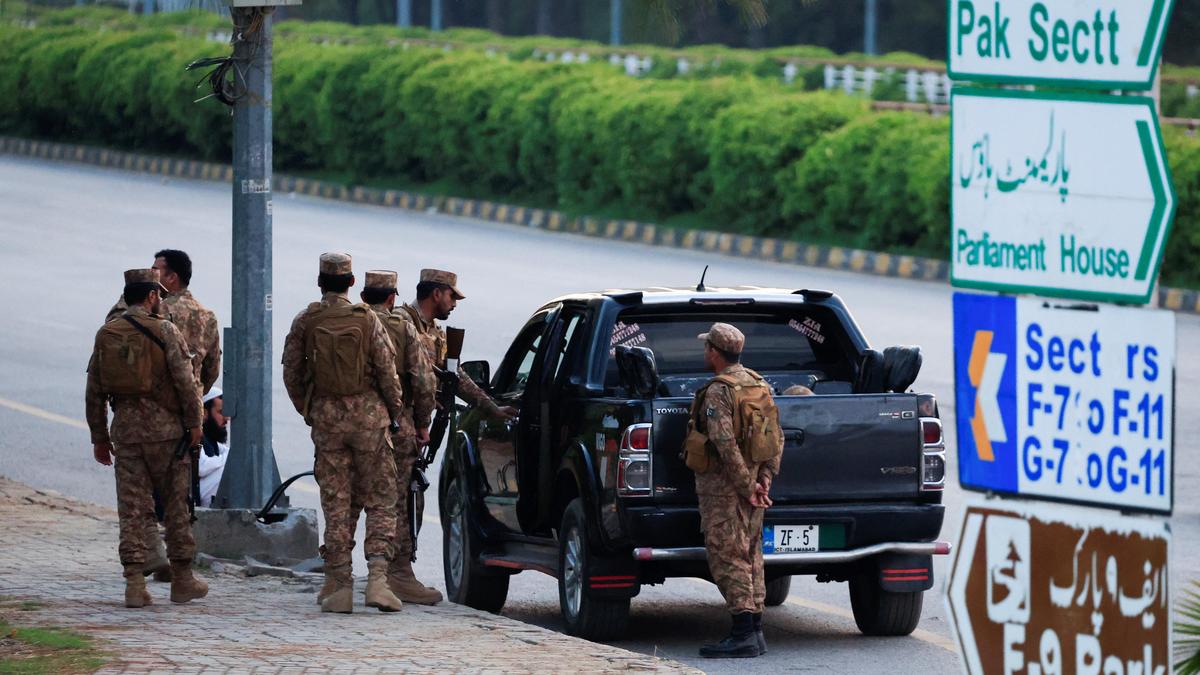
Pakistan finds itself in a bizarre, sweating-bullets position whenever Washington and Tehran start talking. You’d think a neighbor would want peace next door. It’s not that simple. Islamabad’s foreign policy is a high-wire act where the wire is made of dental floss and the floor is made of lava. Right now, the prospect of any U.S.-Iran rapprochement doesn't bring relief to the Pakistani elite. It brings a cold, calculated panic.
The logic is straightforward. Pakistan has spent decades playing both sides of a very dangerous fence. They need Saudi money and American military hardware, but they share a porous, 900-kilometer border with an Iran that isn't afraid to use its proxies. When the U.S. and Iran are at each other's throats, Pakistan gets to be the "essential partner" or the "neutral mediator." If they actually make up, Pakistan suddenly looks less like a strategic bridge and more like a messy liability with too many internal problems.
The China Factor and the Port War
Let’s talk about the elephant in the room. Or rather, the two ports. Pakistan has Gwadar. Iran has Chabahar.
For years, the narrative was that Gwadar, backed by billions in Chinese CPEC investment, would be the crown jewel of regional trade. Meanwhile, Chabahar was the Indian-backed alternative, a way for Delhi to bypass Pakistan and reach Afghanistan. If the U.S. lifts sanctions on Iran as part of a grand bargain, Chabahar won't just be an Indian project. It’ll become a global magnet for investment.
Think about it. If you're a logistics firm, would you rather deal with the bureaucratic nightmare and security risks of the Balochistan province in Pakistan, or a newly opened, sanctions-free Iranian coast? A U.S.-Iran deal could effectively kill the competitive edge of the China-Pakistan Economic Corridor. Islamabad knows this. They won't say it out loud, but they're scared of being sidelined by a more stable, more oil-rich neighbor that suddenly has Uncle Sam’s blessing to trade.
Saudi Pressure and the Sectarian Powderkeg
You can't talk about Pakistan’s anxiety without mentioning the House of Saud. Pakistan’s economy is basically a series of "please bail us out" phone calls to Riyadh. The Saudis don't just give money for free; they expect loyalty. Specifically, they expect Pakistan to stay firmly in the anti-Iran camp.
If the U.S. decides Iran is a partner again, Pakistan’s cozy relationship with Saudi Arabia gets weird. Does Islamabad follow the U.S. lead and warm up to Tehran? If they do, the Saudi credit line might dry up. If they don't, they risk being on the wrong side of the new American regional strategy.
Then there’s the internal mess. Pakistan has a significant Shia minority. We’ve seen what happens when Middle Eastern proxy wars play out on Pakistani streets. Every time tensions rise or fall between D.C. and Tehran, it ripples through the local mosques and political parties. Peace between the U.S. and Iran might actually settle things down, but the transition period is a nightmare for Pakistani intelligence services who are used to managing these tensions like a thermostat.
The Nuclear Double Standard
Here’s something the policy wonks in D.C. rarely admit, but everyone in Islamabad feels. Pakistan is the only Muslim-majority country with the bomb. They've been treated like a pariah for it at times, and a "Major Non-NATO Ally" at others.
If Iran gets a deal that allows them a clear path to civilian nuclear energy—or even just a "freeze" that leaves their infrastructure intact—Pakistan feels cheated. They’ve endured decades of sanctions and "do more" lectures from the U.S. seeing Iran get a seat at the table and a lifting of economic pressure feels like a slap in the face. It's a status thing. Pakistan wants to be the primary power in the region. A rehabilitated Iran threatens that ego and that geopolitical standing.
Border Security and the Balochistan Headache
The border between Iran and Pakistan is a disaster. It's a land of smugglers, insurgents, and occasional cross-border shelling. Just recently, we saw both countries actually trade missile strikes—an unprecedented escalation.
Islamabad worries that a U.S.-Iran deal would give Tehran a free hand to "clean up" its eastern border. Right now, Iran is distracted by the U.S. in the Persian Gulf and the Levant. If those fronts quiet down, the Iranian Revolutionary Guard Corps (IRGC) might turn its full attention to the Jaish al-Adl militants operating from Pakistani soil. That means more drones, more incursions, and more pressure on a Pakistani military that's already stretched thin on the Afghan border.
Energy Needs vs Political Risks
Pakistan is energy starved. They need the Iran-Pakistan gas pipeline. It’s been sitting there, half-finished, for years. Iran finished its side. Pakistan hasn't because they're terrified of U.S. "secondary sanctions."
If a deal happens, the excuse for not finishing the pipeline vanishes. You’d think that’s a good thing. But for the Pakistani government, it means they actually have to deliver. They’d have to navigate the complex web of buying Iranian energy while still keeping the Americans happy enough to keep the IMF loans coming. It’s a "careful what you wish for" scenario.
The Afghan Vacuum
Since the U.S. left Kabul, Pakistan’s influence in Afghanistan has been... messy. Iran has been quietly building its own networks there. If Iran is no longer the "Great Satan" in Washington's eyes, the U.S. might start looking to Tehran to help stabilize Afghanistan instead of relying on the double-games played by Islamabad.
The fear is total displacement. For forty years, Pakistan was the indispensable player for any Western move in Central Asia. An Iran-U.S. thaw makes Pakistan dispensable. That is the root of the anxiety. It's not about war; it's about being ignored.
What Pakistan Should Do Instead of Panic
Watching from the sidelines isn't a strategy. Islamabad needs to stop treating foreign policy like a zero-sum game where Iran’s gain is automatically their loss.
First, they need to fix the border. Instead of reactive missile strikes, they need a formal, high-level joint security mechanism that isn't just for show. Second, they have to diversify the economy so they aren't constantly checking the Saudi or American pulse before making a trade deal.
The smartest move for Pakistan right now is to become the loudest advocate for the deal while simultaneously prepping their ports to compete on merit, not just geography. They need to stop being the "buffer state" and start being a trade hub. If they don't, they’ll just be the awkward neighbor standing outside the room while the big players rewrite the rules of the Middle East.
Stop waiting for the U.S. to give a green light. Start building the infrastructure that makes Pakistan's participation unavoidable, deal or no deal. Fix the domestic tax base so the IMF isn't the only thing keeping the lights on. That's the only way to turn this anxiety into actual leverage.


