The sound of a Cuban city at night is not what you expect. It is not always the rhythmic pulse of son cubano or the clinking of glasses in a tourist-heavy paladar. Often, it is a heavy, thick silence. It is the sound of an entire neighborhood holding its breath because the power has cut out again. In the darkness, the heat of the Caribbean becomes a physical weight. Food in aging refrigerators begins a slow, certain decay. Children try to finish homework by the flickering, amber ghost of a single candle.
For decades, the energy grid in Cuba has been a fragile thing, a web of Cold War-era thermoelectric plants held together by grit, ingenuity, and a dwindling supply of fuel. When the oil stops flowing, the island stops moving. Also making headlines lately: Finland Is Not Keeping Calm And The West Is Misreading The Silence.
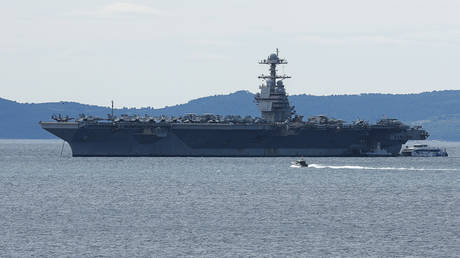
But this week, a different sound echoed across the Port of Matanzas: the low, mechanical groan of a massive tanker docking. For the first time this year, a significant shipment of crude oil has breached the invisible wall of the U.S. blockade. It is more than just a cargo of hydrocarbons. For the people waiting in the humid dark, it is a reprieve.
The Anatomy of a Thirst
To understand why a single ship matters, you have to understand the sheer, grinding difficulty of keeping the lights on in a country under siege. The U.S. embargo—the bloqueo—is not just a political disagreement. It is a complex financial machinery designed to make the procurement of basic necessities a logistical nightmare. Additional details into this topic are detailed by BBC News.
Imagine trying to buy a loaf of bread, but every time you reach for your wallet, the bank freezes your account. Then, the bakery is told that if they sell to you, they can never sell to anyone else in the neighborhood. That is the reality for Cubans trying to source energy on the global market.
Shipping companies fear the "six-month rule," which prevents any vessel that has docked in Cuba from entering a U.S. port for 180 days. Insurance companies hike premiums to astronomical levels. Banks refuse to process payments for fear of multi-billion dollar fines from Washington. Consequently, Cuba often pays a "sovereignty tax"—a massive markup on the market price of oil just to find a supplier willing to take the risk.
A Hero Made of Steel and Rust
Meet Mateo. He isn’t a politician or a CEO. He is a mechanic at the Antonio Guiteras power plant, the largest and most temperamental heartbeat of the Cuban energy system.
Mateo’s hands are permanently stained with a mixture of grease and sea salt. He spends his days coaxing 40-year-old turbines to keep spinning. When the fuel is low-quality or the supply runs dry, the pressure drops. The boilers groan. The entire grid begins to flicker like a dying lightbulb.
"When the tankers don't come," Mateo says, wiping sweat from his brow with a rag that has seen better decades, "we feel it in our bones before the city feels it in their homes. You hear the pitch of the machinery change. It’s a mourning sound."
For Mateo and millions like him, this new shipment represents a temporary victory over the friction of geography and law. It means the "alumbrones"—those precious windows where the electricity actually works—might stay open a little longer. It means the fans might spin tonight, offering a desperate breeze against the mosquitoes and the stagnant air.
The Invisible Stakes of the Blockade
The geopolitical chess match is often discussed in sterile rooms in D.C. or Havana, but the consequences are felt in the hospital hallways where surgeons pray the backup generators hold. They are felt in the schools where computers sit as expensive paperweights.
The blockade has tightened significantly in recent years. Being placed on the State Sponsors of Terrorism list was a hammer blow, severing the few remaining threads Cuba had to the international banking system. This isn't just about "punishing a government." It is a systematic deconstruction of the island’s ability to function.
When the oil arrives, it is often through a complex dance of "ghost" tankers, STS (ship-to-ship) transfers in the middle of the ocean, and diplomatic favors. This latest shipment, reportedly sourced from traditional allies who have decided the risk is worth the reward, serves as a reminder that the world is no longer unipolar. There are cracks in the wall, and through those cracks, the oil flows.
The Cost of a Cold Beer
There is a specific kind of joy in Havana when the power returns after a long blackout. You hear it first: a collective cheer that ripples through the streets. People run to their kitchens to see if the water pump is working. They check the freezer.
In a world of high-speed internet and instant gratification, it is easy to forget that modern life is built entirely on a foundation of stable energy. Without it, you are cast back into the 19th century, minus the infrastructure to handle it.
The arrival of this oil is a stopgap. It won't fix the crumbling masonry of the Havana Vieja or solve the deep economic crisis that has led to record-breaking migration. But it buys time. In Cuba, time is the most precious currency of all. Time to breathe. Time to plan. Time to hope that the next ship is already on the horizon.
A Cycle of Resilience and Exhaustion
There is a limit to how much a human spirit can endure before the resilience turns into a hollowed-out exhaustion. You see it in the eyes of the elderly men playing dominoes by streetlamps, hoping the light stays on long enough to finish the game. They have seen the "Special Period" of the 90s. They have seen the brief thaw of the Obama years. Now, they see a world that seems to have forgotten the human cost of a decades-old grudge.
Critics will argue that the Cuban government should have transitioned to renewables years ago. They are right, in a vacuum. But how do you build a solar farm when you can’t buy the panels? How do you invest in wind energy when the credit lines are choked off?
The oil shipment is a reminder of the island’s forced dependency on the very things the rest of the world is trying to leave behind. It is a forced stagnation.
As the sun sets over the Malecón, the orange light reflects off the rusted hulls of the vintage American cars that still prowl the streets—monuments to a time before the silence began. The tanker in Matanzas is pumping now. The pipes are humming. Somewhere in a small apartment in Centro Habana, a mother is finally able to cook a warm meal for her children without the fear of the stove going cold mid-way through.
The lights are on. For now.
In the distance, the ocean remains vast and indifferent, a blue-grey expanse that holds both the promise of the next shipment and the weight of the ships that are never allowed to arrive. The struggle isn't over; it has simply been paused by the arrival of a few million barrels of hope.
The silence of the Cuban night has been pushed back, replaced by the low, steady thrum of a city that refuses to stop breathing, even when the rest of the world tries to take its air away.