The coffee in the Munkácsy Street apartment was cold, but nobody cared. For sixteen years, the air in Budapest had felt heavy, like the thick, humid heat that sits over the Great Hungarian Plain before a summer storm. It was a weight you stopped noticing because it was always there. It was the weight of a single name, a single face, and a single vision that had slowly reshaped the cobblestones of the capital and the dirt tracks of the rural villages alike.
Then came the earthquake.
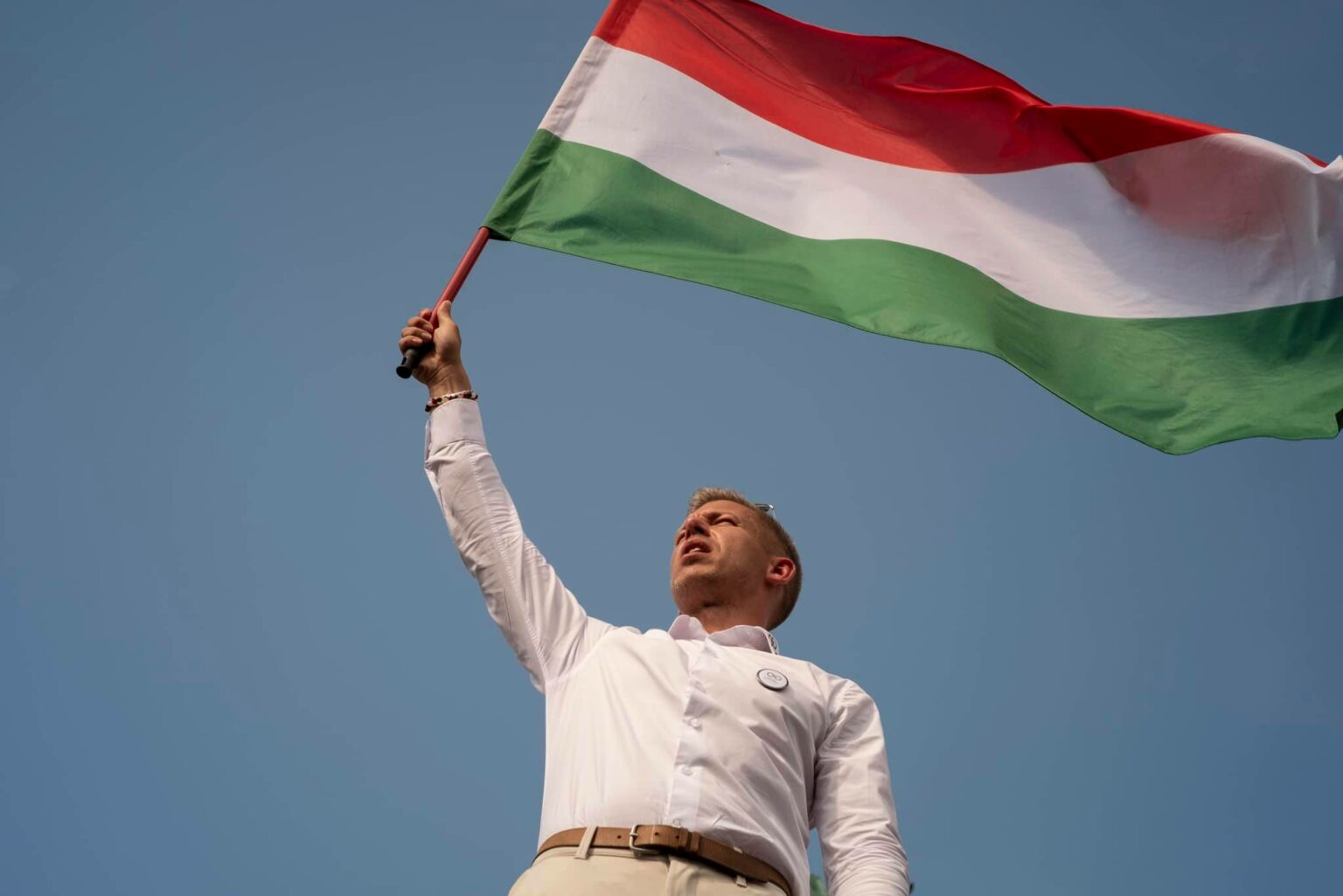
It wasn't a shifting of tectonic plates, but a shifting of hands. Millions of hands, moving pens across paper in small wooden booths. When the tallies began to flicker across the screens on Sunday night, the silence in that apartment—and across much of the continent—was broken by a sound that hadn't been heard in a generation. It was the sound of a status quo shattering. Viktor Orbán, the man who had become synonymous with the "illiberal" heart of Europe, was out.
The Architect of the Fortress
To understand why this feels like the end of an era, you have to look at the house he built. Orbán didn't rule with the crude tools of a twentieth-century autocrat. There were no tanks. Instead, there were tax codes. There were media conglomerates. There were billboards that told you exactly who your enemies were, usually featuring the faces of foreign billionaires or Brussels bureaucrats.
He understood a fundamental truth about human nature: people will trade a significant amount of freedom for the feeling of being protected. He positioned himself as the ultimate sentry, the man at the gate holding back the tides of globalization, migration, and cultural change. For sixteen years, his Fidesz party wasn't just a political organization; it was a cultural identity. If you were a "true Hungarian," you were with him. If you weren't, you were an outsider in your own home.
Consider a hypothetical shopkeeper in Debrecen, let’s call him András. For a decade, András saw his pension rise slightly and his sense of national pride soar. He didn't mind that the local news station only interviewed government ministers, or that the contracts for the new bridge went to the Prime Minister’s childhood friend. He felt safe. But safety has a shelf life. Eventually, the inflation that ate at his savings and the crumbling walls of the local hospital began to speak louder than the billboards. The fortress began to feel like a cage.
The Tremor That Travelled North
The shockwaves didn't stop at the Hungarian border. This electoral result is a localized event with global DNA. For years, Orbán served as the blueprint for "national conservatism" across the West. Politicians from the United States to France looked at Budapest as a laboratory. They saw a leader who could successfully challenge the European Union, rewrite a constitution to favor his own party, and still win landslide after landslide.
He was the proof of concept. He showed that you could hollow out democratic institutions from the inside while maintaining the outward appearance of a democracy. He was the North Star for those who felt the liberal world order had failed them. When that star blinked out on Sunday night, the navigation systems of populist movements across the globe suddenly started recalibrating.
The European Union, often criticized for its slow, grinding bureaucracy, has spent years trying to figure out how to handle the "Hungarian problem." They froze billions in funding. They issued stern reports. They held endless summits. But in the end, it wasn't a directive from Brussels that changed the tide. It was the Hungarian people deciding they wanted to be part of the room, not just a thorn in its side.
The Invisible Stakes of a Ballot
What does it actually look like when a country changes its mind? It looks like a university student in Szeged who spent her entire life under one leader finally believing her vote was a tool rather than a ritual. It looks like a teacher who no longer fears losing their job for mentioning a banned book in the faculty lounge. These are the invisible stakes—the psychological release of a nation realizing that history is not a closed loop.
The opposition that unseated him was not a monolith. It was a messy, loud, and often fractured coalition of people who agreed on almost nothing except for the fact that the air had become unbreathable. They were the Greens, the Liberals, the Socialists, and even disgruntled former conservatives. They were a reminder that sometimes, the most powerful political force isn't a shared vision, but a shared exhaustion.
This wasn't a victory for one specific ideology over another. It was a victory for the concept of the "alternation of power." In a healthy system, the winners know they will one day lose, and the losers know they have a chance to win again. For sixteen years, that cycle was broken in Hungary. The gears were jammed. On Sunday, the machinery of democracy groaned, sputtered, and finally began to turn again.
The Morning After the Earthquake
Waking up in a post-Orbán Hungary is a disorienting experience for everyone involved. For his supporters, it feels like the walls have been torn down and the wolves are at the door. For his detractors, it’s a moment of euphoria followed immediately by the crushing weight of reality. The infrastructure of the country—the courts, the media, the schools—is still deeply embedded with the DNA of the previous regime.
You don't undo sixteen years of consolidated power with one inauguration. The new government inherits a house where the wiring is tangled and the foundation is slanted. They have to prove that they can offer more than just "not being Orbán." They have to fix the hospitals, lower the price of bread, and somehow heal a society that has been told for nearly two decades that half of its citizens are traitors.
But as the sun rose over the Parliament building on Monday morning, reflecting off the water of the Danube, something was undeniably different. The city felt lighter. People stood in line for the tram, checking their phones, looking at the same headlines that were being read in Washington, London, and Berlin.
The earthquake is over. The rebuilding is the hard part. It is the slow, quiet work of people who have forgotten how to talk to each other without shouting. It is the work of a country rediscovering that its identity isn't held in the hands of one man, but in the collective breath of ten million people who just decided to start again.
The blue of the river didn't actually change, of course. It’s still the same silt-heavy water flowing toward the Black Sea. But for the first time in a long time, the people standing on its banks weren't just looking at the reflection of a fortress. They were looking at the horizon.