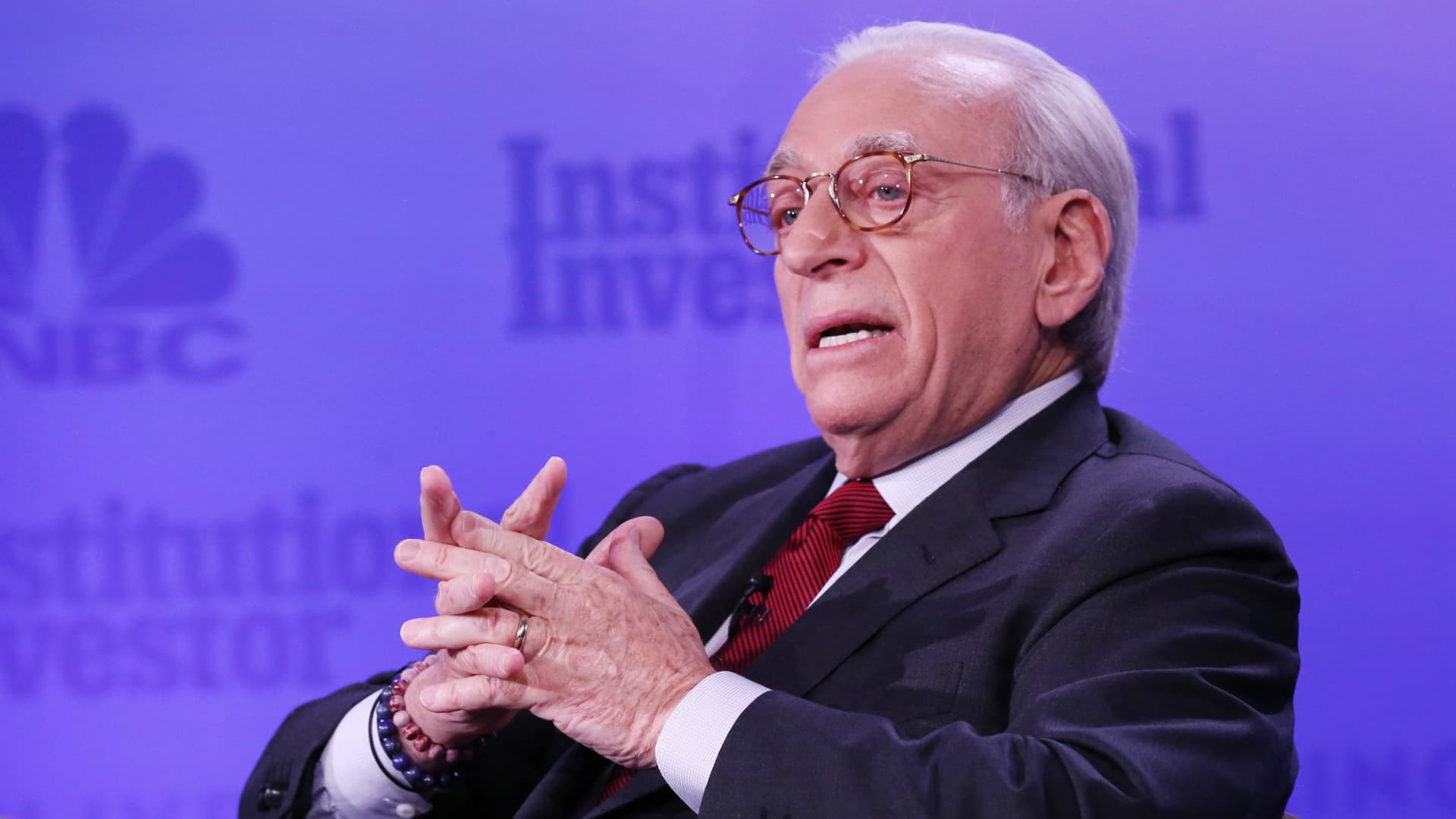
The era of the "comfortably mid-sized" asset manager is over. If you aren't a trillion-dollar behemoth or a hyper-specialized boutique, you're basically shark bait. Nelson Peltz knows this better than anyone, and his recent $7.4 billion takeover of Janus Henderson isn't just another notch on his activist belt. It’s a loud signal that the $25 billion wave of consolidation we’ve seen over the last year is hitting a fever pitch.
Wall Street's favorite agitator, through his firm Trian Fund Management and General Catalyst, finally pulled the trigger to take Janus Henderson private. This wasn't a snap decision. Peltz has been circling this drain since 2020, slowly building a 20% stake and a board seat. By offering $49.00 a share—an 18% premium—he’s betting that the only way for these firms to survive the relentless pressure of passive indexing and fee compression is to get off the public stage and retool in the dark.
The squeeze is real and it's coming for everyone
Why is this happening now? Honestly, the math for active managers has been brutal for a decade. Vanguard and BlackRock have turned the industry into a scale game where the lowest price wins. If you're Janus Henderson, managing around $484 billion, you're in a "no man's land." You're too big to be nimble and too small to compete on price with the passive giants.
The "bidding war" narrative we're seeing isn't just about who wants to own these assets. It's about who can survive the $25 billion consolidation wave that’s currently reshaping the sector. Invesco, State Street, and Franklin Templeton are all looking over their shoulders. They know that organic growth—just getting better at picking stocks—isn't enough anymore. You have to buy your way into new markets like private credit or active ETFs.
Private equity is the new landlord of Wall Street
The entry of General Catalyst into the Janus deal is a weird, but brilliant, twist. You don't usually see Silicon Valley venture capital firms teaming up with 83-year-old activist investors to buy legacy bond and stock pickers. But it makes sense when you realize that asset management is now a technology business.
The goal here is simple. By taking Janus private, Peltz and his partners can:
- Stop worrying about quarterly earnings calls where analysts grill them on every basis point of outflow.
- Aggressively invest in "the plumbing"—the AI and data infrastructure needed to run modern portfolios.
- Pivot to higher-margin products like private equity and private credit without the public market screaming about "style drift."
CEO Ali Dibadj has been pretty upfront about this. He’s excited to "fill in the gaps." In the public eye, every acquisition is scrutinized for its immediate impact on the share price. In private, you can take a three-year view on building a private credit wing from scratch.
Survival of the biggest
Look at the numbers. Global managed assets hit a record $135 trillion recently, but the profit isn't being shared equally. The top 1% of firms are capturing the lion's share of new money. For the rest, it’s a race to merge or die.
The $25 billion figure we’re seeing isn't just a random milestone. It represents a desperate scramble for "capabilities." It’s why we saw the $40 billion data center infrastructure deals and the constant rumors of a Janus-Invesco tie-up before Peltz just decided to buy the whole thing himself.
If you're an investor, you need to understand that the "mutual fund" model is being gutted and replaced. The future is "solutions." Managers don't want to sell you a Large Cap Growth fund; they want to sell you a customized, tax-optimized, private-market-heavy portfolio that you can’t easily replicate for five basis points at Vanguard.
What this means for your money
Don't expect the fees to drop just because these firms are merging. Usually, consolidation in this industry is about protecting margins, not passing savings to you. However, you will likely see a surge in "active ETFs" and "interval funds" as these newly merged giants try to lock you into more complex products.
If you’re holding shares in mid-tier asset managers, you’re basically holding a lottery ticket for the next takeover. But be careful. Not every merger is a success. The 2017 merger that created Janus Henderson was famously "troubled" for years. Culture clashes in this industry are legendary. You can't just smash two groups of ego-driven portfolio managers together and expect them to play nice.
Practical steps for the modern investor
- Check your expense ratios. If you’re still paying 0.75% or more for a basic equity fund in a mid-sized firm, ask yourself what you’re actually getting. If they aren't providing "differentiated insights" (Peltz’s favorite phrase), you’re overpaying.
- Watch the private credit pivot. Every consolidated firm is moving into private debt. It’s the shiny new toy. It offers higher yields but much lower liquidity. Don't get blinded by the "7% yield" without realizing you might not be able to get your money out for five years.
- Follow the activists. When Trian or someone like Elliott Management takes a stake in a financial firm, a sale or a massive restructuring is almost guaranteed within 24 months.
The bidding war for Janus Henderson is just the opening act. As interest rates stay "higher for longer" and the cost of capital remains a real thing again, the weak will continue to be absorbed by the strong. Peltz is just the guy holding the checkbook.