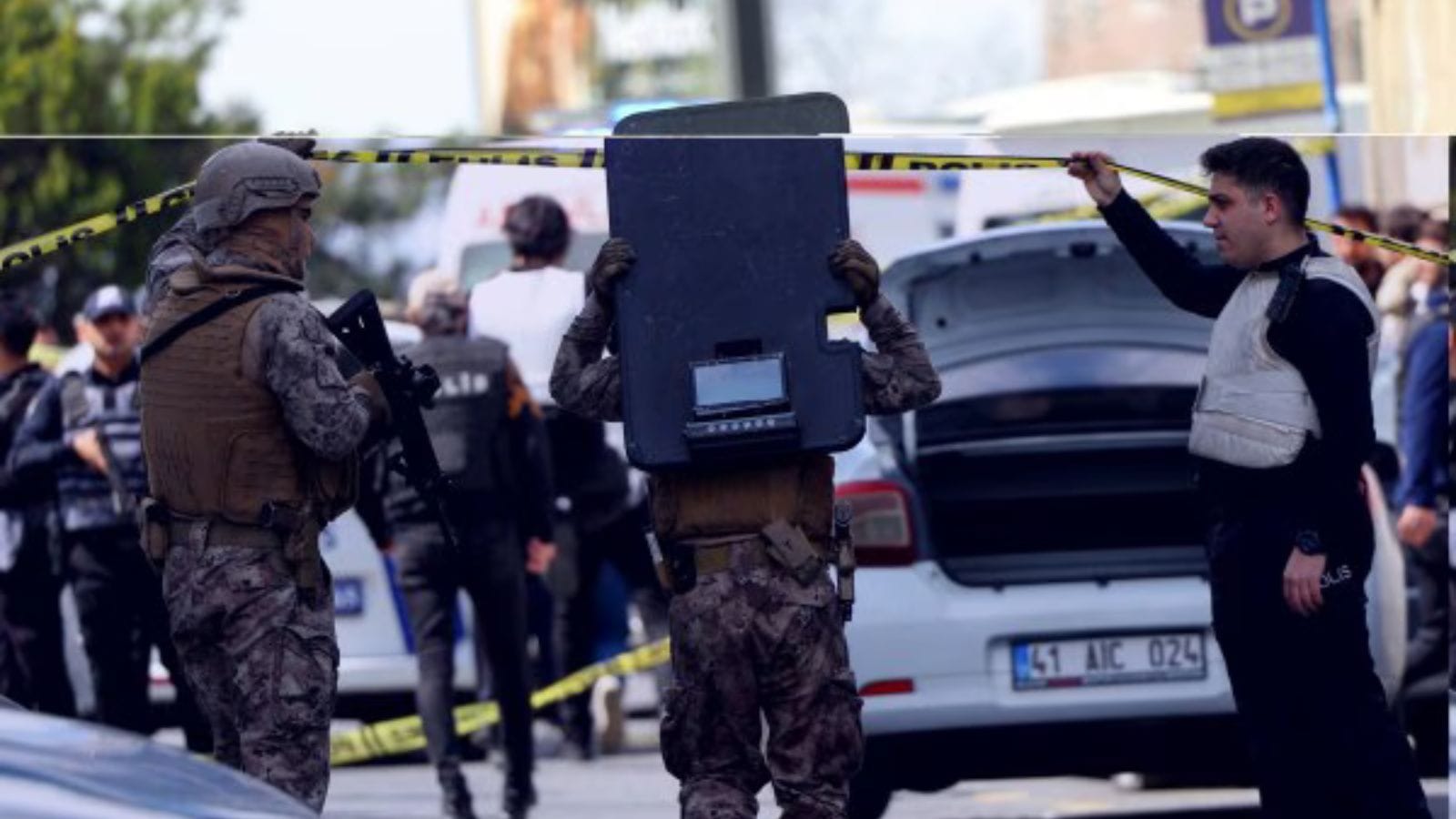
The headlines are predictable. They are carbon copies of a narrative we have seen for decades. A tragedy occurs at a school in Turkey, sixteen people are wounded, and the media immediately retreats into the comfort of the "lone wolf" trope. They focus on the nineteen-year-old’s age, his status as a former student, and the finality of his suicide.
This obsession with the shooter's biography is not just lazy journalism; it is a systemic distraction. By framing these events as unpredictable anomalies—lightning strikes of individual madness—we ignore the cold, hard logic of security infrastructure and the digital footprints that preceded the first shot. Stop looking for "why" he did it in his childhood diary and start looking at why the system failed to see him coming.
The Illusion of the Unpredictable
Most reporting treats these incidents like natural disasters. They aren’t. An earthquake has no intent. A mass shooting is a deliberate, choreographed failure of multiple gatekeeping layers. The "lone wolf" label is a gift to the people responsible for safety because it implies that no amount of preparation could have stopped a single, determined mind.
That is a lie.
In the security world, we talk about the "attack lifecycle." No one wakes up, brushes their teeth, and decides to storm a school on a whim. There is a phase called "leakage." Research from the Secret Service’s National Threat Assessment Center suggests that in nearly every major school shooting, the perpetrator communicated their intent to at least one person beforehand.
The failure isn't a lack of data. It’s a lack of synthesis. We are drowning in signals—social media posts, encrypted chats, behavioral shifts—but we treat them as noise until blood is spilled. The competitor's article focuses on the "16 wounded" as a static statistic. It should be focusing on the months of missed opportunities that led to that number.
Security Theatre vs. Hardened Infrastructure
Look at the physical response. The standard playbook involves metal detectors, more guards, and "see something, say something" posters. This is security theatre. It’s designed to make parents feel better while doing nothing to stop a motivated actor.
If a nineteen-year-old can breach a campus and fire enough rounds to hit sixteen people, the perimeter didn't just fail; it didn't exist. We need to stop talking about "security" as a person standing at a gate and start talking about it as a series of interlocking technical constraints.
- Access Control: Traditional locks are useless. If a former student still has access or knows the vulnerabilities of the entry points, the school is a sieve.
- Response Time: The "suicide" at the end of these events is often the only thing that stops the clock. If the shooter is the one who decides when the event ends, the security force is irrelevant.
- Surveillance Integration: We have cameras everywhere, but they are passive historians. They record the tragedy so we can watch it later. We need proactive AI-driven visual recognition—not for "faces," but for weapons and tactical movement—integrated directly into automated lockdown systems.
The Data Gap
We love to blame "mental health." It’s the easiest out for politicians and pundits. But "mental health" is a broad, sweeping category that explains everything and nothing. Plenty of people struggle with depression or social isolation; 99.9% of them never hurt a soul.
The real issue is the Threat Assessment Gap.
I have seen institutions spend millions on "wellness programs" while having zero protocols for what to do when a student exhibits clear, violent ideation. We treat these threats as disciplinary issues rather than security risks. We suspend the student—sending them home to stew in their anger with no supervision—and then act shocked when they return to the only place they feel they can "settle the score."
The Logic of the Target
Schools are targeted because they are high-density, low-resistance environments. They are symbols. To the perpetrator, the school isn't a building; it’s a stage.
The media feeds this. By publishing the shooter's age, his background, and his "tragic" end, they provide the very script the next shooter will follow. We are incentivizing the act through the promise of a global audience. If we actually wanted to stop this, we would scrub the names. We would refuse to analyze the "troubled" psyche. We would treat the shooter as a technical glitch that was deleted.
Stop Asking the Wrong Questions
The public asks: "What was he thinking?"
The experts ask: "What was he carrying, and how did he get it through the door?"
If you want to solve the problem of school shootings, you have to stop treating them as social tragedies and start treating them as tactical failures. It’s cold. It’s uncomfortable. It lacks the "human interest" angle that sells newspapers. But it’s the only way to move the needle.
We need to move away from the "event-based" model of news. The story isn't the 16 wounded today. The story is the thousands of schools that are currently operating with the exact same vulnerabilities. We are waiting for the next "lone wolf" to prove us right.
The Cost of the Counter-Intuitive
Adopting a hard-line, data-driven security posture is expensive. It’s invasive. It turns schools into something that feels less like a community and more like a facility. That is the trade-off.
If we aren't willing to turn schools into hard targets, we have to stop acting surprised when they are treated as soft ones. You can have an open, inviting campus, or you can have a secure one. You cannot have both in a world where the "lone wolf" narrative is used to excuse institutional incompetence.
Every time a former student walks back onto a campus to commit an atrocity, it is a failure of the vetting process. It is a failure of the alumni database. It is a failure of the local law enforcement’s digital monitoring.
Stop mourning the "inevitable." Start auditing the infrastructure.
The shooter didn't "take his own life." He ended his operation after the system allowed him to complete it.
Fix the system. Stop writing the obituaries.