In the hushed, gilded corridors of Islamabad, the air carries a weight that doesn’t show up on a barometer. It is the weight of proximity. To the west, the Iranian border stretches across sun-scorched deserts; to the far west, the shadow of Washington looms with its carrier strike groups and economic levers. Between these two giants stands Pakistan, holding a fraying thread of communication.
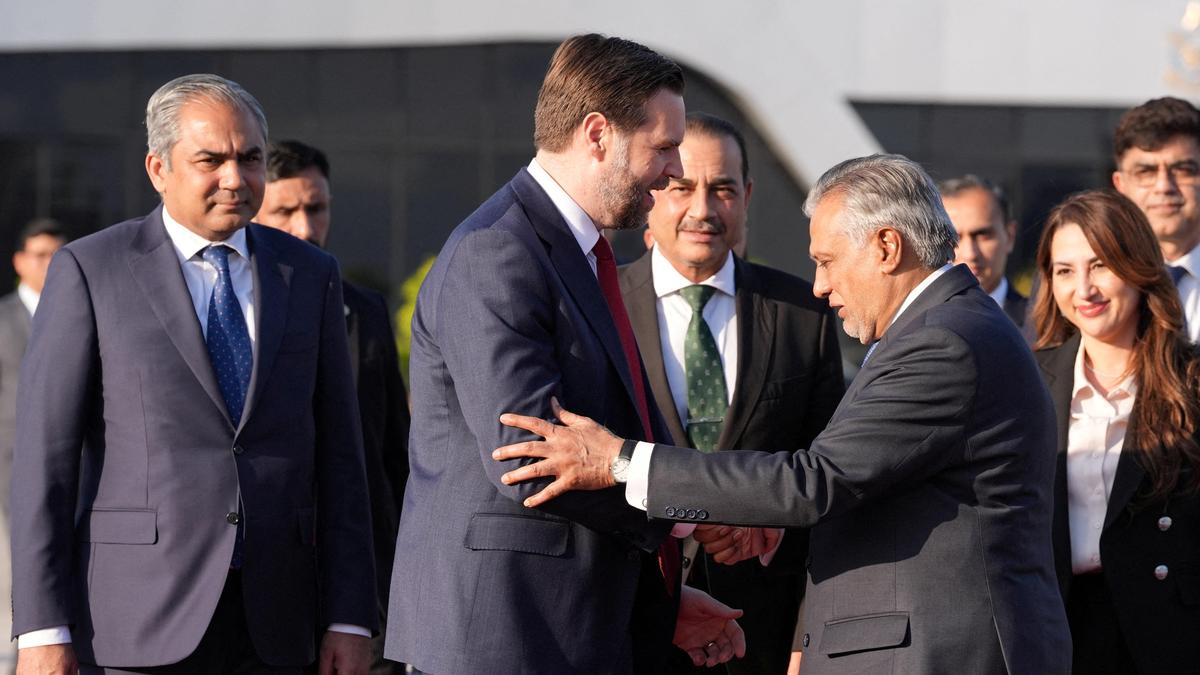
Foreign Minister Ishaq Dar recently stood before the cameras, his words measured, his tone scrubbed of the urgency that likely pulses behind closed doors. He spoke of "facilitating" dialogue. He spoke of "restraint." To the casual observer, it was another round of diplomatic boilerplate. But beneath the starched suits and the teleprompter-ready phrases lies a high-stakes gamble that affects every dinner table from Tehran to Karachi, and every policy desk in D.C.
Think of it this way. You are living in a house where two of your neighbors are standing on their respective porches, gasoline cans in hand, flicking lighters. You are the one person both of them will still talk to. If you stop talking, the street goes up in flames.
The Invisible Geography of Risk
Geography is a destiny no nation can outrun. When Ishaq Dar reaffirms Pakistan’s role as a bridge between the U.S. and Iran, he isn't just playing at being a peacemaker for the sake of international prestige. He is trying to keep the smoke from his own lungs.
For decades, the relationship between Washington and Tehran has been a series of clenched teeth and missed opportunities. Pakistan has frequently occupied the uncomfortable middle ground. It is a position of extreme vulnerability. If the tensions escalate into a regional conflagration, Pakistan faces a refugee crisis that could dwarf previous decades, an energy vacuum that would paralyze its industry, and sectarian tremors that could tear at its social fabric.
The "facilitation" Dar describes isn't just about passing envelopes. It’s about translation. Not of language, but of intent. In a world where a single drone strike or a miscalculated naval maneuver in the Strait of Hormuz can trigger a decade of war, someone has to be the person who says, "They aren't looking for a fight; they’re looking for a way out."
The Human Cost of the Silence
Consider a hypothetical shopkeeper in Quetta, let’s call him Ahmed. Ahmed doesn’t read the nuances of the Joint Comprehensive Plan of Action (JCPOA). He doesn’t track the movements of the U.S. Fifth Fleet. But he knows that when the "facilitation" fails, the border closes. When the border closes, his supply of affordable goods vanishes. When the rhetoric in Washington turns to "all options on the table," the local currency shivers.
Ahmed represents the millions of lives pinned to the success of Dar’s diplomatic tightrope walk. The "human element" here isn't just a buzzword. It is the physical reality of people living in the path of a potential storm.
The United States wants security and a halt to nuclear proliferation. Iran wants sovereignty and the removal of the economic boot on its neck. Pakistan wants both of them to lower their voices so it can breathe. Dar’s plea for a ceasefire—specifically in the context of the broader regional instability—is a cry for a return to the status quo, because the status quo, as flawed as it is, keeps the lights on.
The Art of the Impossible Message
Diplomacy is often the art of saying "no" while making it sound like "maybe later," or saying "we agree" when you actually mean "we are exhausted."
Pakistan’s role is unique because it holds a "most favored nation" status with neither yet maintains a functional intimacy with both. It understands the American obsession with regional stability and the Iranian insistence on dignity.
During his recent statements, Dar wasn't just talking to the press. He was sending a signal to the State Department: We are still here. We can still talk to them. Don’t cut the line. Simultaneously, he was telling Tehran: We are advocating for a pause. We are pushing for a ceasefire. Hold your fire.
It is a thankless job. When peace holds, no one credits the messenger. When war breaks out, the messenger is the first one trampled.
Why the Ceasefire Matters Now
The timing of this renewed diplomatic push isn't accidental. The Middle East is currently a mosaic of jagged glass. The conflict in Gaza has acted as a catalyst, pulling distant actors into a tighter, more dangerous orbit. Every rocket fired is a variable that the "bridge" must account for.
Dar’s insistence on a ceasefire isn't a mere moral stance. It is a pragmatic necessity. In a theater of war, the nuance required for U.S.-Iran talks evaporates. You cannot negotiate a complex nuclear or security framework while the ground is shaking from artillery fire.
The "invisible stakes" involve the potential for a total regional collapse. If Pakistan fails to facilitate these talks, and if the U.S. and Iran move from proxy shadow-boxing to direct confrontation, the map of the 21st century changes overnight. We aren't talking about a bump in oil prices. We are talking about the displacement of tens of millions and the end of any hope for economic recovery in South Asia.
The Weight of the Starched Shirt
Ishaq Dar looks calm on television. Most high-level officials do. It is part of the job description to project an image of unshakeable competence. But look at the history of the region. Look at the scars left by the last forty years of intervention and revolution.
The bridge is burning.
On one side, a superpower that is increasingly impatient with "forever wars" but unable to walk away from the oil and the influence. On the other, a regional power that has built its entire identity on resistance.
Pakistan sits in the middle, trying to build a structure out of words and handshakes. It is a fragile architecture. It relies on the hope that, eventually, both sides will realize that the cost of the fire is higher than the cost of the conversation.
Dar’s role is to keep that hope on life support. He is the operator at a switchboard where most of the wires have been cut, frantically trying to plug the remaining ones into the right sockets.
The world watches the flashpoints—the explosions, the protests, the military parades. But the real history is being written in these quiet facilitations. It is written in the messages that don't make the headlines and the meetings that never happened "officially."
It is a terrifying, lonely, and essential task.
The next time a diplomat stands at a podium and speaks of "facilitating dialogue," don't look at the suit. Don't listen to the dry delivery. Look at the border. Look at the shopkeepers. Look at the families who are waiting for the smoke to clear.
The thread is thin, but it is the only thing holding the bridge over the abyss.
One misstep, one silent phone line, and the heat becomes unbearable for everyone.