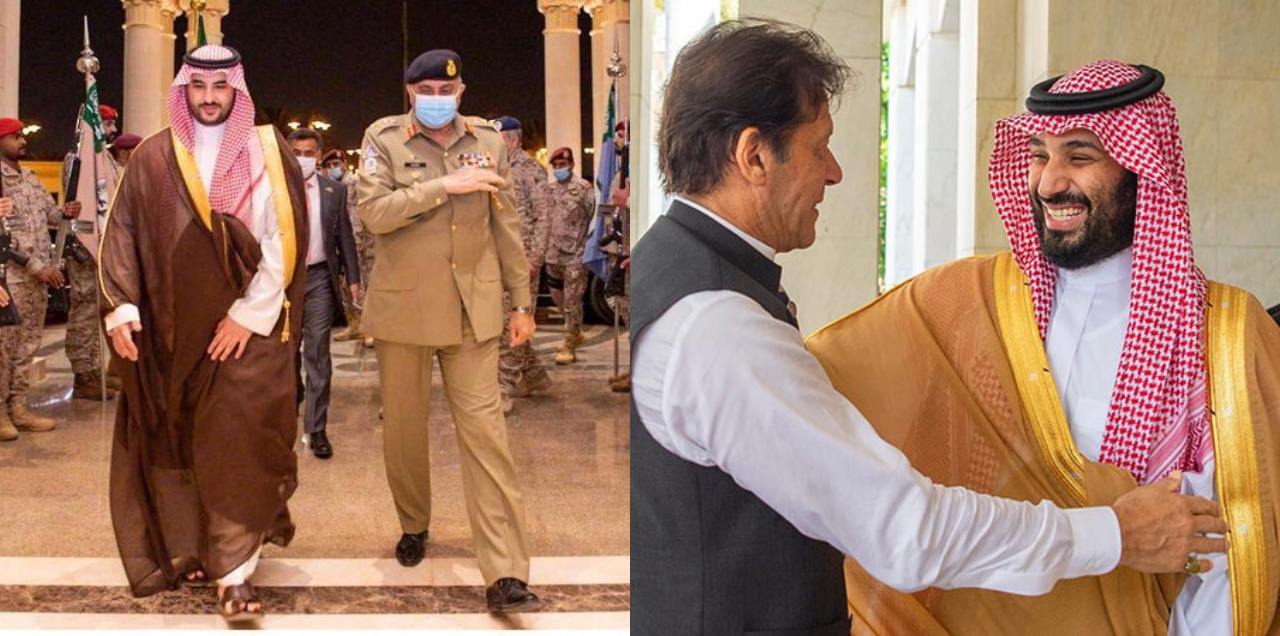
Prime Minister Shehbaz Sharif’s arrival in Saudi Arabia represents a calculated effort to stabilize Pakistan’s precarious balance of payments while navigating the escalating volatility of West Asian geopolitics. This diplomatic engagement is not merely a courtesy visit; it is a structural necessity driven by three converging pressures: the immediate requirement for debt rollover, the strategic imperative of the Special Investment Facilitation Council (SIFC), and the containment of regional spillover from the Iran-Israel friction. The success of this mission depends on Pakistan’s ability to offer credible security guarantees and investment returns in exchange for the liquidity required to satisfy IMF conditionalities.
The Financial Liquidity Function
The primary driver of this engagement is the fiscal bottleneck facing the Pakistani state. Pakistan’s economic survival is indexed to the "Rolling Credit Model," where bilateral deposits from friendly nations—primarily Saudi Arabia, the UAE, and China—act as the primary buffer against sovereign default.
Saudi Arabia’s role in this model is defined by two specific mechanisms:
- Deposit Maintenance: The $3 billion deposit held by the State Bank of Pakistan (SBP) acts as a psychological and mathematical floor for foreign exchange reserves. Without the periodic renewal of these deposits, Pakistan’s debt-to-GDP ratio would hit a breaking point, triggering a credit rating downgrade that would lock the country out of international capital markets.
- Oil Credit Facilities: The Saudi Fund for Development (SFD) provides deferred payment facilities for petroleum products. This functions as a shadow subsidy, reducing the immediate monthly outflow of USD and allowing the government to manage its trade deficit with a higher degree of granularity.
The current visit aims to transition this relationship from a donor-recipient binary to a structured investment partnership. By moving toward equity-based financing—specifically targeting the Reko Diq mining project and agricultural initiatives—Pakistan seeks to reduce the political cost of perpetual borrowing.
The West Asian Security Dilemma
The timing of this visit coincides with an inflection point in West Asian security. The heightening tensions between Iran and Israel place Islamabad in a complex position. Pakistan shares a 900-kilometer border with Iran, yet its economic security is tethered to the Gulf monarchies.
The strategic calculus involves managing the following variables:
- Neutrality Maintenance: Pakistan must avoid becoming a kinetic participant in regional conflicts. However, its historical role as a provider of security expertise and personnel to the Kingdom creates an expectation of "defensive alignment."
- The Iran-Pakistan Gas Pipeline: The threat of US sanctions regarding the pipeline project complicates Pakistan’s energy strategy. By engaging Riyadh, Sharif is looking for alternative energy investments that do not carry the same geopolitical risk profile as the Iranian venture.
- Maritime Security: As the Red Sea becomes a zone of active conflict, the security of shipping lanes is a shared priority. Pakistan’s naval presence in the Arabian Sea is a specialized asset that can be traded for economic concessions.
The SIFC Framework as a Diplomatic Tool
The Special Investment Facilitation Council (SIFC) represents the structural backbone of Pakistan’s new economic diplomacy. It is designed to bypass traditional bureaucratic inertia by providing a "single-window" interface for foreign investors, backed by the military establishment to ensure policy continuity across political cycles.
In the Saudi context, the SIFC is targeting the "Saudi Vision 2030" capital surplus. The logic is to align Pakistan’s privatization list with Saudi Arabia’s diversification goals. The primary sectors under negotiation include:
- Corporate Agriculture: Utilizing vast tracts of state land to provide food security for the Kingdom, essentially exporting Pakistani soil and water resources in the form of high-value crops.
- Mining and Minerals: The Tethyan Copper Belt, particularly Reko Diq, is the centerpiece. Saudi investment here would serve as a hedge against global commodity price volatility while providing Pakistan with the upfront capital needed to bridge its current account deficit.
- Energy Infrastructure: The proposed Saudi refinery in Gwadar remains a critical, albeit delayed, project. The technical challenge lies in the refinery's configuration to handle specific crude grades and its proximity to the China-Pakistan Economic Corridor (CPEC) infrastructure.
Risk Factors and Structural Constraints
The durability of any agreement reached during this visit is subject to several internal and external constraints. Understanding these limitations is vital for any realistic assessment of the outcome.
Political Legitimacy and Continuity
Foreign investors, including the Saudi Public Investment Fund (PIF), require a ten-to-twenty-year horizon for ROI. Pakistan’s internal political fragmentation creates a "sovereign risk premium." If a future administration attempts to litigate or reverse current investment deals, the reputational damage would be irreversible. The SIFC is an attempt to mitigate this, but it cannot entirely eliminate the risk of civil unrest or judicial intervention.
IMF Overlap
Every dollar committed by Saudi Arabia is monitored by the International Monetary Fund (IMF). The IMF’s "net international reserves" targets often limit how Pakistan can utilize bilateral inflows. If Riyadh provides a loan, it must be used to build reserves, not to fund populist subsidies. This creates a friction point where the government cannot use Saudi aid to lower domestic electricity or fuel prices, which are the primary drivers of political instability.
Regional Competition for Capital
Pakistan is competing for Saudi capital against other emerging markets and the Kingdom’s own massive internal projects like NEOM. To win this capital, Pakistan must offer internal rates of return (IRR) that exceed the risks of its domestic environment. This necessitates significant deregulation and potentially unpopular labor reforms.
Tactical Realignment and the Shift to Geo-Economics
The shift from "Geo-politics" to "Geo-economics" has been the stated goal of Pakistani policymakers for three years. This visit is the stress test for that transition. In the past, Pakistan leveraged its geographic location for strategic rent. Today, that location is insufficient; it must provide a functional economic corridor.
The bottleneck in this transition is the lack of "Complementary Infrastructure." While Saudi Arabia may invest in a refinery, the secondary pipelines, road networks, and rail links remain underdeveloped. Therefore, the strategic recommendation for the Sharif administration is to prioritize the "Infrastructure-First" model where Saudi capital is funneled into the foundational logistics that make subsequent industrial investments viable.
The focus must remain on the Privatization Commission’s ability to divest state-owned enterprises (SOEs). The Saudis have signaled a lack of interest in "rescue packages" and a preference for "asset acquisition." This requires a ruthless pruning of the Pakistani public sector, starting with the national carrier and power distribution companies.
Forecast: The Probable Equilibrium
The most likely outcome of the current diplomatic track is a staged rollout of investments totaling $5 billion to $10 billion over the next thirty-six months, contingent on Pakistan meeting specific IMF benchmarks. This will not result in an immediate "windfall" but rather a stabilization of the currency and a marginal improvement in the credit outlook.
The long-term success of the Saudi-Pakistan axis depends on whether Islamabad can maintain its internal security environment. Any escalation in domestic militancy or political volatility will immediately pause Saudi capital flows. Consequently, the government’s primary task is the "securitization of investment"—ensuring that the physical and legal sites of Saudi projects are insulated from the broader national instability.
The strategic play is to lock in the Saudi commitments before the next IMF review. This creates a "forced multiplier effect" where the IMF sees the bilateral support as a guarantee of program success, thereby easing the terms of the next Extended Fund Facility (EFF). Pakistan is currently playing a high-stakes game of financial sequencing where the Saudi visit is the indispensable first move.