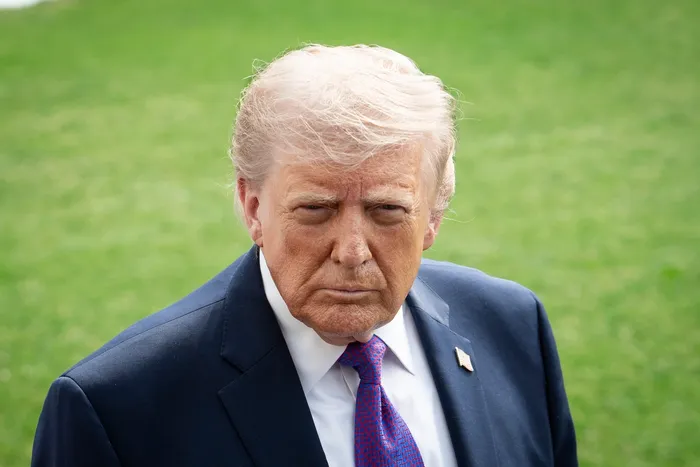
The ten-day ceasefire brokered by President Trump between Israel and Lebanon represents a shift from permanent resolution attempts toward a high-frequency stabilization protocol. By compressing the diplomatic window into a 240-hour sprint, the administration has introduced a "stress test" model for regional security. This strategy assumes that the primary barrier to peace is not a lack of terms, but a lack of verifiable compliance under pressure. The ceasefire functions as a tactical pause designed to measure the command-and-control integrity of both the Israel Defense Forces (IDF) and Hezbollah, while simultaneously testing the logistical capacity of the Lebanese Armed Forces (LAF) to occupy the buffer zones created by the conflict.
The Tri-Component Architecture of the Ten Day Window
To understand why a ten-day limit was selected over an indefinite pause, one must analyze the incentive structures of the involved parties. A short-term window forces immediate, high-stakes decisions that long-term negotiations allow actors to defer.
1. The Verification Threshold
The first 72 hours of the protocol serve as a "silence audit." During this period, the cessation of kinetic activity is monitored not for its total absence, but for its origin. Sporadic fire from non-state actors or rogue elements is distinguishable from coordinated military strikes. If the IDF and Hezbollah can maintain a zero-strike policy during this high-tension phase, it proves that the chain of command on both sides is operational and willing to adhere to executive directives. Failure here signals a lack of centralized authority, rendering further diplomacy moot.
2. The Logistical Vacuum
A ceasefire creates a physical space that must be filled. In Southern Lebanon, the withdrawal or repositioning of Hezbollah units creates a power vacuum. The Trump protocol utilizes the ten-day period to assess the "deployment velocity" of the Lebanese Armed Forces. If the LAF cannot mobilize to secure the Litani River line within this window, the security guarantees required by Israel—specifically the prevention of a return to the status quo ante—cannot be met. The brevity of the ceasefire prevents Hezbollah from effectively re-entrenching during the lull.
3. The Political Calibration Phase
President Trump’s involvement adds a layer of "reputational collateral." For Israel, the ten-day window provides a low-risk environment to evaluate the new U.S. administration's enforcement mechanisms. For Lebanon, it is a test of sovereign autonomy. The short duration prevents any single party from using the pause to re-arm significantly, as the procurement and transport cycles for heavy weaponry typically exceed a ten-day period under active surveillance.
Strategic Friction Points and the Cost of Non-Compliance
The primary risk in this framework is the "Asymmetric Spoilers" effect. Small, unaffiliated militant groups or internal political factions may perceive the ceasefire as a threat to their relevance.
- The Attribution Problem: In a ten-day window, a single rocket launch can collapse the entire framework. The challenge for intelligence agencies is determining whether a breach is a policy shift or a tactical anomaly.
- The Buffer Zone Elasticity: Israel’s requirement for a "clean" zone up to the Litani River is a geographic hardline. The protocol's success depends on whether Lebanon views this as a temporary security measure or a permanent loss of territorial agency.
The cost function for breaking the ceasefire is heavily weighted against Lebanon’s remaining civilian infrastructure. Israel has signaled that a failure of the ten-day test will result in a "high-intensity reset," where the subsequent phase of operations will target broader logistical nodes rather than just tactical positions. This creates a binary outcome: either the ten days lead to a structured extension, or they serve as the final countdown to a wider regional escalation.
Displacing the Buffer Zone Logic
Historically, ceasefires in the Levant have failed because they relied on UNIFIL—a force with high visibility but low enforcement power. The current protocol shifts the burden of enforcement to a bilateral verification mechanism between the U.S. and the regional players. This moves the accountability from an international body to a direct state-to-state level.
The "Red Line" variables in this ten-day period include:
- Airspace Integrity: Whether Israel continues reconnaissance overflights and how Lebanon responds.
- Maritime Corridors: The monitoring of the Mediterranean coast to prevent hardware replenishment.
- Subterranean Neutralization: Whether Israel is permitted to continue destroying existing tunnel infrastructure during the "pause" under the guise of defensive clearing.
The Economic Implications of the Pause
The ceasefire is not merely a military maneuver; it is an economic necessity for the Lebanese state, which is currently in a condition of near-total fiscal collapse. Every day of kinetic conflict compounds the destruction of "dual-use" infrastructure—ports, bridges, and energy grids. The ten-day window allows for a momentary stabilization of the Lebanese Pound and a pause in the internal displacement crisis, which has seen over a million people moving toward the north.
For Israel, the economic cost of the conflict is measured in "reserve duty attrition." The mobilization of hundreds of thousands of reservists has pulled significant talent from the high-tech and industrial sectors. A successful ten-day test allows the Israeli government to begin calculating a phased demobilization, reducing the fiscal deficit incurred by the Ministry of Defense.
Intelligence as the Primary Enforcer
The reliance on President Trump’s personal diplomatic brand suggests that the "enforcement" of these ten days is backed by the threat of renewed American sanctions or, conversely, the promise of reconstruction incentives. This is "transactional diplomacy" applied to a theater that has traditionally been governed by "ideological diplomacy."
The intelligence community's role during these 240 hours is to provide a "common operating picture." Discrepancies in reporting—where one side claims a violation and the other denies it—must be resolved in real-time by U.S. satellite and signal intelligence. This role as a "digital referee" is the hidden backbone of the Trump protocol.
Structural Limitations of Short Termism
The ten-day limit is a double-edged sword. While it creates urgency, it does not allow for the "cooling off" of deep-seated animosities. It treats the conflict as a technical malfunction that needs a reboot rather than a civilizational struggle.
- Constraint 1: It assumes the Lebanese government has the leverage to dictate terms to Hezbollah, a group that maintains a private military larger than the national army.
- Constraint 2: It assumes Israel is willing to trade a tactical advantage for a diplomatic "maybe."
- Constraint 3: It ignores the "Iran Factor," where external support for proxies can be ramped up precisely to spite a U.S.-led initiative.
The absence of a "Phase 2" plan within the public announcement suggests that the administration is playing a "probabilistic game." If the ten days hold, the probability of a 30-day extension increases exponentially. If they do not, the administration can claim it provided a final opportunity for peace before "letting the chips fall."
Strategic Execution and the Road to Day 11
The transition from Day 10 to Day 11 is the most volatile moment in the current geopolitical cycle. Success is not defined by a signed treaty, but by a shift in the "Rules of Engagement" (ROE). If both parties emerge from the ten days with a clearer understanding of the other’s "threshold for pain," the ceasefire has achieved its technical objective.
The immediate tactical requirement is the establishment of a "Hotline Mechanism" between the IDF and the LAF, mediated by the U.S. Central Command (CENTCOM). Without this, a localized misunderstanding on the border could escalate into a full-scale resumption of hostilities. The focus must remain on the physical separation of forces. The Israel-Lebanon border is a high-friction environment; the goal of the Trump protocol is to introduce enough "diplomatic lubricant" to prevent a total engine seizure of the regional security apparatus.
The focus now shifts to the "Ground Reality Audit." Analysts should watch for the movement of heavy artillery away from the Blue Line. This is the only reliable metric for long-term intent. If the hardware stays in place, the ceasefire is merely a reload period. If it moves, the ten-day sprint has successfully transitioned into a marathon of stabilization.