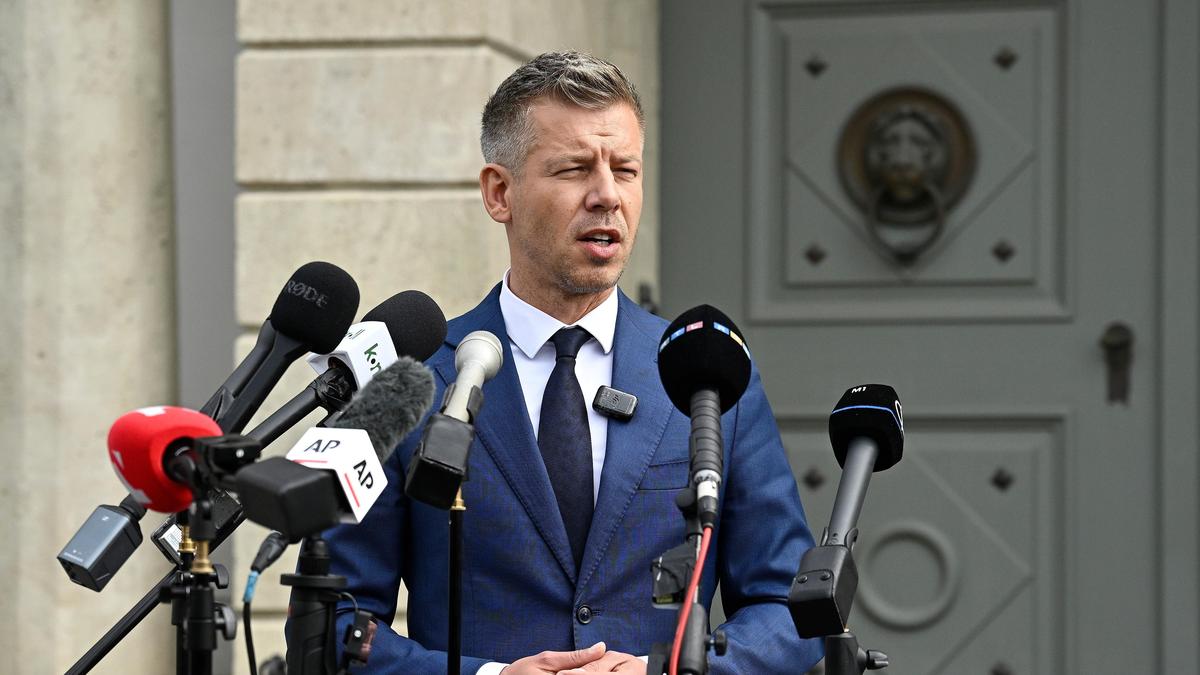
The iron grip that Viktor Orbán held over Hungary for sixteen years did not rust away through slow decay; it was shattered by a man who helped build the forge. On April 12, 2026, the European Union's longest-serving leader watched his "illiberal" empire collapse in a single night as the Tisza Party, led by former regime insider Péter Magyar, secured a staggering two-thirds supermajority. This was not a standard change of guard. It was an institutional exorcism. By capturing 137 of 199 seats, Magyar didn't just win an election; he hijacked the very electoral machinery Orbán had engineered to ensure he could never lose.
The primary reason for this seismic shift is deceptively simple. Magyar understood a truth that the traditional, fragmented opposition ignored for a decade: you cannot beat a populist with high-minded philosophy; you beat him with a more energetic version of his own brand. Magyar took Orbán’s playbook—nationalism, conservative values, and a "man of the people" persona—and stripped away the pro-Russian tilt and the systemic graft that had finally begun to starve the Hungarian middle class.
The Insider Who Knew Too Much
Péter Magyar was never the underdog the international media initially portrayed him to be. He was a creature of the system. As the former husband of Justice Minister Judit Varga and a director of various state-owned enterprises, he sat at the dinner tables where the "NER" (National System of Cooperation) was managed. He didn't just witness the corruption; he understood the plumbing of the state.
When he broke ranks in early 2024 following the presidential pardon scandal, he didn't come with empty hands. He came with voice recordings. The Schadl-Völner affair, involving high-level bribery within the justice ministry, provided the initial spark, but Magyar’s real genius was in the sustained burn. He transitioned from a whistleblower to a messianic figure by utilizing social media to bypass the state-controlled media monolith that had buried every other challenger since 2010.
Playing the System Against Its Creator
Orbán’s 2011 electoral laws were a masterpiece of gerrymandering and "winner-takes-all" mechanics. They were designed to ensure that even a slight plurality for Fidesz would result in a crushing parliamentary majority. For years, this forced a divided opposition into unnatural coalitions that voters found repulsive.
Magyar broke this cycle by refusing to play nicely with the "old" opposition. He cannibalized them first. By positioning Tisza as a "third way" that was neither the corrupt past of the socialists nor the stagnant present of Fidesz, he created a vacuum. When the 2026 vote arrived, the high turnout of nearly 80% meant that the electoral "bonus" seats—those designed to favor the largest party—flowed directly to Magyar. The fortress was built to keep people out, but once the intruder was inside, the walls only served to protect him.
The Economic Breaking Point
While the rhetoric focused on democracy, the victory was fueled by the wallet. Under Orbán, Hungary suffered some of the highest inflation rates in the EU. The government's reliance on price caps—specifically on fuel and basic foodstuffs—created a distorted reality that eventually buckled.
Magyar’s platform was ruthlessly pragmatic. He didn't promise a progressive utopia; he promised to unlock the billions of Euros in EU funds frozen due to rule-of-law disputes. For the Hungarian voter, the choice became a transaction: stick with Orbán and stay isolated and poor, or pivot to Magyar and get the European money flowing again. It was a cold, business-minded calculation that resonated in the rural heartlands, not just the liberal hubs of Budapest.
The Washington Miscalculation
The 2026 election also served as a stinging rebuke to a specific brand of American foreign policy. In the days leading up to the vote, high-ranking figures from the U.S., including Vice President JD Vance, visited Budapest to bolster Orbán’s credentials as a global conservative icon. They bet on the incumbent, viewing him as a bridgehead for "MAGA" style politics in Europe.
That bet failed spectacularly. By tethering Orbán to the American far-right, they inadvertently helped Magyar’s narrative that the Prime Minister was more interested in global culture wars than the price of bread in Debrecen. Magyar, meanwhile, maintained a disciplined focus on sovereignty, effectively out-patriot-ing the man who had made patriotism his sole product.
Can Orbánism Survive Without Orbán?
The immediate question is whether Magyar is truly a reformer or simply a younger, more efficient version of what came before. His campaign was notably populist. He has been vague on the specifics of dismantling the deep state of Fidesz-appointed judges, university boards, and media regulators.
The "Deep State" Orbán built was designed to be permanent. Most key institutions are headed by loyalists with nine-year terms that cannot be overturned by a simple majority. However, with a two-thirds mandate, Magyar now holds the "nuclear option": the ability to rewrite the constitution.
The danger for Hungary is the "savior" trap. The country has a historical tendency to trade one strongman for another in times of crisis. Magyar’s victory is a triumph for European integration and a blow to Vladimir Putin’s influence in the region, but the hard work of restoring a multi-party democracy—one that doesn't rely on the charisma of a single defector—is only just beginning.
Orbán has conceded, but he remains in the wings, leading a wounded but still disciplined opposition. He is a politician who thrives in the wilderness. Magyar’s honeymoon will last exactly as long as it takes for the first austerity measure to hit the public. The fortress has fallen, but the blueprints are still lying on the desk.