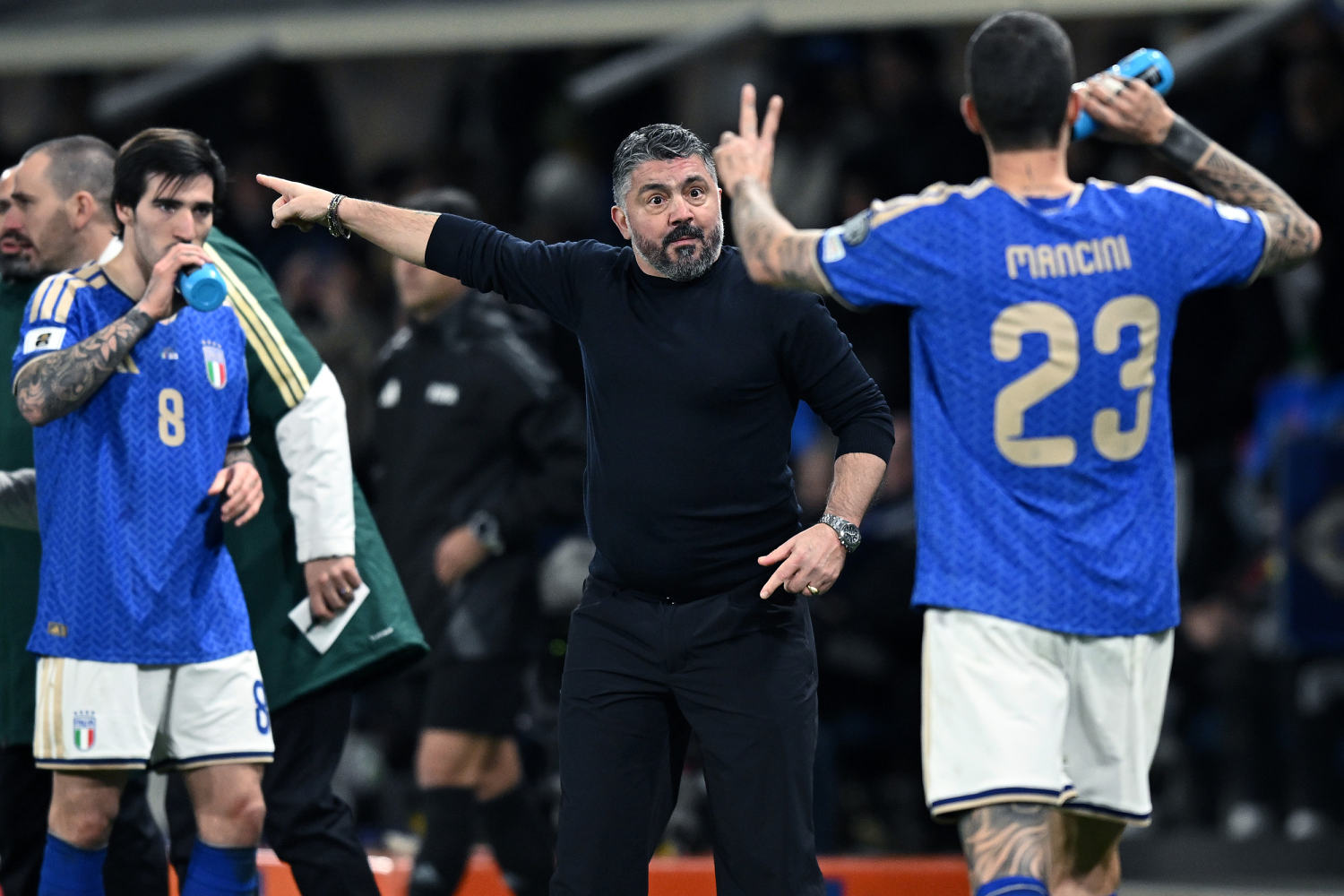
Italy’s absence from the 2018 and 2022 FIFA World Cups is not a statistical anomaly but the terminal output of a twenty-year erosion in talent production, economic competitiveness, and tactical dogmatism. The national team, the Azzurri, once functioned as the apex of a self-sustaining ecosystem. Today, it operates as a disconnected entity attempting to extract elite performance from a domestic league that has transitioned from a global destination to a developmental transit hub. To understand why a nation with four world titles faces a potential third consecutive tournament absence, one must analyze the failure through three specific variables: the demographic collapse of the domestic player pool, the capital deficit of Serie A relative to the Premier League, and the "Winner’s Curse" of the Euro 2020 title which masked systemic rot with a transient tactical peak.
The Talent Pipeline Bottleneck
The primary driver of Italian decline is a contraction in the supply of "Tier 1" technical players, specifically in the creative midfield and clinical finishing positions. In the 1990s and early 2000s, the Italian selection pool was built on the back of an academy system that prioritized technical flair and defensive intelligence in equal measure. This produced players like Francesco Totti, Alessandro Del Piero, and Roberto Baggio—individuals capable of spontaneous game-breaking actions.
The current landscape is defined by a lack of creative surplus. In the 2023-24 Serie A season, over 60% of minutes played were by non-Italian players. This is not inherently problematic if the domestic minority is of elite caliber, but the distribution of these minutes reveals a structural flaw. Italian players are disproportionately concentrated in defensive roles and lower-table clubs. The "Big Three"—Juventus, AC Milan, and Inter Milan—no longer serve as the primary finishing school for the national team. When the spine of the national team is forged at clubs battling relegation or mid-table mediocrity, the psychological and tactical threshold required for elite international competition remains unreached.
The lack of a reliable "Number 9" (a clinical striker) is the most visible symptom of this pipeline failure. Ciro Immobile, despite prolific domestic numbers, consistently underperformed in high-stakes international knockout contexts. The transition to Gianluca Scamacca or Mateo Retegui represents a search for a functional solution rather than an elite one. This is a direct consequence of Italian clubs preferring the "certainty" of experienced foreign imports over the "volatility" of developing local youth, a risk-averse strategy driven by the immediate financial necessity of Champions League qualification.
The Economic Asymmetry of Serie A
The geopolitical economy of European football has shifted the center of gravity away from the Mediterranean. In the late 20th century, Serie A was the richest league in the world, capable of attracting every Ballon d'Or winner. Today, the league’s total revenue is less than half that of the English Premier League. This fiscal divergence creates three specific downstream effects on the national team:
- Investment in Infrastructure: While England, Germany, and Spain modernized their stadium infrastructure and training grounds in the 2000s, Italian clubs remained shackled to municipal-owned, crumbling stadiums. This limits match-day revenue, which in turn limits the budget for high-end coaching staff at the youth level.
- The "Export" Problem: Until recently, Italian players rarely played abroad. This was seen as a sign of the league’s strength. Now, it is a sign of market isolation. Players like Marco Verratti (formerly PSG) and Sandro Tonali (Newcastle) are exceptions. When the domestic league slows down in pace and tactical intensity, players who do not experience the higher-velocity environments of the Premier League or the technical rigor of La Liga struggle when facing international opponents who play at a higher "RPM" (revolutions per minute).
- The Financial Fair Play (FFP) Trap: Italian clubs, lacking the commercial revenue of their English counterparts, are forced into "Plusvalenza" (capital gains) strategies—selling young talent to balance books. This churn prevents the long-term squad cohesion that once made Italian clubs, and by extension the national team, tactically superior.
The Euro 2020 Mirage and the Winner’s Curse
Italy’s victory in the 2020 European Championship (played in 2021) was an analytical outlier that delayed necessary reforms. Under Roberto Mancini, the team adopted a proactive, possession-based style that departed from the traditional Catenaccio (bolt/chain) defensive philosophy. This shift was highly effective against European peers but lacked the depth to sustain a multi-year cycle.
The "Winner’s Curse" in this context refers to the cognitive bias that success validates the existing structure. After winning the Euros, the Italian FA (FIGC) and the broader footballing culture failed to address the fact that the victory was achieved with a 36-year-old Giorgio Chiellini and a 34-year-old Leonardo Bonucci. The team’s reliance on an aging defensive core meant that when those pillars inevitably crumbled, there was no "Generation X" ready to replace them.
The subsequent failure to qualify for the 2022 World Cup, losing to North Macedonia in a playoff, was the market correction. Italy dominated possession (66%) and had 32 shots to North Macedonia's 4, yet lost 1-0. This efficiency gap is the defining characteristic of the modern Azzurri. They can control the "middle third" of the pitch through tactical discipline but lack the "final third" quality to convert dominance into results.
Tactical Homogenization vs. Traditional Identity
A secondary cause of the regression is a crisis of identity. For decades, Italy excelled because it mastered the "dark arts" of defending and the clinical counter-attack. Modern coaching in Italy has moved toward a "Global Style"—high pressing, short passing, and fluid positioning. While this makes Italian players more adaptable, it has stripped them of their unique competitive advantage.
When every team plays the same way, the winner is determined by superior individual athleticism and technical precision. In these categories, Italy is currently outclassed by the depth of France, the raw athleticism of England, and the technical conveyor belt of Spain. By abandoning their defensive specialization to become a "lite" version of a possession-based team, Italy has entered a competition where they do not have the superior resources to win.
The logical framework for recovery requires a bifurcation of strategy. First, the FIGC must mandate "homegrown" quotas that are strictly enforced, moving beyond the current loopholes that allow clubs to bypass youth development. Second, Serie A must undergo a commercial centralization to close the revenue gap with the Premier League, enabling clubs to retain top-tier Italian talent during their peak years (ages 23-27).
The risk of missing a third straight World Cup is no longer a "nightmare scenario"—it is the baseline projection if the structural variables remain unchanged. The upcoming expansion of the World Cup to 48 teams in 2026 provides a safety net that might prevent the embarrassment of absence, but it will not fix the underlying decay. A nation that relies on its history to win its future eventually finds itself with neither.
Italy must pivot from being a consumer of its own mythos to an architect of a new industrial model for football. This requires de-prioritizing short-term results in the Nations League or friendlies in favor of a total integration between the U-17, U-21, and senior levels, focusing on the development of "high-velocity" attacking profiles that the current system systematically filters out. If the Italian system continues to prioritize tactical compliance over individual brilliance, the four stars on their jersey will remain artifacts of a previous century rather than indicators of current relevance.