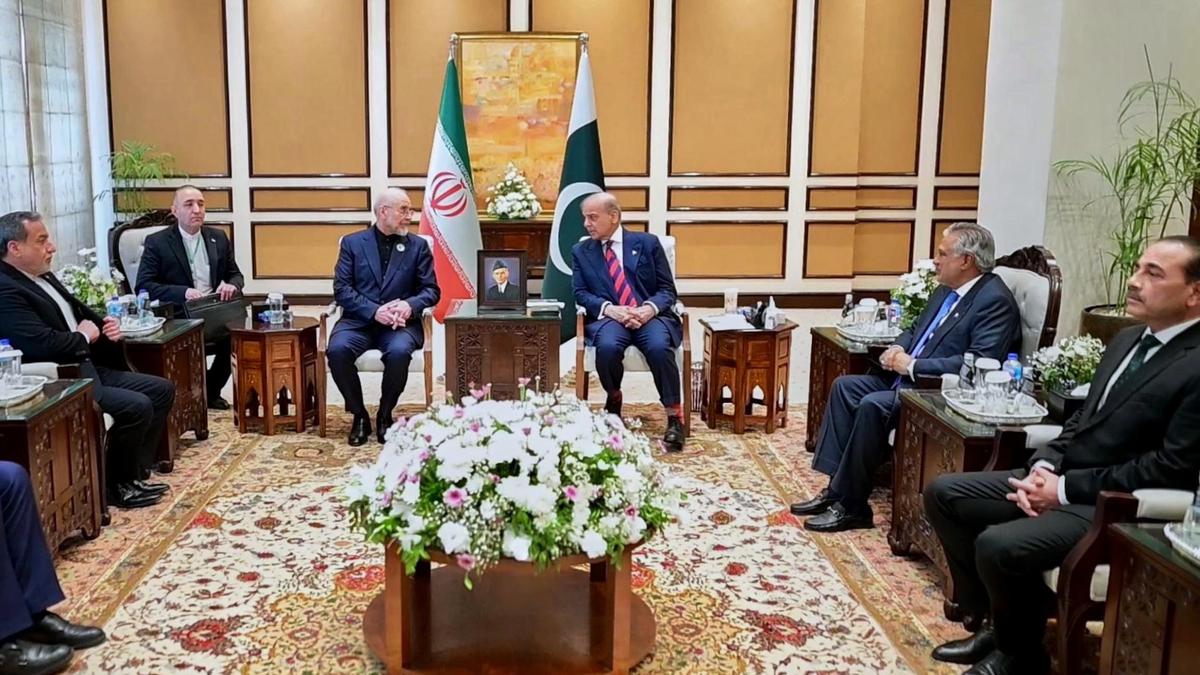
The collapse of the 21-hour marathon summit in Islamabad between the United States and Iran has left the global community staring into a geopolitical void. This morning, as Vice President JD Vance boarded Air Force Two and the Iranian delegation returned to a nation already reeling from six weeks of open conflict, the "disappointment" expressed by UK Health Secretary Wes Streeting felt less like a diplomatic assessment and more like an epitaph for regional stability. Streeting’s admission that the talks ended without a breakthrough confirms that the two-week ceasefire, currently the only barrier between the Middle East and a wider conflagration, is now resting on a razor's edge.
Diplomatic failures of this magnitude are rarely about a single missed clause or a misunderstood translation. They are about fundamental, irreconcilable visions of power. While the UK and other allies cling to the hope that "failing until you succeed" is a viable strategy, the ground reality suggests that the Islamabad meeting was less of a negotiation and more of a public airing of non-negotiable demands. The failure highlights a terrifying truth. When the gap between two nuclear-adjacent powers is bridged only by "incendiary" social media posts and "unreasonable demands," the mechanism of diplomacy itself is broken.
The Nuclear Wall and the Strait of Hormuz
The primary friction point, according to Vance, remains the nuclear question. The United States is demanding an affirmative, verifiable commitment that Iran will not only abandon its nuclear weapons program but also dismantle the infrastructure that would allow for a "breakout" capability. This isn't just about uranium enrichment. It is about the complete deconstruction of a decade of domestic technological advancement. For Tehran, this is viewed as a demand for total surrender, not a peace treaty.
Beyond the centrifuges, the Strait of Hormuz has transformed from a geographic choke point into a primary weapon of war. During the talks, Iran reportedly insisted on maintaining absolute control over the waterway, including the right to charge transit fees to foreign vessels—a move that would effectively place a tax on the world’s energy supply. The U.S. response was a literal show of force. Even as the negotiators sat in Islamabad, the U.S. Central Command confirmed that two Navy destroyers were clearing mines in the strait, a clear signal that Washington considers the waterway international, regardless of Tehran's claims.
Streeting and the British Dilemma
Wes Streeting’s critique of the "incendiary, provocative, and outrageous" rhetoric coming from the White House exposes a widening rift in the Special Relationship. The UK government, led by Keir Starmer, has attempted to walk a fine line by refusing to join initial U.S.-Israeli strikes on Iran. This decision has earned the UK "flak" from former leaders and domestic rivals, but Streeting defended it as a necessary act of "grit and guts."
However, the UK’s position is increasingly isolated. By judging the U.S. President on "what he does, not just what he says," London is trying to maintain a partnership with a White House that seems increasingly disinterested in traditional allied consensus. When the President remarks that a deal isn't even essential because the U.S. has "already won," it undermines the very leverage the British and Omanis are trying to build.
The Economic Cost of the Deadlock
The failure to reach an agreement has immediate, tangible consequences for the global economy.
- Oil Volatility: Brent crude remains pegged at levels unseen since the initial invasion, with markets pricing in the risk of a permanent closure of the Strait of Hormuz.
- Frozen Assets: Iran’s demand for the release of $6 billion in frozen funds was flatly rejected, leaving Tehran with no financial incentive to de-escalate.
- Supply Chain Fragility: With the Saudi East-West pipeline only recently back online after drone attacks, the regional energy infrastructure is one spark away from a total blackout.
Why the Ceasefire Won't Hold
The current two-week truce was intended to provide breathing room for these talks. Instead, it has served as a period for both sides to re-arm and re-position. Reports from the ground indicate that while the missiles have stopped flying, the logistics of war have not. Iranian-backed militias in Iraq and Lebanon are reportedly preparing for a "war of attrition," and the U.S. has not slowed its deployment of carrier strike groups to the region.
The "final and best offer" delivered by Vance in Islamabad is, in the eyes of the Iranian leadership, an ultimatum. History shows that when a regional power is backed into a corner where its only options are total capitulation or total war, it rarely chooses the former. The insistence on a permanent deal without sunset clauses—a key Trump administration demand—removes the one thing Iranian diplomats need to sell a deal back home: a path toward normalization.
The Technological Shadow War
While the world focuses on the public statements in Pakistan, a second war is being fought in the digital and technological sectors. The U.S. is not just aiming for physical disarmament; it is targeting the intellectual and digital infrastructure of the Iranian state. This includes sophisticated cyber operations designed to degrade Iran’s command and control systems, which Tehran views as a direct violation of any ceasefire agreement.
Conversely, Iran’s reliance on "asymmetric" technology—low-cost drones and sea mines—has proven that you don't need a conventional air force to disrupt a global superpower. The Islamabad talks failed to address this technological disparity. Washington wants a 20th-century style surrender, while Tehran is fighting a 21st-century war of disruption.
The most chilling takeaway from the weekend is the realization that both sides believe they are winning. Washington sees an Iran crippled by strikes and internal dissent. Tehran sees a U.S. administration that is overextended and politically divided. When both parties in a conflict believe time is on their side, neither is truly motivated to find a middle ground. The "merit in continuing to try," as Streeting put it, is rapidly being outweighed by the momentum of a war that neither side seems willing to stop.
The Islamabad talks weren't just a failure of diplomacy. They were a confirmation that the language of negotiation has been replaced by the language of force. The window for a "sustainable end" to this war is closing, and it won't be reopened by "incendiary" posts or "disappointed" ministers. It will take a fundamental shift in the strategic calculus of both nations—a shift that, as of this morning, remains nowhere in sight.
The ceasefire expires in nine days. Unless a radical change occurs, the next time we see high-level representatives from these two nations together, it won't be at a conference table in Pakistan. It will be across a battlefield that has already claimed too many lives. Wait for the next notification. It will likely be a launch alert.