The Iranian geopolitical strategy operates not as a series of reactionary gambits, but as a sophisticated optimization problem designed to maximize regional influence while minimizing the risk of direct state-on-state kinetic conflict. This framework, often mischaracterized as a "long game" of ideological patience, is actually a rigid adherence to a "Forward Defense" doctrine. At its core, Tehran seeks to export its security borders through a distributed network of non-state actors, creating a buffer zone that forces any potential conflict to occur on foreign soil. To understand the current friction in the Middle East, one must deconstruct the three operational pillars of this architecture: specialized proxy integration, domestic ballistic autonomy, and the threshold of nuclear latency.
The Taxonomy of Proxy Integration
The "Axis of Resistance" is frequently viewed as a monolithic entity, yet its effectiveness derives from a tiered hierarchy of autonomy and capability. Tehran does not exercise absolute command and control; instead, it utilizes a venture capital model of militancy. It provides the initial "Series A" funding—ideology and basic hardware—and expects "returns" in the form of regional disruption and localized governance.
Tier I: Strategic Extensions
Hezbollah represents the most advanced iteration of this model. Unlike smaller militias, Hezbollah possesses a state-level arsenal and a sophisticated command structure. Its role is to serve as a primary deterrent against Mediterranean or Israeli escalation. By maintaining a massive rocket inventory, Hezbollah effectively holds a "second-strike" capability that constrains the military options of Iranian adversaries.
Tier II: Operational Disruptors
The Houthis in Yemen and various Kata'ib groups in Iraq serve as geographic pressure points. Their utility lies in their ability to threaten global maritime chokepoints—specifically the Bab al-Mandab Strait—and U.S. logistical hubs. These groups provide Tehran with "plausible deniability," a mechanism that raises the cost of attribution for the West. If a drone strikes a commercial vessel, the legal and political hurdle of tracing the command to Tehran creates a temporal gap that Iran uses to de-escalate on its own terms.
Tier III: Ideological Affiliates
Groups like Hamas and Palestinian Islamic Jihad occupy the outer rim. While their goals align with Tehran’s anti-Zionist rhetoric, their operational independence is higher. Iran uses these groups to maintain "perpetual friction," ensuring that regional competitors remain bogged down in localized security crises, preventing the formation of a unified anti-Iran coalition.
The Ballistic Cost Function
Iran has compensated for its aging and sanctioned Air Force by building the largest ballistic and cruise missile inventory in the Middle East. This is not merely a display of force; it is a calculated response to the "Offset Strategy" of its rivals.
- The Inverse Cost Ratio: A single Iranian-produced Shahed-136 loitering munition costs approximately $20,000 to $30,000. To intercept it, an adversary often employs a surface-to-air missile costing between $1 million and $4 million. By launching massed "swarms," Iran forces its opponents into an economically unsustainable defensive posture.
- Precision Revolution: Historically, Iranian missiles lacked the Circular Error Probable (CEP) necessary for tactical utility. However, the integration of GPS/GLONASS guidance and indigenous terminal seekers has shifted these weapons from "political tools" to "counter-force assets." They can now reliably target hangars, radar arrays, and desalination plants, moving the threat from civilian terror to structural economic paralysis.
- The Underground Logic: The "Missile Cities"—hardened, subterranean launch facilities—ensure survivability against a first strike. This creates a "Fleet in Being" effect; the mere existence of these hidden assets forces planners to reserve significant resources for a suppression mission that may never fully succeed.
Nuclear Latency as a Diplomatic Lever
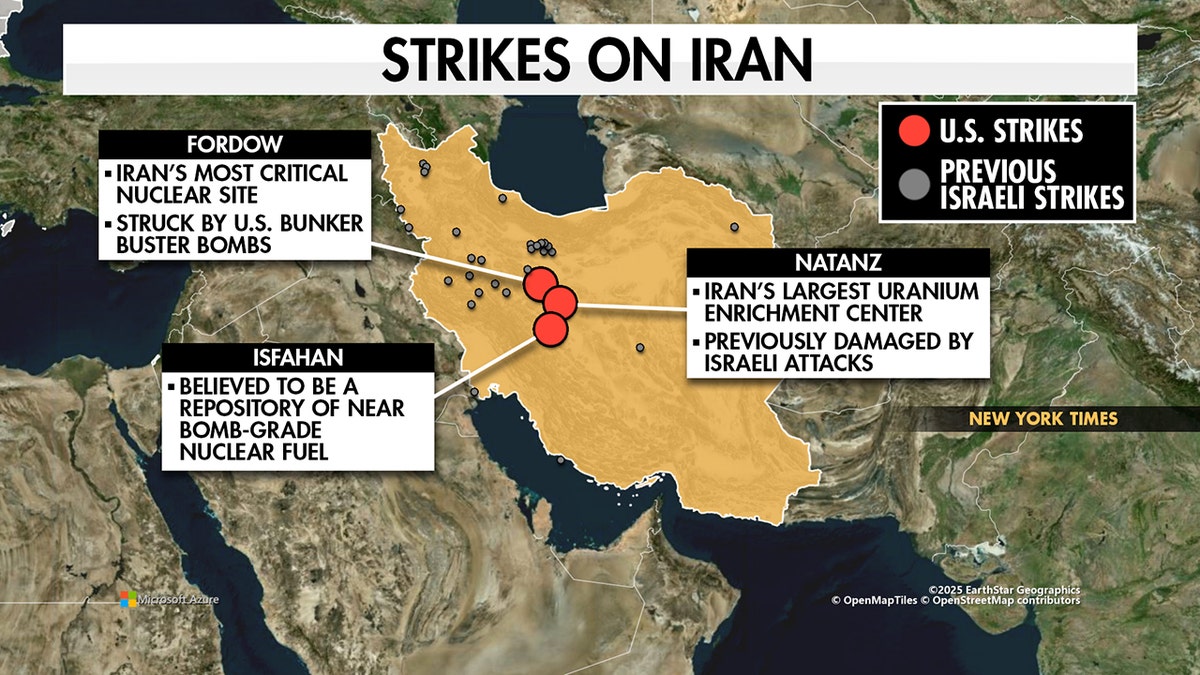
The Iranian nuclear program is frequently discussed in binary terms: "The Bomb" or "No Bomb." This is a fundamental misunderstanding of the strategy. The objective is not necessarily the assembly of a device, but the achievement of "Latency"—the technical capability to produce a weapon within a timeframe shorter than an adversary's political decision-making cycle.
This state of "Breakout Readiness" creates a permanent seat at the diplomatic table. By modulating uranium enrichment levels (shifting from 5% to 20% or 60%), Tehran communicates intent without crossing the "red line" of weaponization. This creates a "ratchet effect": once technical knowledge is gained (e.g., advanced centrifuge manufacturing or metal casting), it cannot be unlearned through sanctions or sabotage.
The bottleneck for Iran is no longer the physics of enrichment, but the "weaponization" phase—the miniaturization of a warhead to fit a reentry vehicle. Until this threshold is crossed, the nuclear program serves as a high-stakes insurance policy for the regime's survival.
The Economic Resilience Loophole
Sanctions are designed to induce state collapse or policy shifts through economic deprivation. Iran has countered this through the "Resistance Economy," a system built on three structural adaptations:
- Hydrocarbon Smuggling Networks: Using "ghost fleets" and ship-to-ship transfers, Iran maintains a baseline of oil exports to markets less sensitive to Western sanctions, primarily China. This provides the hard currency necessary to fund the IRGC (Islamic Revolutionary Guard Corps) and internal security apparatus.
- Regional Barter and Trade: Iran has deepened its economic ties with Iraq and Afghanistan, using local currency or goods-based trade to bypass the SWIFT banking system. This makes the "financial iron curtain" porous.
- Import Substitution: Forced by necessity, Iran has developed a domestic industrial base for mid-tech goods. While inefficient by global standards, it prevents the total consumer vacuum that typically precedes civil unrest.
The Strategic Bottleneck: Succession and Internal Friction
The primary threat to this architecture is not external, but biological and structural. The centralized nature of the "Velayat-e Faqih" system means that the transition of power after the current Supreme Leader is a moment of extreme systemic vulnerability.
There is an inherent tension between the IRGC, which favors a "Security-First" approach (prioritizing proxy networks and military expansion), and the bureaucratic-clerical class, which recognizes that long-term survival requires a degree of economic reintegration. This internal friction creates a "Policy Paralysis" where the state cannot fully commit to either a total war or a grand bargain.
Furthermore, the "Forward Defense" doctrine is facing diminishing returns. The cost of maintaining influence in Lebanon, Syria, and Yemen is rising, while the domestic population faces high inflation and water scarcity. This creates a "Resource Mismatch" where the regime’s external ambitions are increasingly decoupled from its internal stability.
Tactical Realignment and Regional Hedging
In response to the Abraham Accords and the normalization of ties between Israel and several Arab states, Iran has pivoted toward tactical de-escalation with its neighbors, most notably Saudi Arabia. This is not a shift in long-term goals, but a "strategic pause" designed to break its regional isolation. By lowering the temperature with Riyadh, Tehran aims to:
- Decouple the Gulf states from the U.S. security umbrella.
- Reduce the immediate threat of a multi-front regional war.
- Focus its resources on the "Near Abroad" and its ongoing shadow war with Israel.
This hedging strategy indicates that Iran recognizes the limits of its hard power. It is shifting from a policy of "Exporting the Revolution" to a policy of "Securing the Perimeter."
The Escalation Ladder
The current geopolitical environment is defined by a "Gray Zone" conflict. Because both Iran and its primary adversaries (the U.S. and Israel) wish to avoid a total war, they compete in the space between peace and open combat. This involves cyberattacks, maritime sabotage, and targeted assassinations.
The danger of this model is "Signal Misinterpretation." When both sides operate in the gray zone, the threshold for what constitutes a "declaration of war" becomes blurred. A tactical drone strike that kills more people than intended, or a cyberattack that accidentally triggers a hospital power failure, could inadvertently force a climb up the escalation ladder.
To manage this, any strategic approach toward Iran must move beyond the "maximum pressure" vs. "appeasement" dichotomy. A stable regional framework requires:
- Establishing Direct De-confliction Channels: To prevent accidental escalation during maritime or proxy-led incidents.
- Deterrence through Denial: Focusing on bolstering the air defenses and maritime security of regional partners to make Iranian asymmetric tactics less effective and more costly.
- Targeting the Logistics of Influence: Shifting sanctions from broad economic measures to the specific technical and financial nodes that enable the IRGC’s drone and missile programs.
The Iranian state has proven remarkably adept at navigating a hostile global environment. Its strategy is not a "game" but a survival-oriented optimization of limited resources against superior conventional forces. The goal for global actors is not to wait for a "collapse" that may not come, but to increase the "Cost of Aggression" until the regime's internal cost-benefit analysis favors a return to the international legal order.
Monitor the transition within the IRGC leadership and the pace of advanced centrifuge deployment as the two primary indicators of a shift from regional deterrence to a direct offensive posture.