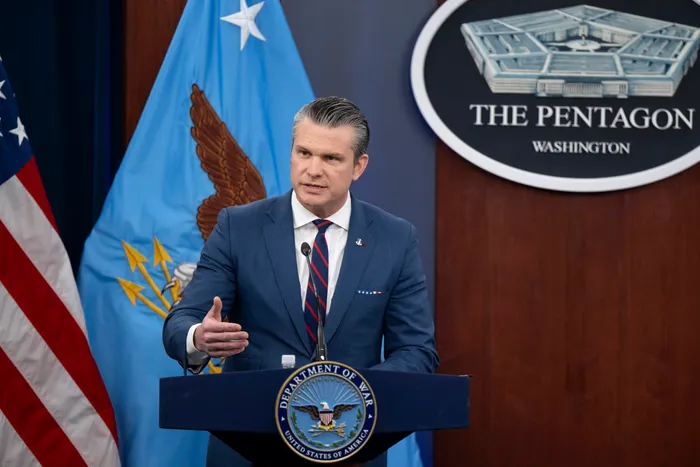
The clock is ticking on a two-week ceasefire, and Defense Secretary Pete Hegseth isn't mincing words. Standing at the Pentagon podium this Thursday, he laid out a reality that’s as cold as it is clear. Iran can take the "golden bridge" offered by the U.S. negotiating team or watch its remaining energy grid turn into a smoking crater.
"Choose wisely," Hegseth warned. It’s a phrase that sounds like a movie line, but the stakes are terrifyingly real. For the people of Iran, the difference between these two paths isn't just about politics. It’s about whether they’ll have electricity, fuel, or a functioning economy by the end of next week.
The iron clad blockade is just the beginning
If you think the current naval blockade is aggressive, Hegseth wants you to know it’s actually the "polite" version of what’s coming. For the last 24 hours, over 10,000 U.S. sailors, marines, and aircrew have been enforcing a strict perimeter around Iranian ports. They’re intercepting everything. Any ship flying an Iranian flag or suspected of carrying material support is being stopped.
General Dan Caine, Chairman of the Joint Chiefs of Staff, confirmed the military is operating inside Iran’s territorial seas and international waters. The message to the world’s shipping lanes is simple. If you don't comply, force will be used. This isn't a suggestion; it’s a total economic strangulation designed to force Tehran’s hand before the April 22 deadline.
Why this isn't a fair fight anymore
Hegseth’s rhetoric on Thursday was pointedly aggressive. He didn't just talk about strategy; he went after the Iranian leadership's pride. He noted that while Iranian forces are currently "digging out" of bombed-out facilities, the U.S. is "reloading with more power than ever."
The U.S. military has already struck over 11,000 targets in the last month. Iran’s navy is essentially gone. Its missile forces are struggling to reorganize under the watchful eye of U.S. intelligence. Hegseth made it clear that the U.S. knows exactly what's being moved and where.
- Intelligence edge: The U.S. claims to have better eyes on the ground than at any point in the conflict.
- Targeting: Critical dual-use infrastructure and the remaining power generation plants are already locked into the targeting computers.
- Zero reconstitution: Hegseth argued that while Iran can dig out its remaining launchers, they can’t replace them. The U.S., however, is "retooling" and "rearming" during this brief pause.
The message is aimed directly at the Iranian Supreme Leader’s inner circle. They’re being told that their military capabilities are depleted, while the American machine is just getting its second wind.
The three sticking points at the table
So, what does a deal actually look like? Vice President JD Vance is leading a delegation that's pushing for a very specific, narrow agreement. They aren't looking for a grand "reset" of relations. They want three things settled immediately:
- The Strait of Hormuz: Iran has been using the threat of naval mines to keep global oil prices high. The U.S. wants a permanent de-escalation mechanism here to ensure ships can pass without fear of being blown up.
- Nuclear guarantees: Hegseth was firm that the "war department" will ensure Iran never gets a nuclear weapon. Period.
- Wartime damages and detainees: There’s a messy list of secondary issues, including the release of prisoners and how to handle the massive costs of the last few months of fighting.
Iran, on the other hand, wants an "all-encompassing" deal that ends the threat of war entirely. They’re sending a 70-person delegation to try and broaden the scope. But with 6,000 more U.S. troops arriving on the USS George H.W. Bush, it doesn't look like Washington is in a mood to compromise on the big stuff.
What happens if the ceasefire expires
If April 22 comes and goes without a signature, the "polite" phase ends. Hegseth specifically mentioned that energy infrastructure is "not destroyed yet." That "yet" is the most important word in his entire briefing.
We’ve seen what happens when the U.S. focuses on "logistical capabilities." It means no lights in Tehran. It means no fuel for the IRGC. It means a complete collapse of what’s left of the Iranian economy.
Honestly, the Iranian leadership is in a corner. They’re dealing with internal infighting—reports suggest clashes between Foreign Minister Abbas Araghchi and IRGC commanders over who even gets to sit at the table. While they argue, the U.S. Navy is clearing mines and prepping for the next wave of sorties.
You should keep a close eye on the shipping rates in the Gulf over the next 48 hours. If the "in principle" agreement mentioned by mediators doesn't turn into a hard document by the weekend, expect oil prices to spike as the markets realize the "hard way" is becoming the only way left.
The next few days aren't just decisive for the war. They’re going to define the map of the Middle East for the next decade. If you're looking for a sign of peace, watch for a sudden shift in Tehran’s rhetoric regarding the Strait. If they don't blink soon, the bombs start falling again on Wednesday.