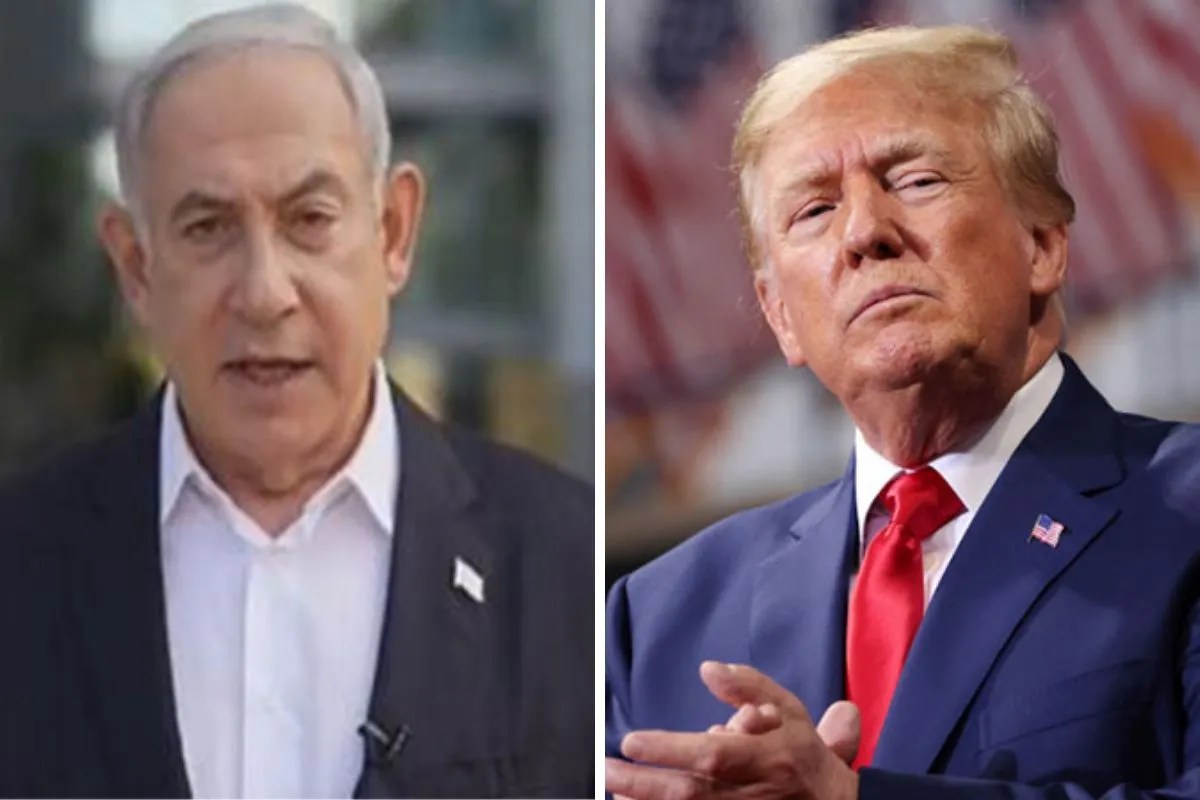
The ink on the transition papers in Washington is still fresh, yet the scent of cordite from the Iranian desert is already drifting across the Potomac. While Donald Trump prepares to re-enter the Oval Office with the swagger of a man who believes every knot can be cut with the right pair of shears, Benjamin Netanyahu is busy sharpening the blade. The map of the Middle East isn't a static document. It is a shifting, bleeding organism, and right now, it is being redrawn by the fire of Israeli F-35s.
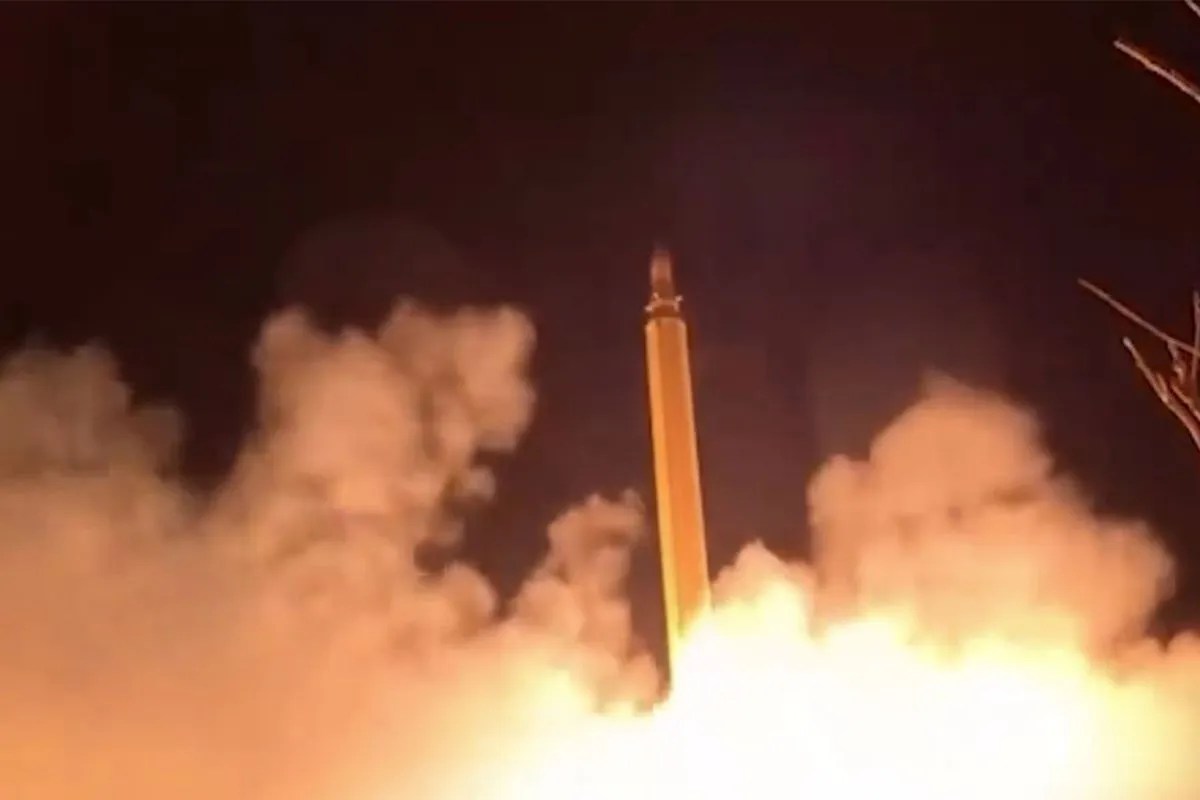
Imagine a technician in Shahrud, Iran. Let’s call him Reza. He doesn't care about the grandstanding in Florida or the fiery rhetoric in Tehran. He cares about the precision of a carbon-fiber filament being wound onto a rocket motor. For years, his facility was the silent heartbeat of Iran’s ballistic reach. Then, in a flash of kinetic energy that defied the darkness of the night, that heartbeat stopped. Israel didn't just hit a building; they dismantled a future.
This wasn't a random act of aggression. It was a calculated message sent to two addresses simultaneously: one in Tehran, and one in Mar-a-Lago.
The Architect and the Disrupter
Donald Trump’s primary campaign promise regarding the world stage was deceptively simple: "I will stop the wars." It’s a compelling vision. He views the world through the lens of a high-stakes real estate closer. To him, every conflict is a bad deal waiting for a better negotiator. He leans on the memory of the Abraham Accords, those historic handshakes that suggested the ancient animosities of the desert could be paved over with luxury hotels and tech partnerships.
But the Middle East of 2026 is not the Middle East of 2020. The "Deal of the Century" has been replaced by the "War of Attrition."
Netanyahu knows this. He is playing a different game. While Trump wants to freeze the clock and start the bidding, the Israeli Prime Minister is trying to break the clock entirely. By systematically obliterating Iran’s missile production capabilities—specifically the sophisticated mixers and factories required to fuel the projectiles that rain down on Tel Aviv—Israel is creating "facts on the ground."
Consider the strategic leverage. If Trump walks into a room with Iranian officials, he wants to offer them a way out. But if Netanyahu has already destroyed their most valuable bargaining chips—their defensive shield and offensive reach—what is left for Trump to negotiate with? You cannot offer a man a coat if his house has already been burned down to the foundation.
The Physics of Escalation
To understand why a peaceful resolution feels like chasing a mirage, we have to look at the machinery of destruction. This isn't just about soldiers in trenches. It’s about the industrial capacity to wage war.
When Israel struck the Shahrud site, they targeted the specialized equipment used to create solid-fuel boosters. This isn't stuff you can buy at a hardware store. It is the result of decades of illicit procurement and indigenous engineering. By removing these "industrial bottlenecks," Israel isn't just winning a battle; they are putting the Iranian missile program into a coma that could last years.
Logically, this should make peace easier, right? A weaker Iran is a less threatening Iran.
The reality is more jagged. In the psychology of the Middle East, weakness often invites desperation rather than surrender. For the leadership in Tehran, the loss of their missile factories isn't just a military setback. It is an existential humiliation. When a regime built on the pillars of "resistance" finds its most secret labs reduced to twisted rebar, the pressure to lash out—even if suicidal—becomes an almost physical weight.
The Human Toll of Strategy
Behind every satellite image of a scorched factory floor, there is a ripple effect that touches the kitchen tables of families from Haifa to Isfahan.
Take an Israeli mother, Sarah, living in the shadow of the northern border. For her, Trump’s talk of "stopping wars" sounds like a lullaby she wants to believe but knows is sung by someone who doesn't hear the sirens. Every time Israel strikes deep into Iran, she holds her breath. She knows the retaliation might not come as a missile; it might come as a drone over her roof or a shadow in her neighborhood.
The stakes are invisible until they are agonizingly real.
We often talk about these events in the abstract—"geopolitical shifts," "strategic imperatives," "defense posturing." These words are bandages designed to hide the blood. The truth is that we are witnessing a race against time. Trump is racing to get to the table before the table is smashed. Netanyahu is racing to ensure that when they finally sit down, there is nothing left for the other side to claim.
The Paradox of the Peacemaker
Trump’s greatest challenge isn't his critics at home. It’s the fact that his closest ally in the region has a completely different definition of "victory."
For Trump, victory is a signed paper and a photo op.
For Netanyahu, victory is the total decapitation of the "Octopus"—the Iranian network of proxies and power.
These two visions are currently in a head-on collision. Every time an Israeli jet crosses into Iranian airspace, the price of the "Trump Peace" goes up. The Iranians, feeling cornered, increase their demands for security guarantees. The Israelis, feeling emboldened by their tactical success, decrease their willingness to compromise.
It is a feedback loop of iron and fire.
The sheer complexity of the modern battlefield makes the old-school diplomacy of the 20th century look like a child’s game. We are dealing with cyber-warfare that can shut down a power grid in seconds, hypersonic missiles that defy physics, and a social media landscape that turns every tactical strike into a global recruitment tool. In this environment, "stopping a war" isn't about a handshake. It’s about managing a thousand moving parts, many of which are designed to explode upon contact.
The Echo in the Desert
There is a haunting silence that follows a massive explosion in the desert. It is the sound of a vacuum being filled by uncertainty.
As we watch the transition of power in the United States, that silence is being filled by the roar of engines over the Levant. The question isn't just whether Trump can stop the war. The question is whether there will be enough of the old world left to save by the time he picks up the phone.
History is rarely made by the people who stand behind podiums. It is made by the people who build the missiles, the people who fly the jets, and the people who wait in the basements for the sky to stop falling. Right now, the architects of destruction are working much faster than the architects of peace.
The sand is shifting. The wind is picking up. And the sandcastle of a negotiated Middle East is being blasted by the very people who claim to be protecting the shore.
Somewhere in the ruins of a factory in Shahrud, a piece of twisted metal cools in the morning air, a silent monument to a peace that was broken before it was even whispered. The world waits for a dealmaker, but the desert only knows the law of the shadow and the strike. The most terrifying thing about the coming months isn't the possibility of failure; it’s the possibility that the players have forgotten how to recognize a win that doesn't involve the total ruin of the other.
The fire is burning. The clock is ticking. The shears are ready, but the knot has turned into a web of wire.