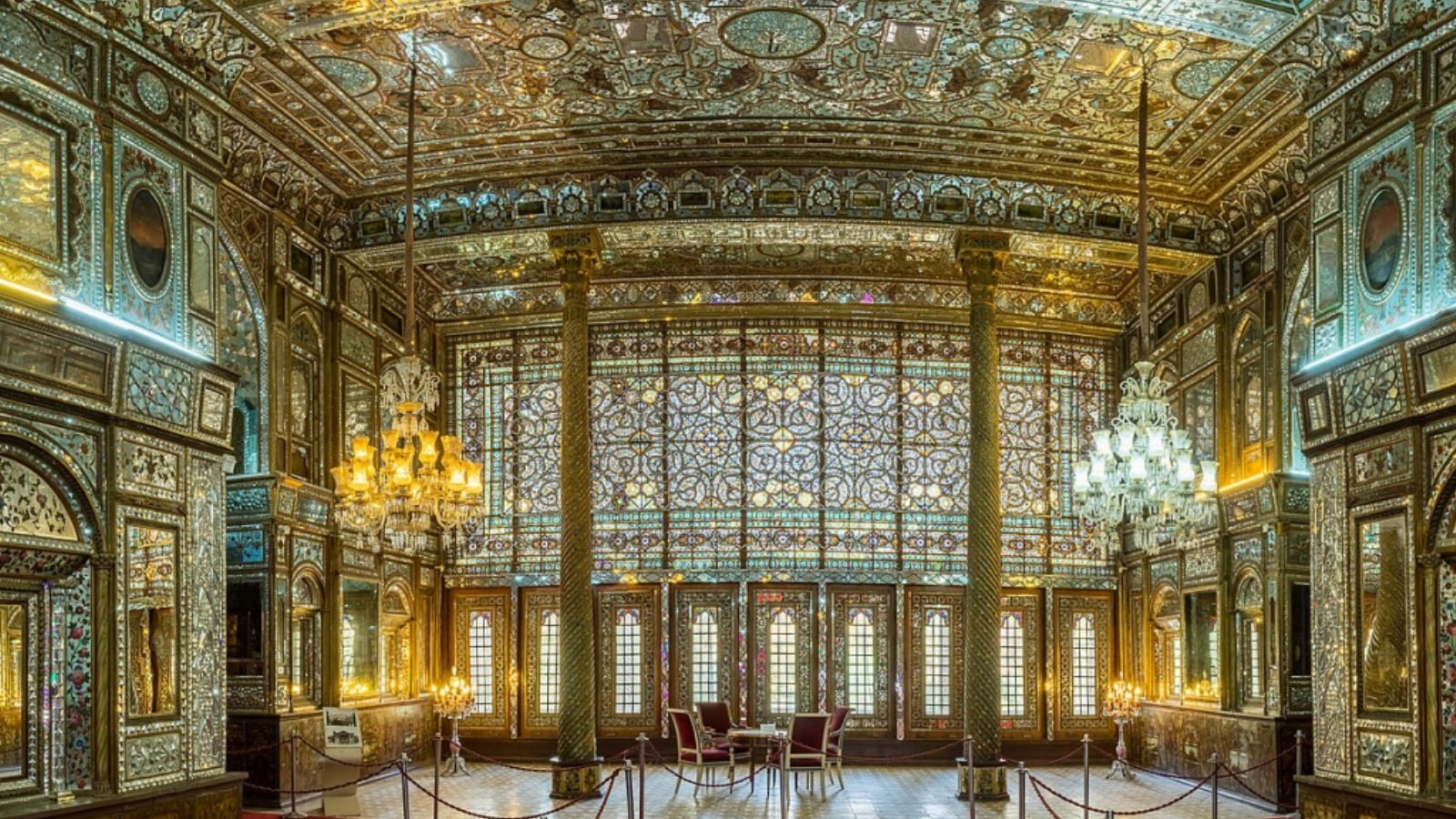
The marble floors of the Golestan Palace, once the jewel of the Qajar dynasty, are currently hidden beneath a thick layer of pulverized masonry and glass shards. This is not the result of slow decay or the predictable hand of time. It is the immediate, jagged consequence of high-explosive munitions detonating in a densely packed urban fabric. While the world watches the military maps, a five-thousand-year-old architectural record is being systematically erased from the earth.
This is no longer a warning of what might happen. The damage is here.
As of mid-April 2026, the inventory of loss is staggering. More than 130 registered UNESCO and national monuments have been caught in the crossfire of the US-Israeli strikes on Iranian soil. While military spokesmen frequently cite "collateral damage" as an unfortunate byproduct of targeting "command and control" centers, the reality on the ground tells a much more disturbing story. Cultural institutions and archives appear to be targeted not because of what they hide, but because of what they represent.
The Architecture of Erasure
The strikes that began in late February have not spared the most significant sites of the Persianate world. In Tehran, the Golestan Palace—the city’s only UNESCO World Heritage property—sustained heavy structural trauma. Blast waves from munitions hitting nearby government buildings shattered the palace’s iconic stained-glass windows and caused nearly 70 percent of the sections of the Marble Throne to collapse.
Further south in Isfahan, the damage to Naqsh-e Jahan Square represents a blow to one of the most important public spaces in human history. The blast waves didn’t just rattle the windows; they stripped the delicate tilework from the northern and western iwans of the Shah Abbas Mosque. These are not components that can be ordered from a catalog. They are the result of centuries of specific, localized craftsmanship that no longer exists in its original form.
In Khorramabad, the Falak-ol-Aflak Citadel, a third-century fortress that has survived countless dynasties and invasions, is now grappling with structural cracks that threaten its long-term stability. The Iranian Ministry of Cultural Heritage has dispatched over 300 experts to conduct triage, but restoration in the middle of a fragile ceasefire is a ghost’s errand.
The Myth of the Precision Strike
The primary defense for these strikes is the concept of "military necessity." Proponents argue that if an adversary places a communications hub near a museum, the museum becomes a legitimate target. This logic is a legal and moral trap. Under the 1954 Hague Convention, cultural property is supposed to be sacrosanct. Yet, coordinates for these sites were transmitted to all belligerents by UNESCO well before the strikes began. The coordinates were ignored.
We are seeing a shift in the philosophy of modern warfare. It is no longer just about neutralizing an army; it is about the dehumanization of a society by obliterating its historical memory. When you destroy a library or a 1,000-year-old mosque, you aren’t just hitting a building. You are deleting the physical evidence of a people’s contribution to global civilization.
Consider the Saadabad Complex. On March 16, strikes near the Green Palace caused massive structural failures. These weren't accidents. The proximity of these strikes suggests a deliberate attempt to undermine the "soft targets" that give a nation its identity.
Environmental Collapse as a Force Multiplier
While missiles fall from above, the ground beneath these monuments is literally sinking. Iran was already facing an ecological catastrophe before the first bomb was dropped. Decades of water mismanagement and aggressive dam-building have led to land subsidence so severe that historic buildings in Isfahan and Shiraz were already showing deep fissures.
The conflict has paralyzed the very environmentalists and scientists who were working to stabilize these sites. With the internet cut off and research funding diverted to the war effort, the "silent" destruction of heritage—caused by drying aquifers and shifting soil—is accelerating. You cannot save a 12th-century mosque from a blast wave if the ground it sits on is already turning to powder.
The Asymmetry of International Outrage
There is a biting irony in the international response. When the Taliban blew up the Buddhas of Bamiyan, the world was unified in its condemnation. Today, the response to the destruction of Iranian heritage is filtered through the lens of geopolitics. UNESCO has expressed "deep concern," but it has stopped short of the explicit condemnation seen in other conflicts.
This silence is legally corrosive. If the international community accepts the destruction of Golestan or Naqsh-e Jahan as the "price of war," it effectively nullifies the protections of the Hague Convention for everyone. It signals that cultural heritage is only worth protecting when it belongs to a political ally.
The loss isn't just Iranian. It belongs to anyone who values the history of human urban development, the evolution of mathematics, and the birth of writing. Iran is home to 29 UNESCO World Heritage sites and 40,000 registered national monuments. This is the bedrock of Western and Eastern civilization alike.
The Restoration Trap
Even if a permanent peace is reached tomorrow, the path to restoration is fraught with danger. Iranian officials report that at least eight damage-assessment reports have been sent to international organizations. However, international experts cannot enter the country to verify these claims due to the security situation.
Furthermore, the "restoration" itself can be a form of destruction. Without access to international archives and specialized materials currently blocked by sanctions, local teams are forced to use "emergency" measures that may inadvertently cause further damage. A hastily applied patch of modern cement can trap moisture in ancient brick, leading to a total collapse within a decade.
The real tragedy is that once a site like the Masjed-e Jame in Isfahan loses its original 12th-century masonry, it is gone forever. You can build a replica, but you cannot rebuild the history. We are currently witnessing the transition of living history into a series of digital files and memories.
The documentation process has begun in Tehran and Isfahan, but it is a race against time and the next round of sorties. If the international community continues to treat these sites as collateral, the next generation will only know the grandeur of Persian architecture through the grainy footage of its destruction.
Stop looking at the maps and start looking at the ruins.