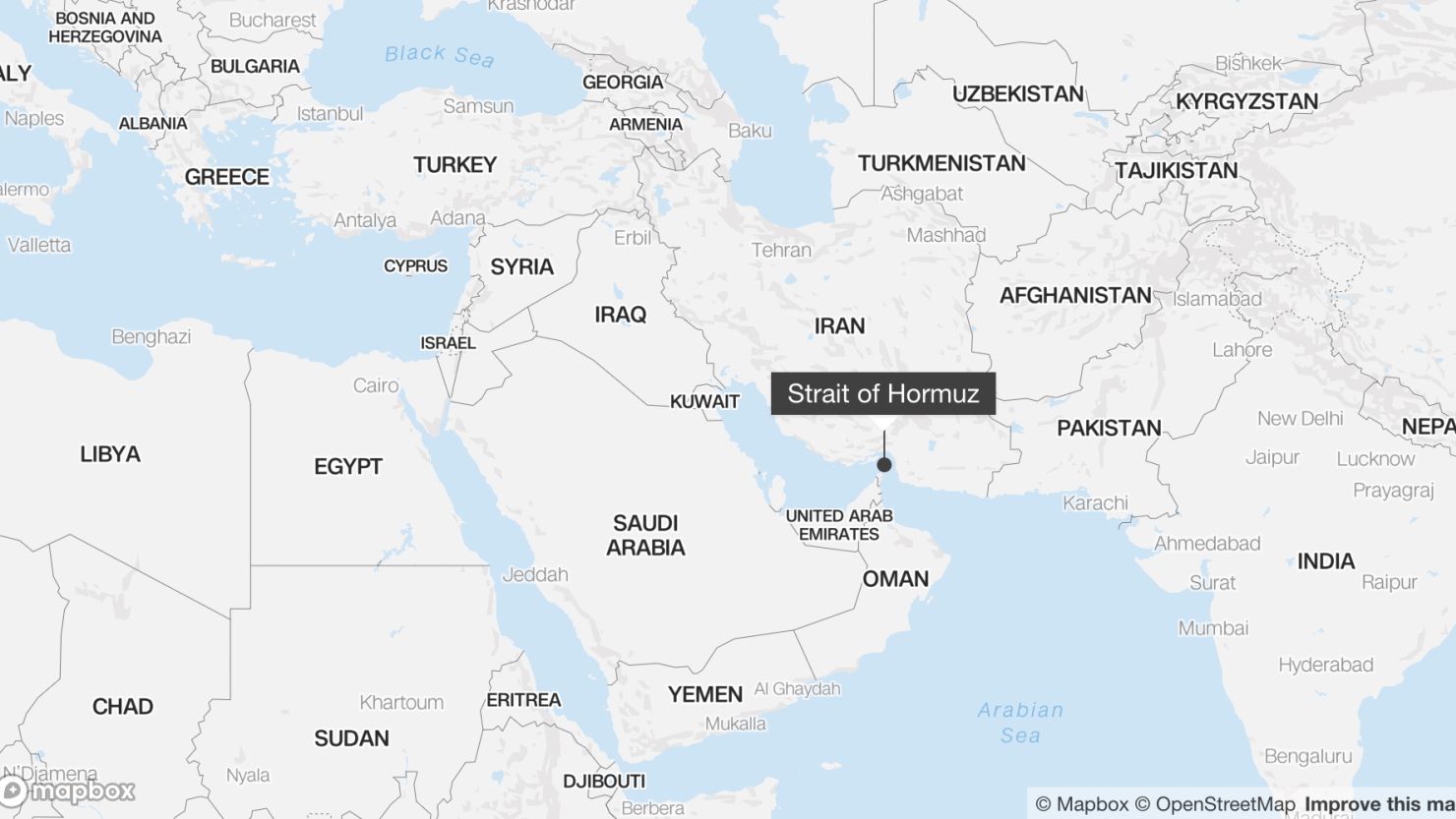
The narrative is as predictable as it is lazy. Regional analysts are tripping over themselves to claim that Islamabad just pulled a fast one on Tehran by cozying up to Washington in the Strait of Hormuz. They paint a picture of "betrayal" and "duping," suggesting that Pakistan’s recent maritime cooperation with the U.S. is a knife in the back of the Iranian regime.
It’s a neat story. It’s also fundamentally wrong.
If you believe Pakistan "fooled" Iran, you are falling for a surface-level geopolitical soap opera while missing the structural reality of the Persian Gulf. This isn't a game of high-stakes deception; it's a cold, calculated exercise in Strategic Ambiguity. Pakistan isn't choosing a side; it's managing a decline in its own leverage by playing both ends against a middle that no longer exists.
The Myth of the Monolithic Alliance
The "lazy consensus" assumes that Pakistan and Iran were ever in a position to be "allies" in the Western sense of the word. They weren't. They are neighbors who share a volatile border, a mutual suspicion of ethnic insurgencies, and a desperate need for energy that never quite materializes.
To say Pakistan "duped" Iran implies there was a foundation of trust to violate. In reality, the relationship has always been transactional and guarded. When Pakistan participates in U.S.-led maritime exercises or allows American assets to monitor the Strait of Hormuz, it isn't "switching teams." It’s maintaining the only life support system its economy has left: the favor of Western financial institutions and the security of global oil transit.
Iran knows this. Tehran isn't "upset" because they were surprised; they are posturing because it’s the only diplomatic currency they have left to trade.
Follow the Data, Not the Drama
Let’s look at the numbers the pundits ignore. Pakistan’s debt-to-GDP ratio isn't just a statistic; it’s a straitjacket. When your country is surviving on IMF tranches and Saudi deposits, your "sovereign" foreign policy is an illusion.
- Fact: Over 60% of Pakistan’s exports go to the U.S. and the EU.
- Fact: Total trade with Iran is a rounding error by comparison, hampered by sanctions that Pakistan cannot afford to trigger.
- Fact: The $IP$ (Iran-Pakistan) gas pipeline is a pipe dream—literally. Pakistan faces billions in potential penalties for not completing it, but it faces certain economic annihilation via U.S. sanctions if it does.
Imagine a scenario where a drowning man reaches for a life raft (the U.S. security umbrella) while his neighbor (Iran) shouts that he’s being "unfaithful." The man isn't being unfaithful; he’s trying not to sink. The idea that Islamabad would risk its entire financial architecture to appease a sanctioned neighbor is a fantasy peddled by those who don't understand how power actually functions in 2026.
The Technology Gap: Why "Security" is a Software Problem
The competitor articles love to talk about "ships" and "patrols." They are stuck in 1985. The real reason Pakistan is indispensable to the U.S. in the Strait—and why Iran is actually terrified—isn't about more hulls in the water. It's about Integrated Sensing.
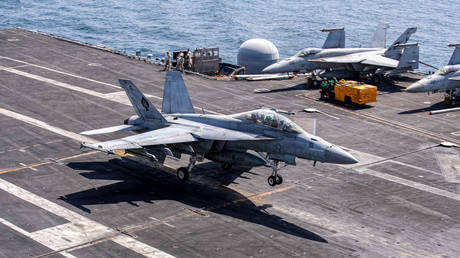
The U.S. is currently deploying a mesh network of unmanned surface vessels (USVs) and AI-driven underwater sensors throughout the region. Pakistan’s role is to provide the "geographic nodes" for this data.
$$S = f(D, N, A)$$
In this simplified model, Security ($S$) is a function of Data density ($D$), Network nodes ($N$), and Algorithmic processing ($A$). Pakistan provides the $N$. Without those nodes, the U.S. "sees" less. By participating, Pakistan isn't just "helping" the U.S.; it is gaining access to a level of maritime domain awareness it could never develop on its own.
Tehran’s grievance isn't about "betrayal." It’s about the fact that Pakistan is helping the U.S. build a digital glass ceiling over the Persian Gulf. Once that sensor net is fully operational, Iran’s asymmetric naval tactics—the small boats, the mine-laying—become visible in real-time. Pakistan is selling the "eyes," and Iran is the target.
The Balochistan Factor: The Secret Handshake
Everyone wants to talk about the Strait of Hormuz. Nobody wants to talk about the Sistan-Baluchestan border.
The real "dupe" isn't happening at sea; it’s happening on land. Both nations have been accusing each other of harboring terrorists for decades. Recently, we saw a flurry of missile exchanges that the media treated as a "near-war." It wasn't. It was a coordinated cleansing of non-state actors that neither government wanted to take responsibility for.
Pakistan uses the "U.S. pivot" in the Strait as a smokescreen. By appearing to align with Washington at sea, it buys a "get out of jail free" card for its kinetic actions on the Iranian border. It tells the West, "We are protecting your oil," while it tells Iran, "We have to do this to keep the Americans off our back."
It’s a brilliant, cynical double-game. But calling it a "betrayal" of Iran is amateur hour. Iran does the exact same thing with its proxies in Iraq and Yemen. This is the standard operating procedure for mid-tier powers trying to survive the friction between superpowers.
Dismantling the "People Also Ask" Nonsense
"Is Pakistan becoming a U.S. puppet again?"
The question is flawed because it assumes Pakistan ever stopped being a client state. Sovereignty is a luxury Pakistan hasn't been able to afford since the late 90s. The current "alignment" isn't a shift in policy; it’s a renewal of a lease.
"Will Iran retaliate by cutting off energy?"
Iran can't cut off what it isn't delivering. The energy cooperation between the two is largely theoretical. Iran needs the Pakistani market far more than Pakistan needs Iranian gas—especially when Pakistan can pivot to Qatari LNG with U.S. approval.
"Does this make the Strait of Hormuz more dangerous?"
No. It makes it more predictable. Predictability is the enemy of the insurgent but the best friend of the global market. Pakistan’s presence provides a "Sunni buffer" that prevents U.S.-Iran tensions from escalating into a purely sectarian or binary conflict.
The Hard Truth About Regional "Stability"
I’ve spent years watching these "strategic shifts" play out in boardroom briefings and embassy backchannels. The pattern is always the same:
- A regional power makes a pragmatic move to secure its own borders or bank account.
- The media interprets this as a tectonic shift in loyalty.
- The "betrayed" party screams for the cameras while continuing to trade under the table.
Pakistan is currently facing a 25% inflation rate and a crumbling infrastructure. Do you honestly think the generals in Rawalpindi are worried about "Tehran being upset"? They are worried about the lights staying on and the payroll being met.
The U.S. offers a path to liquidity. Iran offers a path to more sanctions. The "choice" was made before the first ship ever set sail for the Hormuz exercises.
Stop Looking for "Betrayal"
The obsession with Pakistan "duping" Iran is a distraction. The real story is the Obsolescence of the Regional Brother. In a world of fragmented supply chains and digital warfare, "neighborly solidarity" is a myth.
Pakistan is acting as a rational, self-interested actor in a chaotic system. It is leveraging its geography to extract maximum value from a superpower that is increasingly disinterested in the Middle East but terrified of a vacuum.
If you want to understand the future of the Strait, stop reading headlines about "diplomatic rifts." Start looking at the maritime data integration contracts. Start looking at who is paying the interest on the latest round of sovereign bonds.
Pakistan didn't dupe Iran. Pakistan looked at the balance sheet and realized that Iran’s friendship doesn't pay the bills, but American maritime security does.
Accept the cold reality: In the new Middle East, there are no "dupes"—only those who haven't realized the game has changed.
Buy the sensors. Forget the "allies." Follow the money.