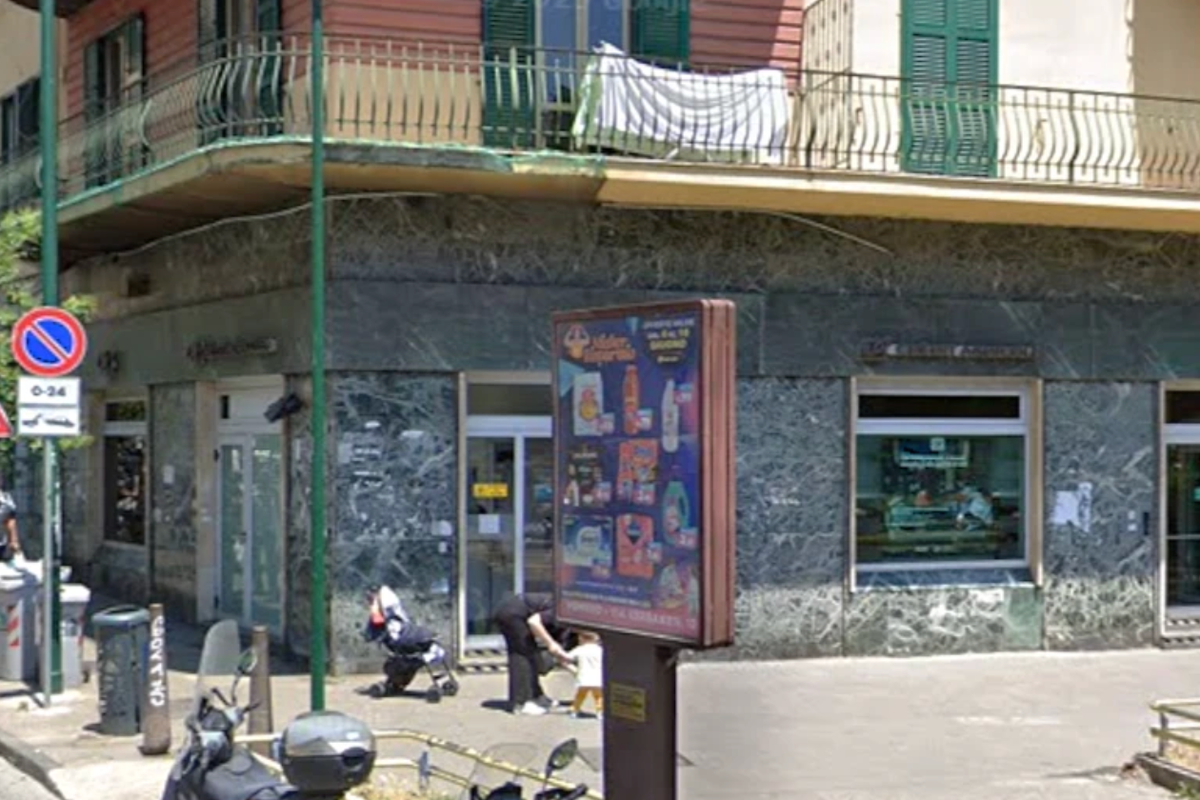
The marble floor of a Neapolitan bank is never truly cold. It carries the residual heat of a thousand frantic footsteps, the humidity of the Mediterranean, and the rhythmic thrum of a city that lives at a constant, feverish pitch. But at 10:30 on a Tuesday morning, for twenty-five souls inside a branch in the heart of Naples, the world froze.
The sound didn't come from the front door. It didn't come from a shattering window or a screeching getaway car. It came from the earth itself. A dull, rhythmic thudding beneath the floorboards, a vibration in the soles of the shoes, and then—the impossible. The floor gave way.
The Subterranean Ghost
Naples is a city built on layers of its own ghosts. Beneath the buzzing Vespas and the lines of drying laundry lies a sprawling, labyrinthine underworld of Greek aqueducts, Roman tunnels, and Bourbon-era sewers. It is a dark mirror of the streets above. To the average tourist, these are historical curiosities. To a specific breed of Neapolitan criminal, they are a tactical expressway.
Imagine you are a bank teller. You’ve spent your morning worrying about interest rates or a lukewarm espresso. Suddenly, four men rise like specters from a hole in the ground. They are covered in the grime of the city’s entrails, smelling of damp stone and ancient waste, wielding weapons that look terrifyingly real in the fluorescent light.
This wasn't a heist born of a Hollywood script. This was "the hole in the wall" gang, a local phenomenon that treats the city’s geological instability as a business partner. They didn't need to bypass the high-tech biometric scanners at the main entrance. They simply waited until the tectonic plates of civil engineering worked in their favor.
Twenty-Five Heartbeats
We often read the word "hostage" and think of a statistic. We see the number 25 and our brains categorize it as a manageable tragedy. But focus on the individual.
Consider a hypothetical woman named Elena. She is sixty-eight. She went to the bank to withdraw a small pension to buy gifts for her grandson’s birthday. When the men emerged from the floor, Elena didn't see a "bank heist." She saw the end of her world. She was ushered, along with twenty-four others, into a back room.
The robbers weren't looking for blood; they were looking for time.
For the next two hours, the air in that room grew heavy. Fear has a scent—a metallic, sharp tang that cuts through the smell of old paper and air conditioning. The captives were told to stay quiet. To stay down. The robbers didn't shout instructions like movie villains. They moved with the frantic, focused energy of blue-collar workers on a deadline. They were mining the vault, not with picks, but with the threat of violence.
Outside, the city of Naples continued its chaotic dance. A street performer played a mandolin three blocks away. A chef tossed pasta. The police began to circle, their sirens swallowed by the thick stone walls of the historic building. The contrast is the cruelest part of a hostage situation: the world continues to turn while your personal clock has stopped.
The Engineering of an Escape
The police response was a textbook display of Mediterranean tension. Sharpshooters took positions. Negotiators prepared their scripts. The perimeter was tightened until not even a stray dog could cross the street. The authorities were prepared for a standoff. They were prepared for a surrender.
They were not prepared for the silence.
When the specialized units finally breached the building, expecting a hail of gunfire or a tense standoff, they found a room full of shaken, weeping people—and an empty vault. The robbers were gone.
They hadn't run out the back door. They hadn't tried to blend into the crowd. They simply went back the way they came. They descended back into the bowels of the city, disappearing into the dark, wet veins of the Naples sewer system.
It is a terrifyingly efficient exit strategy. The tunnels beneath Naples are not mapped with the precision of a modern subway. They are a chaotic tangle of ancient masonry and modern piping. Once you are ten feet underground, the GPS on a police cruiser is useless. Thermal imaging struggles against the shifting temperatures of the subterranean air. The robbers didn't just escape; they evaporated.
The Invisible Stakes
Why does this matter to someone who will never set foot in a Neapolitan bank? Because it exposes the fragility of the structures we trust. We build our lives on the assumption that the ground is solid. We trust that the walls of a financial institution are a fortress.
But the "hole in the wall" gang reminds us that every fortress has a soft underbelly. In a world increasingly obsessed with digital security—encryption, two-factor authentication, firewalls—the most effective threat remains the most primal one. A man with a shovel. A map of the sewers. The patience to dig.
The financial cost of the heist was significant, but the emotional tax on the twenty-five people held in that room is unquantifiable. For them, the sound of a heavy footstep or a vibration in the floor will never be "just a noise" again. They are the living reminders that the city we see is only half the story.
The hunt for the perpetrators continues, but in Naples, secrets have a way of being buried deep. The police sift through CCTV footage and interview witnesses, looking for a face, a name, a mistake. But the tunnels remain, silent and indifferent. They have seen empires rise and fall; a bank heist is merely a flicker in their long, dark memory.
The sun eventually set over the Mediterranean, casting long, orange shadows across the Piazza dei Martiri. The bank was boarded up. The sirens faded. But somewhere, meters below the bustling sidewalk where lovers walked hand-in-hand, a muddy boot stepped through a puddle of ancient water, moving further into the dark, carrying the weight of a city’s stolen gold.
The earth didn't just open up that morning. It swallowed the truth whole.