The Impossible Geometry of Return
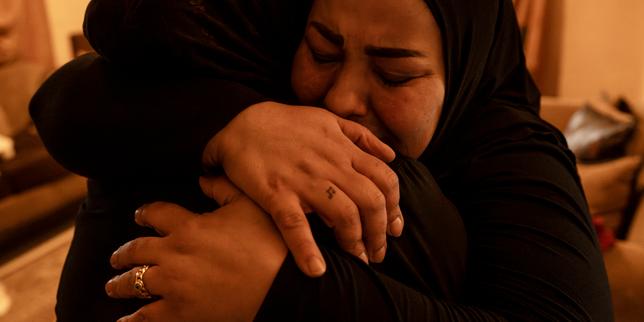
Dust has a way of settling into the pores of a man who has lost everything three times over. In the border villages of South Lebanon, the air is thick with it. As the smoke clears from the latest round of heavy bombardment, thousands of displaced families are streaming back toward the Litani River. They are not returning to homes, but to craters. The immediate narrative often centers on the resilience of the displaced, yet the reality on the ground is a brutal calculation of survival, land ownership, and a total lack of state-level contingency.
The returnees are moving against the tide of logic. Infrastructure is non-existent. Power lines lie coiled like dead snakes in the streets. Water mains have been pulverized. Despite this, the convoys of soot-covered cars persist. For the people of Bint Jbeil, Khiam, and Aita al-Shaab, the land is the only asset that hasn't devalued in Lebanon's crumbling economy. Without the dirt they stand on, they are nothing. They return because staying in overcrowded shelters in Beirut or Sidon is a slow death by indignity.
The Economic Mirage of Reconstruction
Rebuilding a village in South Lebanon is not a simple matter of bricks and mortar. It is a geopolitical nightmare. In previous conflicts, specifically after the 2006 war, Gulf money flooded the region. Qatar, Kuwait, and Saudi Arabia funded "Waad" (The Promise) projects that transformed ruins into modern apartment blocks within years. That faucet is dry.
The current diplomatic friction between Lebanon and the Gulf Cooperation Council means that the massive reconstruction grants of the past are a historical relic. Today, the Lebanese state is a hollow shell. The central bank is paralyzed, and the local currency has lost nearly all its purchasing power. When a farmer says he will rebuild, he is often talking about using his own dwindling savings or relying on Hezbollah’s internal reconstruction arm, Jihad al-Bina.
This creates a dangerous dependency. If the state cannot provide the means to rebuild, the void is filled by non-state actors. This cycle ensures that the border region remains a fortress rather than a civilian province. The "victory" claimed by the landholders is a Pyrrhic one. They own the soil, but the sky above it remains a theater for high-tech warfare that they cannot influence or escape.
The Ghost of 2006 vs the Reality of Today
The scale of destruction in the current conflict has surpassed the 2006 benchmarks in several strategic villages. Modern munitions are more precise, but they are also more destructive to the subterranean infrastructure. The "scorched earth" tactics used in the olive groves have effectively neutralized the local economy for a generation. Olive trees take decades to mature. When they are burned or poisoned with white phosphorus, the heritage of the family is erased alongside the canopy.
The White Phosphorus Legacy
The use of incendiary agents has long-term agricultural implications that the mainstream press rarely audits. This isn't just about the immediate fire. It is about the chemical alteration of the soil. Farmers returning to their plots are finding that the ground is literally toxic.
- Soil Contamination: Residual chemicals seep into the groundwater, affecting irrigation for years.
- Economic Displacement: A farmer who cannot plant today cannot pay off the debts of yesterday.
- Health Hazards: Children playing in the rubble of border towns are at a higher risk of respiratory ailments from the pulverized remnants of modern explosives.
The Psychological Toll of Perpetual Displacement
To understand the South, you must understand the concept of the "temporary-permanent." People build houses with the expectation that they might be leveled. They decorate with a sense of transience. This psychological state has created a unique architectural vernacular in the borderlands—heavy concrete frames designed to withstand shockwaves, yet often sitting empty for months at a time as families flee to the north.
The younger generation is less inclined to participate in this cycle. While the older "landowners" mentioned in competitor reports speak of staying forever, the youth are looking for exits. The brain drain from the South is accelerating. Those who return to the rubble are often the elderly who have nowhere else to go and nothing else to lose. The "victory" of the landowner is often the stubborn refusal of a grandfather to die in a rented room in Beirut.
The Geopolitical Standoff Over the Litani
International pressure to enforce UN Resolution 1701 remains the primary obstacle to a stable return. The resolution calls for the area south of the Litani to be free of any armed personnel other than the Lebanese Army and UNIFIL. In practice, this has never been fully realized. As civilians return, the friction between the Israeli military’s surveillance and the local population’s movements creates a hair-trigger environment.
The Lebanese Army, though respected, lacks the equipment and the mandate to truly secure the border in a way that prevents future escalations. They are effectively observers of their own territory. This leaves the returning civilians in a grey zone. They are the human shield and the human collateral of a conflict that is managed in Tehran, Tel Aviv, and Washington.
The Failure of the International Aid Apparatus
International NGOs are quick to provide blankets and food parcels, but they are terrified of long-term structural reconstruction in South Lebanon. There is a "political risk" associated with building anything that might be destroyed in the next six months. Consequently, aid is stagnant. It keeps people fed but keeps them in ruins.
True reconstruction would require a massive investment in demining. The border is currently a graveyard of unexploded ordnance (UXO). Every step back into a village is a gamble. Until a comprehensive, state-led demining and reconstruction program is initiated, the return of the displaced is more of a protest than a homecoming.
The Strategy of Forced Emptiness
There is a documented shift in military strategy that aims to create a "buffer zone" through civilian displacement. By making the border villages uninhabitable, a military force creates a dead zone where any movement is considered hostile. The return of the villagers is a direct challenge to this strategy. Their presence—the smoke from their cooking fires, the noise of their generators—reasserts the civilian character of the land.
However, this civilian presence is fragile. Without schools, clinics, and markets, a village is just a collection of tents and broken walls. The owners of the land may be "winners" in a moral sense, but they are losing the battle against time and poverty. The defiance of the South is a powerful image, but an image cannot feed a family or educate a child.
Mapping the Destruction
To see the true impact, one must look at the density of strikes in residential centers versus military outposts. The systematic leveling of civilian homes in towns like Marjayoun or Meiss el-Jabal suggests a policy of making "return" a physical impossibility.
The reconstruction will not be a grand event. It will be a slow, agonizing process of one family at a time dragging bags of cement into the hills. It is a quiet, desperate labor that happens far from the cameras of the world’s media, fueled more by the lack of alternatives than by a hope for a peaceful future. The land remains, but the life upon it has been thinned to a breaking point.
The Verdict of the Soil
The owners of the land are still there, but they are standing on a graveyard of their own prosperity. The "victory" is the right to sleep in a basement and wait for the next siren. It is a hard, cold reality that no amount of nationalistic rhetoric can soften. The South is returning to its roots, but the roots are buried deep under a layer of concrete and cordite.
The real crisis is not the destruction itself, but the abandonment of the civilian population by every authority meant to protect them. The state is absent, the international community is fatigued, and the local leadership is invested in the struggle more than the solution. For the displaced, the road home is open, but the home they are looking for no longer exists in three dimensions. It is a memory they are trying to rebuild with their bare hands in a world that has moved on.