The room where the world’s money is managed doesn't look like a battlefield. It’s a quiet space in Washington, D.C., characterized by heavy drapes, polished wood, and the hushed tones of people who speak in basis points rather than battle cries. There is no ticker tape, no shouting, and certainly no gold bars stacked in the corner. Yet, this room is the cockpit of a machine so vast and sensitive that a single misplaced word can send a tremor through a retirement account in Des Moines or a construction site in Dubai.
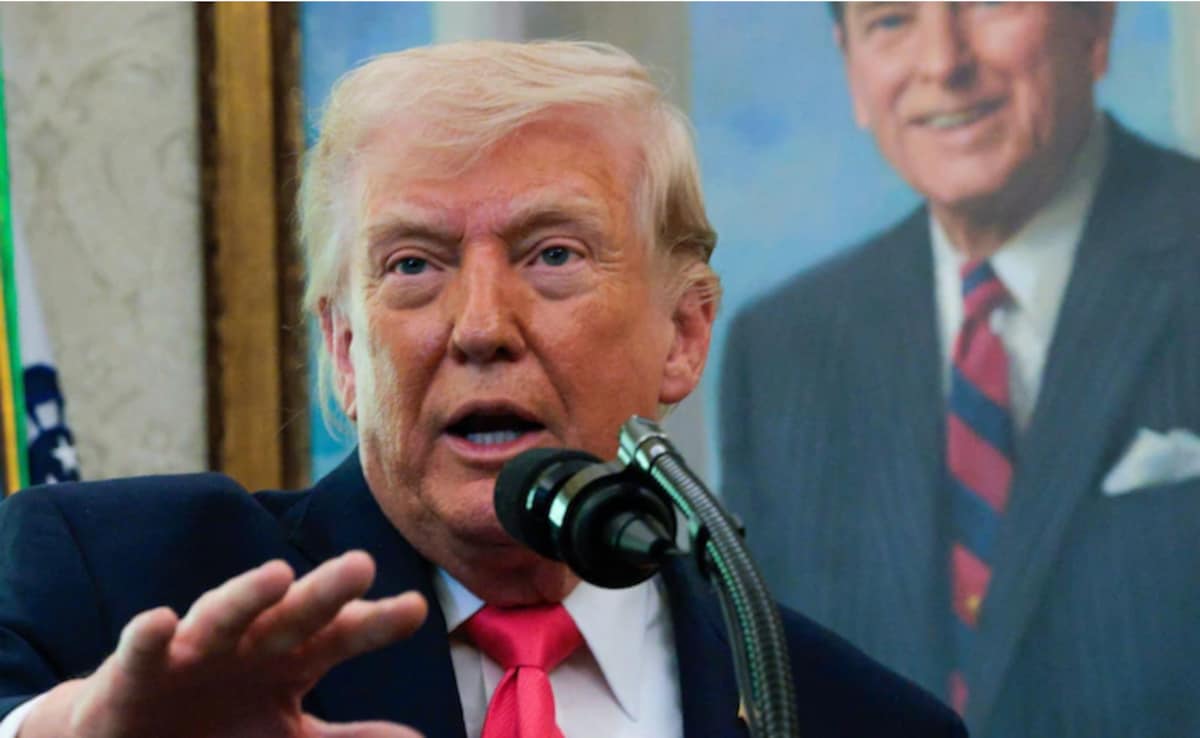
At the center of this machine sits Jerome Powell. To some, he is a technocrat. To others, a shield. But to Donald Trump, he has become something else entirely: a target.
The former president has made his intentions clear. If he returns to the Oval Office, the traditional wall between the White House and the Federal Reserve—a wall built from decades of hard-won economic stability—will not just be cracked. It will be leveled. Trump has signaled that he would "fire" Powell if the Fed Chair stays beyond his mandate, or perhaps even sooner if the legal machinery allows for it.
This isn't just a personnel dispute. It is a fundamental argument about who should hold the leash of the American economy. It’s about whether the person setting your mortgage rate should be an unelected scholar or a politician looking at an upcoming election cycle.
The Invisible Shield
Consider a hypothetical small business owner named Elena. She runs a mid-sized architectural firm. For Elena, the Federal Reserve is an abstraction until she needs to renew her line of credit. When inflation began its aggressive climb, the Fed raised rates. It hurt. Her borrowing costs went up, and she had to delay hiring a new lead designer.
However, Elena knows one thing for certain: the Fed raised those rates because the data demanded it, not because it was popular. In fact, it was deeply unpopular. Politicians on both sides of the aisle grumbled. But the Fed’s independence allowed it to take the bitter medicine required to stop the currency from devaluing.
Independence is the ghost in the machine. It is the belief—shared by global markets—that the U.S. dollar is managed by math and mandate, not by the whims of a man who wants to juice the stock market before a Tuesday in November. When Trump suggests he should have a "say" in interest rates, or that he should be able to dismiss the person at the helm, he is suggesting that the shield be melted down.
The Architecture of a Power Struggle
The Federal Reserve Act of 1913 was designed to be a buffer. The governors have staggered terms that span fourteen years. The Chair serves a four-year term. This design ensures that no single president can easily pack the board with loyalists in one go. It was created this way because history is littered with the corpses of economies where the ruling party printed money to stay in power.
Trump views this buffer as an obstacle. His perspective is rooted in a different philosophy: if the people elect a president to fix the economy, that president should have every tool at his disposal. Why, he argues, should a "clerk" in a suit have more power over the economy than the leader of the free world?
But the "clerk" isn't there to be a leader. He is there to be a thermostat.
If you let a guest in a hotel room control the boiler for the entire building, they might turn it up to 80 degrees because they feel a chill. They feel better for an hour. Meanwhile, the pipes in the basement are sweating, the neighbors are stifling, and eventually, the whole system blows a gasket. The Fed Chair is the person standing by the boiler, looking at the pressure gauges, telling the guest "no" for the sake of the building's structural integrity.
The Price of a Phone Call
What happens the moment a president successfully fires a Fed Chair for political reasons?
The shift wouldn't be a slow burn. It would be a flashover.
Investors thrive on predictability. They buy U.S. Treasuries because they believe the American government will always pay its debts and that the currency won't be inflated into worthlessness by a populist whim. If that trust evaporates, the "risk premium" goes up. That’s a fancy way of saying that everything—from your car payment to the national debt—gets more expensive because the world no longer trusts the hand on the lever.
Imagine the scene: a Tuesday morning, a tweet or a press release announces that the Fed Chair has been removed for refusing to lower rates. Within seconds, the algorithms that drive global finance would register a seismic shift. The dollar would likely dip as international investors look for safer harbors. Gold and Bitcoin might spike. The cost of borrowing for the U.S. government would climb as bond buyers demand higher interest to compensate for the new uncertainty.
Politics is about the immediate. It’s about the next rally, the next headline, the next poll. Economics, specifically monetary policy, is about the generational. It’s about the long, slow arc of the next decade. When those two forces collide, the immediate usually wins the battle and loses the war.
The Human Stakes of a Politicized Dollar
We often talk about the Fed in terms of "the market," but the market is just a collection of people’s hopes and fears.
If the Fed loses its independence, the person who suffers isn't the billionaire on Wall Street. The billionaire has hedges. They have assets in multiple currencies. They have land. The person who suffers is the retiree living on a fixed pension that suddenly doesn't cover the cost of eggs because inflation has been allowed to run hot to satisfy a political narrative. It’s the young couple trying to buy their first home, finding that even though the "political" interest rate is low, no bank will lend to them because the banks are terrified of what the currency will be worth in five years.
There is a reason we don't let the coach of a football team also act as the referee. The coach’s job is to win. The referee’s job is to ensure the game remains a game. Trump is essentially arguing that the referee is part of the "deep state" and that the coach should be allowed to blow the whistle on his own plays.
It sounds efficient. It sounds like taking charge. But it ignores the reality of human nature and the gravity of global finance.
The Ghost of the 1970s
We have been here before. In the early 1970s, President Richard Nixon pressured then-Fed Chair Arthur Burns to keep interest rates low heading into the 1972 election. Burns, despite his better judgment, complied. The economy hummed through the election. Nixon won in a landslide.
Then the bill came due.
The result was a decade of "stagflation"—a miserable cocktail of high unemployment and soaring prices that broke the back of the American middle class. It took a decade of pain and the brutal, uncompromising leadership of Paul Volcker to break that cycle. Volcker had to raise rates to 20%, sending the country into a painful recession just to prove that the Fed was serious about the dollar's value. He was burned in effigy. He was threatened. But he stayed the course because he wasn't running for anything.
That is the "fire" Trump is playing with. He remembers the boom times of his first term and wants to recreate them by any means necessary. But the economy isn't a television show where you can script the ending. It is a biological system. It needs balance.
The Looming Shadow
The threat to fire Powell is a signal to the world that the American experiment is entering a phase where even the most sacred technocratic institutions are up for grabs. It suggests a future where the Federal Reserve is just another cabinet position, subject to the "You’re Fired" ethos of reality TV.
Jerome Powell’s term as Chair ends in May 2026. His term as a Governor ends in 2028. Between now and then, a massive amount of weight will be placed on those polished wood tables in D.C.
If the wall falls, we won't see the damage in the room with the heavy drapes first. We will see it at the grocery store. We will see it in the value of our savings. We will see it in the way the rest of the world looks at a green piece of paper that used to represent the most stable promise on earth.
The lever is there. The hand is reaching for it. And the machine is starting to hum in a way we haven't heard in a very long time.