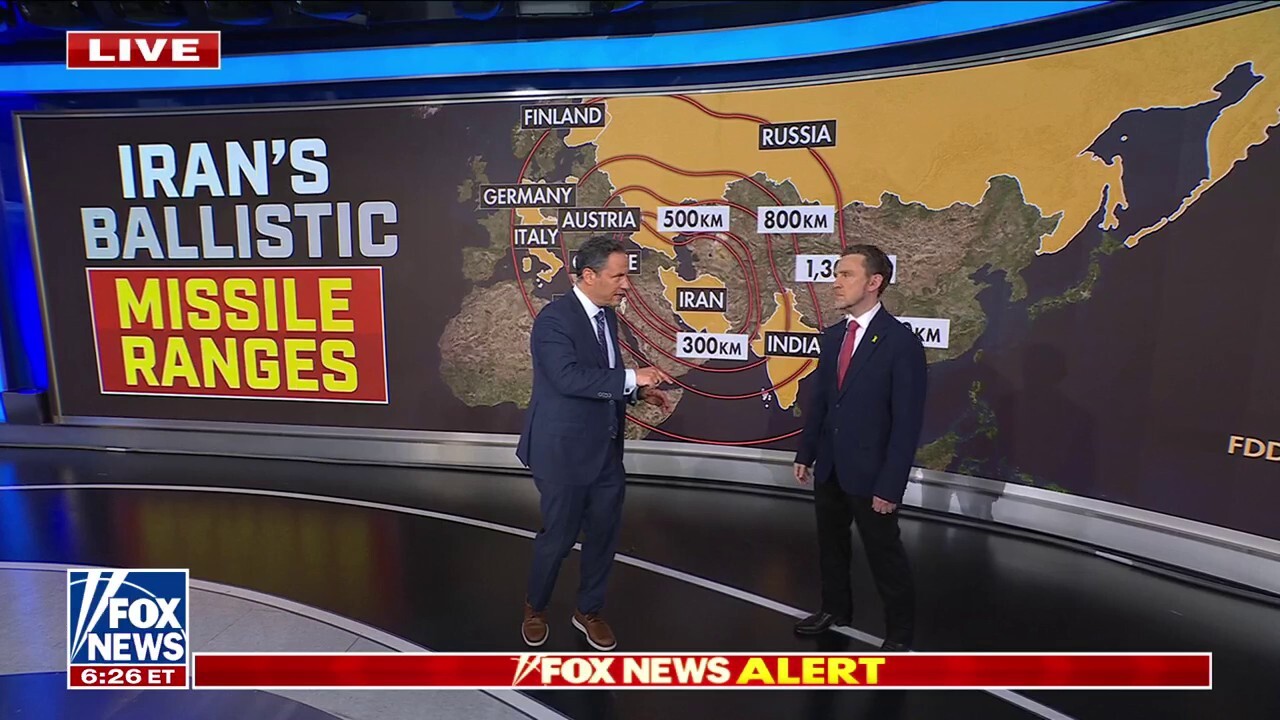
The narrative surrounding the 4,300 missiles and drones launched by Iran and its proxies is a comforting bedtime story for defense contractors. The consensus suggests the Gulf nations—Saudi Arabia and the UAE—are the primary "victims" of Iranian aggression while Israel remains a secondary, albeit more vocal, target. This is wrong. It misses the fundamental mechanics of regional deterrence.
The sheer volume of ordnance isn't evidence of a failing security state or a lopsided war of attrition. It is a stress test that the Gulf nations are passing, not by accident, but by design. If you think the "brunt" of the attack is a sign of weakness, you don't understand how modern integrated air defense works.
The Math of Failed Interception
Most analysts look at a list of 4,000+ projectiles and see a terrifying onslaught. I see a massive data collection exercise. When a Houthi-launched drone or a cruise missile targets an Aramco facility, the "win" isn't just shooting it down. The win is the telemetry.
The Western defense establishment loves to brag about the Patriot PAC-3 or the THAAD systems. But these systems are expensive, rigid, and historically prone to being overwhelmed by cheap, "dumb" swarms. The dirty secret of the Saudi-Iran rivalry is that the Gulf has become the world’s premier live-fire laboratory. Every time a $20,000 Shahed drone is intercepted by a $3 million missile, the media screams about the cost-to-kill ratio.
They are asking the wrong question.
The cost isn't the point. The point is that the Gulf states have successfully integrated a multi-layered sensor net that Israel, for all its Iron Dome hype, hasn't had to use at this sustained, grinding scale. The Gulf isn't facing the "brunt" of a war; they are hardening their infrastructure against the next century of conflict while the rest of the world watches through a telescope.
The "Israel is Different" Delusion
The competitor piece argues that Israel's experience is somehow secondary because the raw numbers in the Gulf are higher. This ignores the geography of intent.
Iran’s strategy against the Gulf is economic.
Iran’s strategy against Israel is existential.
When a drone hits a desalination plant in the UAE, the stock market flinches. When a missile hits Tel Aviv, the region moves toward nuclear escalation. To compare the two based on a spreadsheet of "total launches" is intellectually lazy. It treats all 4,300 projectiles as equal units of aggression. They aren't.
A slow-moving drone aimed at a tanker is a diplomatic message. A ballistic missile aimed at the Negev is a declaration. By focusing on the quantity, observers miss the quality of the threat. The Gulf nations aren't being "targeted more"; they are being "probed more." There is a massive difference between a bully poking you in the chest to see if you’ll blink and an assassin aiming for the throat.
The Logistics of Professional Paranoia
I’ve sat in rooms where military hardware is sold to regional powers. The sales pitch is always about "protection." The reality is about redundancy.
The Gulf states have spent the last decade building what I call "Deep Defense." This isn't just about batteries of missiles. It’s about:
- Cyber-Kinetic Offramps: Knowing when to let a low-impact drone hit a sand dune to avoid revealing the radar signature of a top-tier battery.
- Energy Hedging: Creating enough storage capacity so that a successful hit on a refinery doesn't actually stop the flow of oil.
- The "Buffer State" Gambit: Using proxy battlefields in Yemen to exhaust Iranian inventories before they ever reach the "real" targets.
Israel doesn't have the luxury of "Deep Defense." They have no depth. Every inch of their territory is a high-value target. Therefore, their interception rate must be near-perfect. The Gulf can afford a 90% success rate; Israel requires 99.9%. This makes the Gulf’s "brunt" far more manageable than the narrow, razor-thin margin of error Israel operates within.
Why We Should Stop Rooting for Total Interception
Here is the contrarian truth: A perfect defense is a recipe for a bigger war.
If the Gulf nations—and Israel—could magically swat down 100% of every Iranian-made projectile with zero cost, Iran would stop using missiles and move to something else. Something harder to track. Biological agents. Sub-surface naval mines. Targeted assassinations in European capitals.
The current "missile rain" provides a predictable, manageable rhythm to the conflict. It’s a pressure valve. Both sides know the rules. Iran gets to show its domestic audience it is "resisting." The Gulf nations get to prove their expensive Western toys work. The US defense industry gets to keep its production lines humming.
The 4,300 launches aren't a sign of an escalating war; they are the status quo’s heartbeat.
The Misunderstood Role of the "Little Drones"
The media obsesses over ballistic missiles because they are fast and loud. But the real disruption is the small-diameter, low-altitude drone.
Most "experts" claim the Gulf is failing because these drones sometimes get through. I’ve seen the damage reports. A $500 drone hitting a $500 million facility often does about $5,000 worth of damage. The media reports "Successful Strike on Oil Facility," and the public thinks the world is ending.
In reality, the facility is back online in six hours.
The Gulf has learned to "absorb" the hits. They’ve realized that trying to stop every single plastic drone is a fool's errand. Instead, they’ve hardened the targets themselves. This is Passive Defense, and it’s far more effective than the "Active Defense" everyone writes about. Israel is just starting to learn this. You don't win by having the best shield; you win by being too big and too boring to break.
The Real Winner is the Data
Every launch from Iranian soil or proxy territory is a gift to the intelligence agencies in Riyadh, Abu Dhabi, and Washington.
Imagine a scenario where Iran never fired a single drone. They would have a "fleet in being"—a terrifying, unknown threat. By firing 4,300 of them, they have revealed:
- Their launch signatures.
- The frequency-hopping patterns of their guidance systems.
- The actual (rather than advertised) speed and maneuverability of their payloads.
- The logistics chain required to move those units to the front lines.
Iran has essentially "spent" its secrecy. The Gulf hasn't faced the "brunt"; they have received a free, multi-year masterclass in Iranian military capability. They know exactly how Iran fights, while Iran only knows how the Gulf defends.
Stop Asking Who Faced the "Brunt"
The question itself is a distraction. It implies that being hit more makes you the bigger loser. In the world of high-stakes geopolitics, the loser is the one who reveals his hand first.
Iran has shown its hand 4,300 times.
The Gulf states have used those 4,300 opportunities to build the most sophisticated, battle-tested air defense network on the planet. They aren't the victims of this story. They are the beneficiaries of Iranian strategic overreach.
The next time you see a headline about a "massive barrage," don't look at the explosions. Look at the radar screens. The side that is learning is the side that is winning. And right now, the Gulf is the most educated region on earth.
Build the wall? No. Build the sensor. Then, let them fire. Every missed shot is a lesson paid for by the enemy.
The age of the "impenetrable fortress" is dead. Long live the age of the "resilient sponge." If you're still counting missiles to determine who's winning, you've already lost the war.
Stop looking at the sky and start looking at the code.
That is where the conflict is being won.


