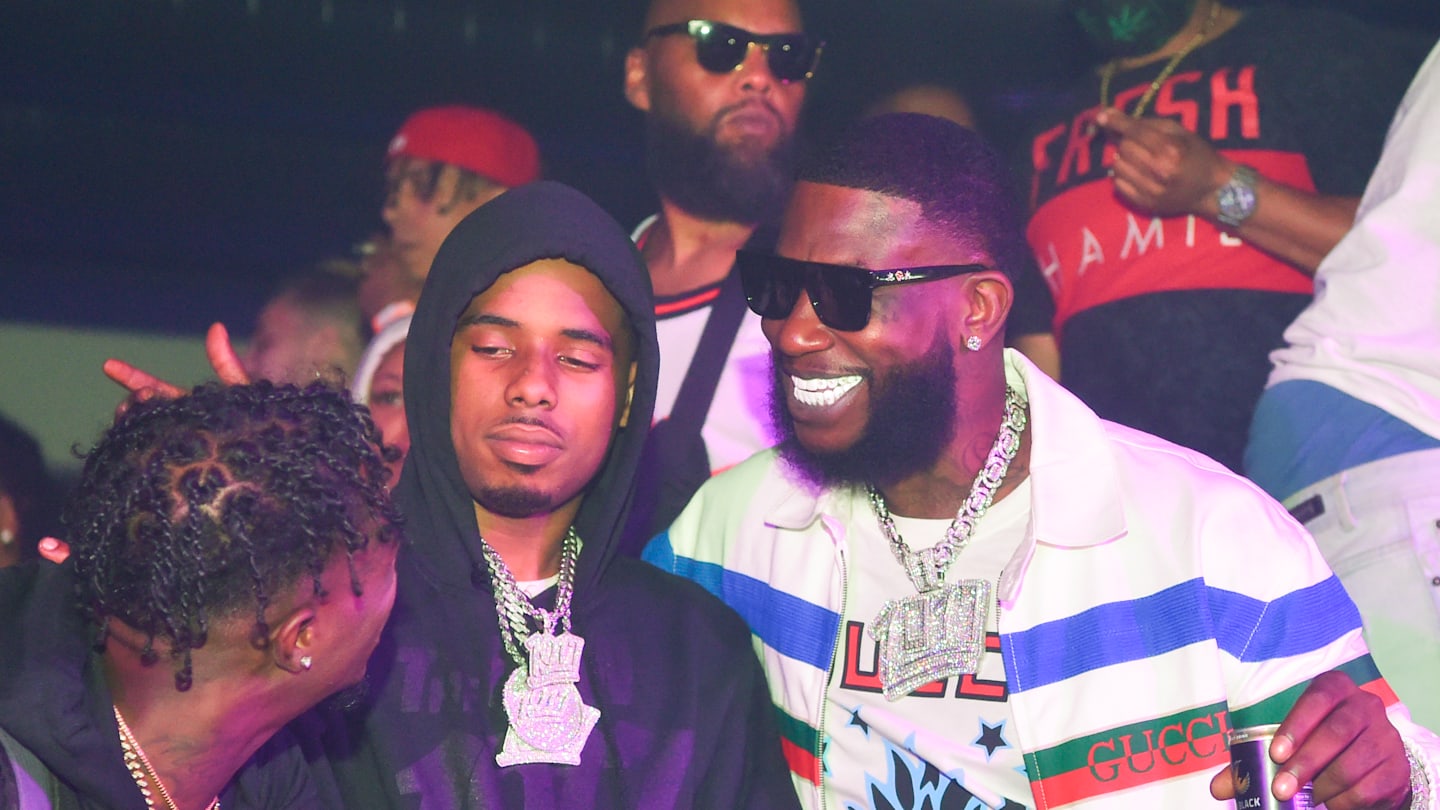
The headlines are feeding you a fairy tale of betrayal and street justice. They want you to believe that Pooh Shiesty and Big30—the very artists Gucci Mane plucked from the mud to build his 1017 empire—turned on their mentor in a cinematic heist involving high-end rentals and missing jewelry.
The mainstream media loves this script. It’s clean. It’s easy. It reinforces every tired stereotype about the "unpredictable" nature of the rap game. But if you’ve spent five minutes behind the velvet rope of a label’s legal department, you know this story stinks of narrative engineering. Also making waves in related news: Why Point Break is the Only Action Movie That Actually Matters.
We aren't looking at a simple robbery. We are looking at the messy, public collapse of a 21st-century sharecropping system.
The Myth of the Grateful Protege
The "lazy consensus" suggests that Pooh Shiesty and Big30 are simply ungrateful. The argument goes: Gucci gave them a platform, a chain, and a path out of Memphis, and they repaid him with a stick-up. Additional insights regarding the matter are covered by Entertainment Weekly.
That perspective ignores the mechanics of modern 360 deals. In the current music economy, the "mentor" isn't just a big brother; they are a venture capitalist with a high-interest loan. When a veteran rapper signs a hot newcomer, they aren't doing it out of the goodness of their heart. They are buying equity in a human being.
When prosecutors claim these artists robbed their own CEO, they are describing a symptom, not the cause. You don't bite the hand that feeds you unless that hand is also squeezing the life out of your royalties. I have seen labels manufacture "conflicts" to trigger morality clauses in contracts, allowing them to freeze payments or seize masters. While the public gasps at the "audacity" of the crime, the accountants are looking at the balance sheet.
Why the Prosecution's Timeline Makes No Sense
Let’s look at the logistics. These guys are high-profile assets. They are tracked, monitored, and geotagged every second of their lives by their own social media teams and federal authorities alike.
The idea that they would risk a multi-million dollar career for a few hundred thousand dollars in jewelry and a rental car is a logic gap you could drive a tour bus through.
- The Incentive Problem: Why steal the jewelry when you can just buy the factory?
- The Visibility Factor: You don’t commit a "kidnapping" in a world where every doorbell has a camera and every phone is a tracking device.
- The Internal Logic: If Gucci Mane was truly the victim of a violent kidnapping and robbery by his own roster, the legal filings would look drastically different.
The reality is likely far more mundane and far more sinister. We are likely seeing a dispute over "recoupables" that went sideways. In rap, "the chain" isn't a gift. It's a lien. If the artist tries to leave or renegotiate, that jewelry becomes the flashpoint for a "robbery" charge that is more about reclaiming collateral than actual street beef.
Dismantling the "Street Cred" Defense
People also ask: "Wouldn't this just help their street cred?"
This is the most dangerous lie in the industry. Nobody at the level of Pooh Shiesty needs a kidnapping charge to sell records. In 2026, a federal indictment isn't a marketing tool; it's a corporate death sentence. It voids insurance policies for tours. It kills brand deals. It makes you unbookable at major festivals.
The "street cred" argument is a convenient mask used by prosecutors to make a financial dispute look like a gang war. By framing this as a violent betrayal, the state can bypass the nuances of contract law and go straight for the juggernaut of RICO-adjacent optics.
The Economics of the 1017 Pressure Cooker
Gucci Mane has spent the last decade rebranding himself as the ultimate talent scout. He is the "East Atlanta Santa," the man who finds the diamonds in the rough. But look at the turnover rate.
- Artist signs for a modest advance.
- Artist generates massive streaming numbers.
- Artist realizes their "mentor" is taking a 50% cut of everything before the label even touches it.
- Friction occurs.
- Suddenly, there’s a "legal issue."
I’ve watched this cycle play out with a dozen different imprints. The veteran stays clean, the rookies go to jail, and the catalog stays in the hands of the veteran. It is a brilliant, albeit cold-blooded, business model. If you can’t keep the artist, you keep the controversy, which drives up the value of the back catalog.
Stop Asking "Who Did It" and Start Asking "Who Profits"
If Pooh Shiesty and Big30 are locked up, who wins?
- The Insurance Companies: They don't have to pay out on canceled appearances if the cause is criminal activity.
- The Primary Label: They can keep collecting on the streams without having to pay for new videos, travel, or promotion.
- The Narrative: Gucci Mane remains the "survivor" while the youth are branded as "volatile."
The industry wants you to focus on the flashy details of the robbery. They want you to argue about who pulled what trigger and who took which watch. They don't want you looking at the predatory nature of the contracts that make these young men feel like they have to "rob" back what was taken from them in the boardroom.
The Actionable Truth for the Next Generation
If you are a rising artist, the lesson here isn't "don't rob your boss." That should be obvious. The lesson is: Never sign a deal where your boss is also your landlord, your jeweler, and your primary creditor.
When one man controls your income, your image, and your physical assets, you aren't an artist. You're a ward of the state-within-a-state. The "kidnapping" might have been a physical act, but the "robbery" happened the moment the pen touched the paper.
Everything else is just theatre for the evening news.
The industry doesn't need more "mentors" like Gucci Mane. It needs more forensic accountants and fewer "big brothers" with jewelry and a hidden agenda.
Pay attention to the paperwork, not the jewelry. The jewelry is just the bait. The paperwork is the trap.