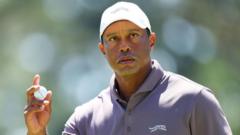
The ambulance ride in February 2021 felt like a funeral procession for the PGA Tour. When news broke that Tiger Woods had crashed his SUV in Southern California, the sports world didn't just worry about his legs. They worried about the balance sheet. For twenty-five years, professional golf operated as a mono-economy. If Tiger played, TV ratings doubled. If he won, equipment sales spiked. If he was injured, the air left the room.
We've spent decades wondering what happens when the needle-mover finally stops moving. The 2021 crash was the brutal, unplanned dress rehearsal for a post-Tiger reality. But a funny thing happened while everyone was waiting for the sport to collapse. Golf actually got bigger. It got younger. It stopped being a one-man show because it had no other choice.
The myth of the permanent dependency
Critics love to say golf is nothing without red shirts on Sundays. They point to the "Tiger Bump" as proof that the sport is on life support. This perspective misses how the industry has shifted beneath our feet. The crash didn't kill golf's momentum—it forced the tour and the fans to look at the talent that was already standing right in front of them.
Think about the numbers for a second. Even before the accident, the demographics were shifting. According to the National Golf Foundation, off-course participation—places like Topgolf and indoor simulators—has exploded. We aren't just watching one guy anymore; people are actually playing the game in ways that don't require five hours on a Saturday. The "Tiger Effect" started the fire, but the current growth is fueled by a much broader base of fans who care about the lifestyle as much as the leaderboard.
Why the Sunday ratings obsession is a trap
TV executives still sweat when Tiger isn't in the field. I get it. Advertisers pay a premium for those eyes. But using 1997 Masters ratings as the only metric for golf’s health is lazy. We aren't in 1997. The way we consume sports has fractured into a thousand pieces.
- Younger fans follow highlights on Instagram and TikTok.
- Betting markets have created a whole new reason to watch a random Tuesday practice round.
- Rivalries between guys like Scottie Scheffler, Rory McIlroy, and the LIV defectors provide drama that doesn't rely on a single legend's health.
The dependency was real because we made it real. By treating Tiger like the only sun in the solar system, the media ignored the rising stars. When the crash happened, the vacuum was filled by personalities who actually show up every week. You can't build a sustainable business on a guy who can only play four times a year. The tour finally figured that out.
The LIV distraction and the value of competition
You can't talk about golf's future without mentioning the elephant in the room. The fracture between the PGA Tour and LIV Golf happened in the shadow of Tiger’s recovery. Some say the split weakened the sport. I’d argue it forced the PGA Tour to innovate for the first time in a century.
They had to increase purses. They had to create "Signature Events." They had to make the product better because they couldn't just lean on Tiger to sell tickets. Competition, even the messy and controversial kind, creates engagement. Fans are talking about golf more now than they were five years ago, even if they're arguing about who sold out and who stayed loyal. That's a sign of a healthy, living sport, not a dying one waiting for a savior.
A new breed of star power
Look at the current roster. Scottie Scheffler isn't Tiger Woods. He doesn't have the same aura of invincibility or the tabloid-heavy backstory. But he's playing historically great golf. Then you have the "vibe" golfers—guys like Max Homa or the Bryan Brothers—who have built massive followings through social media and relatability.
These players don't need to be the next Tiger. They just need to be interesting. The 2021 crash was a wake-up call that the "Next Tiger" search was a dead end. There is no Next Tiger. There's just a Very Good Golf Tour that needs to stand on its own feet. Honestly, the sport is more interesting when five guys have a chance to win rather than one guy beating the field by twelve strokes every time.
Moving past the nostalgia
It's okay to admit we miss the 2000s. That era was electric. But nostalgia is a terrible business strategy. If golf remains dependent on a man in his late 40s with a fused ankle, it deserves to fail.
The data suggests it won't. Equipment manufacturers like TaylorMade and Callaway are reporting record revenues. Green fees are up across the country. The game has transitioned from a spectator sport centered on one icon to a participation-heavy hobby for a new generation. We've moved from the "Tiger Era" to the "Anywhere Era."
What you should watch for next
The real test isn't whether Tiger wins another major. It's how the tour handles the next three years of media rights and player retention. If you're a fan, stop looking for the red shirt. Start looking at the depth of the field.
- Follow the amateur ranks. The talent coming out of college right now is absurdly good and ready for TV.
- Support your local muni. The health of the pro game starts with the people paying $40 for a twilight round.
- Embrace the chaos. The merger talks and the shifting schedules are part of the evolution.
Golf survived the 2021 crash because the game is bigger than any individual. It's time we started acting like it. The dependency is over. The sport is doing just fine.