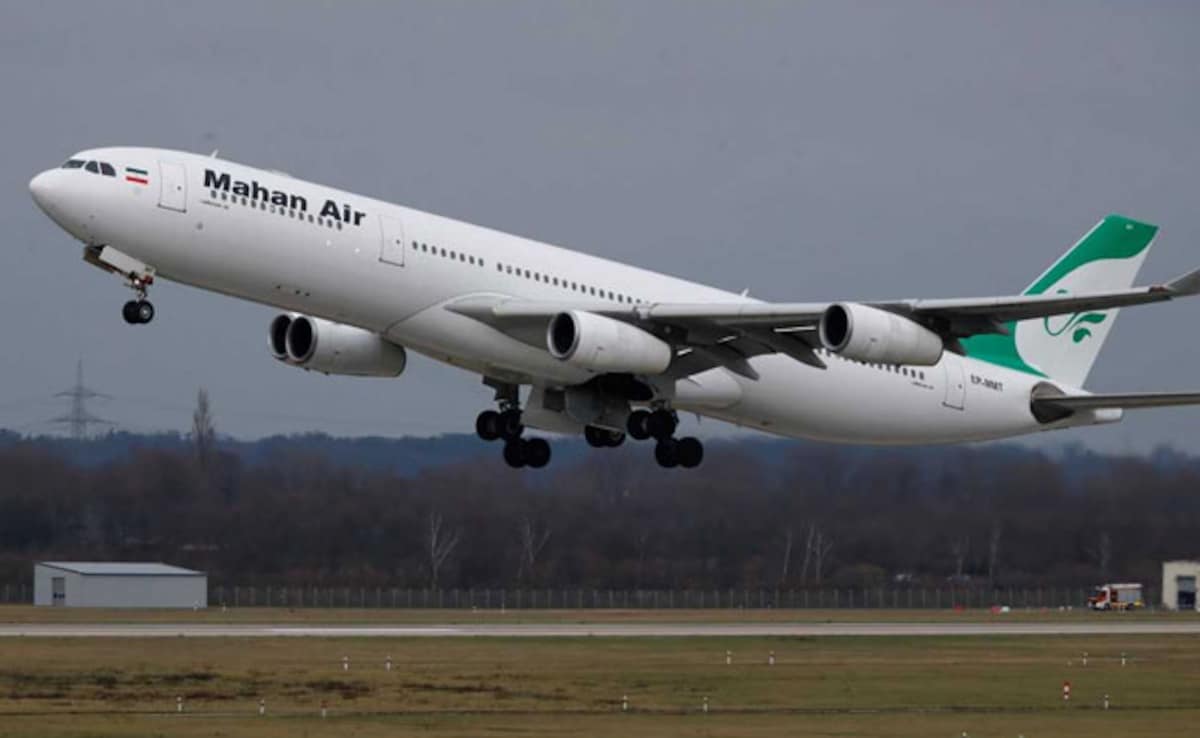
The cargo hold of an Ilyushin-76 is a cavern of cold metal and echoing silence. It smells of hydraulic fluid, stale air, and the faint, sweet scent of cardboard. Inside these flying warehouses, the mission is usually simple: move weight from point A to point B. But when the crates are stamped with the insignia of the Red Crescent and the destination is a disaster zone in India, the weight isn't just measured in kilograms. It is measured in heartbeats.
Somewhere over the jagged terrain of the Middle East, that weight evaporated in a flash of kinetic energy. Don't forget to check out our previous post on this related article.
An Iranian transport plane, repurposed from its military origins to carry life-saving supplies, became the latest ghost in a conflict that refuses to stay within its borders. It was scheduled for a mission of mercy. It ended as a smudge of smoke on a satellite feed. This is not just a story about a missile hitting a wing; it is about the moment the world decided that the logistics of war are more important than the logistics of survival.
The Anatomy of a Misfire
To understand how a plane full of bandages and high-calorie biscuits ends up in the crosshairs of a U.S. airstrike, you have to look at the sky the way a radar operator does. The sky is crowded. It is a messy, overlapping grid of civilian corridors, military exclusion zones, and "gray-space" where intention is everything. If you want more about the context here, Associated Press offers an informative summary.
The U.S. military, operating under the heavy mantle of "deterrence," maintains a hair-trigger presence in the region. Their logic is binary. Friend or foe. Threat or non-threat. When an Iranian-flagged vessel—even one designated for a humanitarian run—enters a theater of active kinetic operations, the nuance of its cargo is often invisible to the person pressing the button three hundred miles away.
Consider the pilot. Let’s call him Abbas. Abbas isn't a politician. He is a man who checked his flight path four times before takeoff. He knew the risks of flying an Iranian tail number through a sky patrolled by American Predators and Reapers. He likely gripped the controls a little tighter as he approached the border, watching the flickering green of his instruments, hoping the transponder signal was clear enough to say: I am help. I am not a weapon.
He was wrong.
The strike was clinical. High-altitude. Precise. The munitions used by the U.S. are designed to minimize "collateral damage," a sterile term that attempts to scrub the blood off the ledger. But when you strike a plane meant for India—a nation waiting for that specific aid to bolster its own overstretched relief efforts—the collateral damage isn't just the crew. It is the thousands of people on the ground who will now wait for help that is never coming.
The Invisible Bridge to India
India and Iran share a relationship that often baffles Western analysts. It is a connection forged in oil, history, and a shared geography that ignores the dictates of Washington. When India faces a crisis—be it a natural disaster or a medical shortage—Tehran is often among the first to offer a hand, not out of pure altruism, but because the stability of the region depends on these small, vital bridges of cooperation.
This specific mission was part of a larger diplomatic effort. It was a gesture. In the world of high-stakes geopolitics, gestures are the only thing keeping the gears from grinding to a total halt. By striking this plane, the U.S. didn't just eliminate a target; they burned a bridge. They sent a message to New Delhi and Tehran alike that in the current climate, there is no such thing as a "neutral" flight.
The irony is thick enough to choke on. The U.S. often positions itself as the global guarantor of maritime and aerial freedom. Yet, here, the freedom to deliver aid was revoked by a Hellfire missile.
The Cost of a "Clean" Strike
We are told that modern warfare is a surgical affair. We see the grainy black-and-white footage of a vehicle disappearing in a puff of smoke, and we are led to believe that the problem has been solved with zero waste.
But there is no such thing as a clean strike.
Every time a humanitarian asset is hit, the cost of aid goes up globally. Insurance premiums for relief flights skyrocket. Pilots become hesitant. NGOs begin to weigh the lives of their staff against the lives of those they are trying to save. The "shadow" of the strike lingers long after the debris has settled.
Imagine the warehouse in India. The trucks are lined up. The local volunteers have cleared space for the arrival of specialized equipment. They check their watches. They refresh the flight tracker. The icon for the Iranian transport stops moving. It hangs there, stationary on a digital map, for five minutes. Ten. Then it disappears.
The silence that follows that disappearance is the real tragedy. It’s the silence of a doctor realizing he won't have the supplies for the morning shift. It’s the silence of a government official having to explain to his superiors that a "friendly" power just vaporized their relief shipment.
The Logic of the Machine
Why did it happen? The official reports will cite "intelligence indicators." They will talk about "proactive defense." They will use words that sound like they were generated by a spreadsheet to justify the fact that a giant metal bird filled with hope was swatted out of the air.
The U.S. military operates on a philosophy of "active scanning." If an asset belongs to an adversary, it is treated as a component of that adversary’s war machine until proven otherwise. In the seconds it takes to make a kill-decision, "proven otherwise" is a luxury the operators feel they cannot afford. They saw an Iranian transport in a zone where Iranian transports carry parts for drones or missiles. They didn't see the boxes of medicine.
This is the failure of intelligence in the age of total surveillance. We can see the heat signature of a man's cigarette from space, but we cannot seem to see the intent of a mission. We have traded wisdom for data.
The Ripple in the Water
This incident won't start a world war. It won't even dominate the news cycle for more than forty-eight hours. It will be buried under the next scandal, the next election cycle, the next celebrity divorce.
But in the corridors of power in Asia, the memory will fester.
Trust is a non-renewable resource. Every time a "mistake" like this occurs, the United States loses a fraction of its moral authority to lead. It becomes harder to convince the world that you are the "good guys" when your missiles are shredding blankets and bandages.
The people who were supposed to receive that aid don't care about the U.S.-Iran proxy war. They don't care about the nuances of the JCPOA or the intricacies of Middle Eastern air defense. They only know that they were promised help, and that help was destroyed by a country that claims to be the world's policeman.
A Sky Full of Shadows
Tonight, there are other planes in the air. Some carry tourists. Some carry weapons. Some carry the very same kind of aid that was lost in the strike.
The pilots of those planes are looking at their radar screens with a new kind of dread. They know now that the markings on their wings might not protect them. They know that the "mercy" in their mission statement is invisible to the sensors of a drone circling at thirty thousand feet.
The debris of the Iranian transport is scattered across a desert floor, glinting under a cold moon. It is a graveyard of good intentions. In the distance, the low hum of a patrolling engine continues, an indifferent heartbeat in a sky that has forgotten how to distinguish between a threat and a prayer.
One man in a dusty office in India turns off the lights. He doesn't need to wait anymore. The sky is empty.


